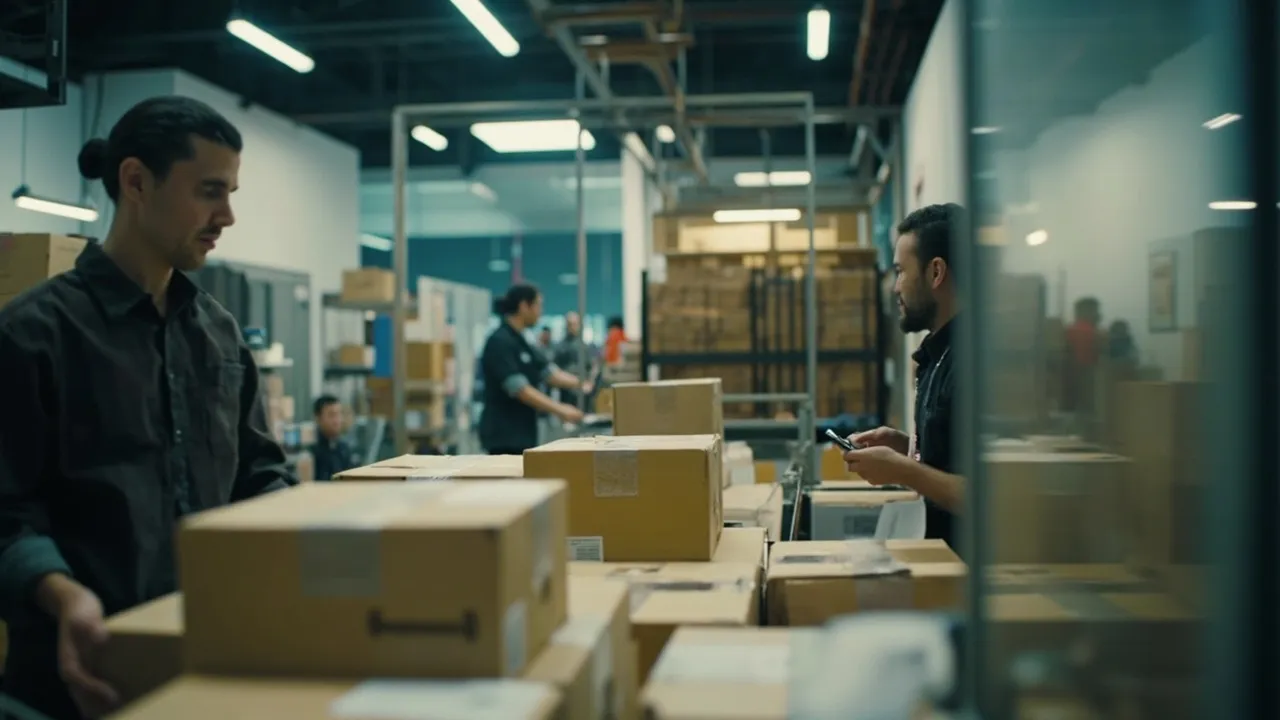
India’s Last-Mile Delivery Market Is Growing Fast Enough to Redraw Urban Fulfillment


India is no longer a future last-mile market that global shippers can study from a distance. It is a live operating laboratory for dense urban fulfillment, regional carrier orchestration, quick-commerce expectations, cash-on-delivery complexity, and return flows that behave differently from the U.S. or Europe.
The growth curve explains why. Mordor Intelligence estimates India’s last-mile delivery market will expand from $7.96 billion in 2026 to $14.45 billion by 2031, a 12.67% CAGR. That is not just parcel volume getting bigger. It is a structural shift in how inventory is positioned, how delivery promises are made, and how much control brands need over carrier performance at the edge of the network.
India’s last mile is especially important because it combines three forces that are difficult to manage in isolation: rapid e-commerce adoption, compressed delivery windows, and fragmented delivery geography. A logistics team can build a strong fulfillment strategy for one of those. India asks operators to solve all three at once.
Density is the operating model, not a nice-to-have
The defining feature of India’s urban fulfillment market is density. Quick-commerce platforms, marketplace sellers, D2C brands, grocery operators, and pharmacy networks are competing for consumers who increasingly expect short delivery windows in metros and improving service in Tier-2 and Tier-3 cities.
Mordor’s last-mile research points to quick-commerce and dark-store expansion as a major growth driver, with same-day delivery forecast to grow at a 14.32% CAGR through 2031. It also reports that standard delivery still held 58.19% of the market in 2025, which is the important tension: India is not becoming one uniform 10-minute market. It is becoming a multi-speed market where standard, same-day, scheduled, hyperlocal, and rural delivery models all coexist.
That changes network design. In the U.S., a shipper may think in terms of regional fulfillment centers, parcel zone skipping, and national carrier coverage. In India, the node strategy gets more granular. Urban fulfillment has to account for dark stores, local sortation, kirana-assisted delivery points, bike-based capacity, neighborhood-level demand pockets, and lane-level congestion. A warehouse five kilometers closer to the consumer may matter more than a cheaper regional site if the service promise depends on first-attempt success inside a narrow window.
COD and returns make delivery an information problem
India’s last mile is not only a transportation problem. It is a payment, exception, and reverse-logistics problem.
Cash on delivery remains a meaningful part of Indian e-commerce behavior, even as digital payments expand. COD changes the last-mile workflow because the driver is not merely completing a drop; the delivery event may include payment collection, refusal handling, proof of delivery, customer communication, and immediate exception capture. If those steps are not digitized, the shipper loses control at the exact point where customer experience and financial reconciliation meet.
Returns intensify the issue. Mordor’s India freight and logistics research identifies flexible delivery windows and “anytime returns” as a national logistics growth driver, with reverse flows rising to up to 20% of total parcel volumes. That is a serious number. A network built only for outbound speed will break when one in five parcel movements may need reverse handling, customer authorization, inventory disposition, carrier settlement, and fraud controls.
For global shippers entering India, the lesson is blunt: do not treat last-mile data as a tracking feed. Treat it as an operating ledger. Every failed delivery attempt, COD event, partial return, address correction, buyer reschedule, and carrier handoff should be captured in a way that finance, customer service, inventory planning, and transportation can all use.
India’s carrier ecosystem rewards optionality
Another mistake is assuming India can be managed with a single-carrier mindset. The country’s metro markets, fast-growing secondary cities, semi-urban regions, and rural routes do not reward one-size-fits-all execution. Different carriers may outperform by region, category, service level, package profile, payment type, or return requirement.
Mordor estimates the broader India freight and logistics market at $315.89 billion in 2026, growing to $476.51 billion by 2031 at an 8.57% CAGR. Last-mile growth is riding on top of that larger logistics modernization cycle: more fulfillment sites, better visibility expectations, corridor investment, and expanding third-party logistics capabilities.
Carrier optionality becomes a strategic advantage. Shippers need the ability to allocate shipments dynamically based on promise date, pin code performance, cash-handling capability, return history, cost, and exception rates. A carrier that performs beautifully in Bengaluru may not be the best answer for Jaipur, Lucknow, or an outer-ring delivery route with poor address standardization.
This is where TMS discipline matters. Without structured carrier scorecards and automated routing rules, teams fall back on habit. With the right data, they can run India as a portfolio: national carriers for consistency, regional specialists for difficult lanes, hyperlocal partners for density, and fallback capacity when service levels slip.
Quick commerce is raising the bar—and the risk
India’s quick-commerce boom is also changing customer expectations beyond grocery. Reuters reported that India’s quick-commerce sector accounted for over two-thirds of all e-grocery orders in 2024, with market share growing roughly fivefold to $6 billion to $7 billion from 2022. That level of adoption pressures adjacent categories: beauty, electronics accessories, pharmacy, convenience, and high-frequency household goods.
But speed has a cost. Ten- or fifteen-minute delivery promises require inventory to sit very close to demand, which raises real estate complexity, replenishment pressure, labor planning issues, rider utilization questions, and regulatory scrutiny. The smartest operators will not copy quick commerce everywhere. They will segment service promises by economics: which SKUs deserve hyperlocal positioning, which orders can move same day, and which customers will accept standard delivery if communication is reliable.
What global shippers should take from India
First, node placement has to follow demand density, not just real estate cost. The best fulfillment network is the one that supports the promise customers actually value.
Second, carrier strategy must be flexible. India rewards multi-carrier execution with strong rules, not fragmented manual decision-making.
Third, returns and COD handling should be designed into the network from day one. They are not edge cases; they are core workflows.
Fourth, delivery data governance is non-negotiable. Address quality, proof of delivery, payment status, exception codes, ETA accuracy, and return disposition all need consistent standards.
The CXTMS view
India’s last-mile market is growing quickly because demand is real, but growth alone does not make execution easier. The winners will be the logistics teams that turn density, carrier optionality, service promises, and exception data into a controlled operating system.
CXTMS helps shippers and logistics providers manage that control layer: carrier selection, shipment visibility, exception workflows, documentation, customer communication, and performance analytics in one connected environment. In high-growth markets like India, that connection is the difference between chasing parcels and managing the network.
Ready to build a last-mile operation that can scale with demand? Schedule a CXTMS demo and see how better transportation visibility supports faster, smarter fulfillment decisions.