Hershey Thinks Supply Chain Tech Can Cut Inventory by $100 Million. That Should Get Everyone’s Attention.

There are a lot of inflated technology claims in supply chain. This one is not small, and it is not vague.
According to Supply Chain Dive, Hershey expects supply chain technology investments to deliver $50 million in productivity gains and reduce inventory by $100 million over the next two years. That is the kind of target operators should pay attention to, because it ties software directly to working capital, execution speed, and operating discipline.
Plenty of companies talk about visibility. Far fewer can explain how better data actually turns into fewer pallets sitting around, less cash trapped in stock, and fewer service failures. Hershey’s example matters because it starts to connect those dots.
Inventory is not just a planning problem anymore
The old way of talking about inventory treated it like a forecasting issue. If planners got demand right, inventory would behave. If they got it wrong, everyone blamed volatility and moved on.
That view is obsolete.
Inventory is now an execution problem as much as a planning problem. Companies carry excess stock when they cannot trust the timing of supply, the quality of demand signals, the status of production, or the reliability of delivery. The result is familiar: extra buffer stock everywhere, slow reactions to change, and constant arguments between procurement, planning, manufacturing, and transportation.
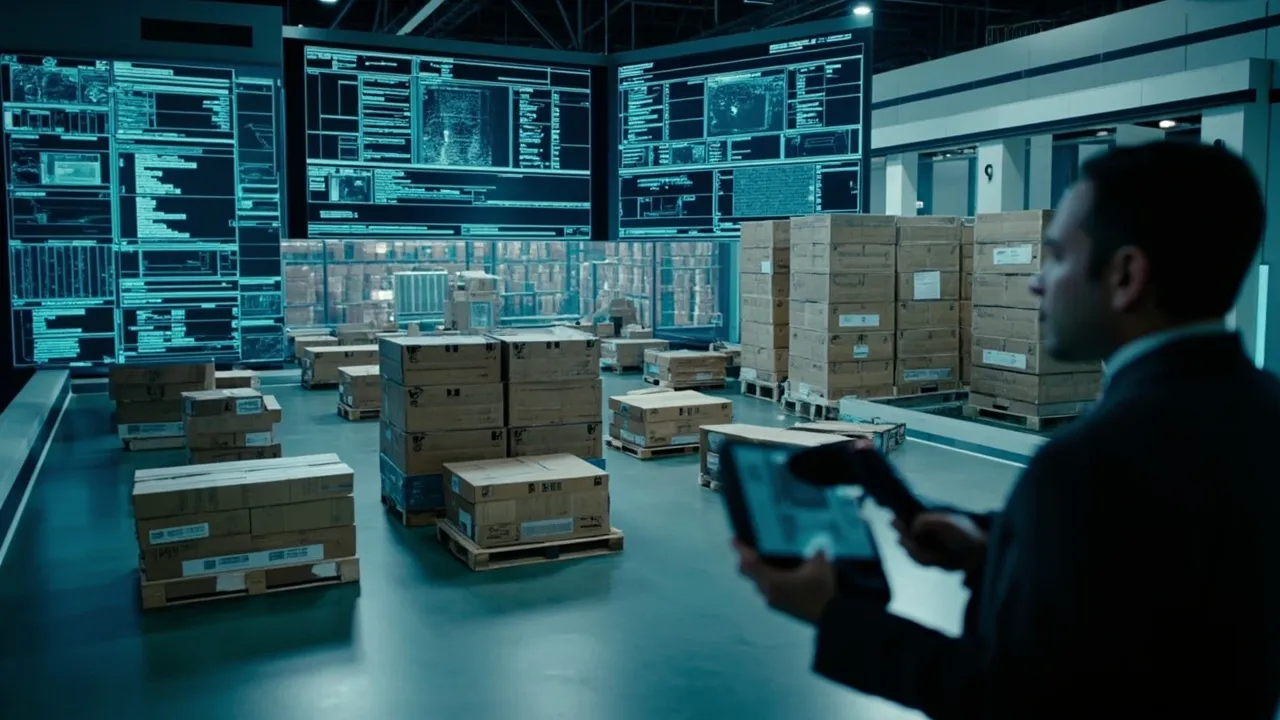
Hershey’s approach suggests something smarter. The company has invested in decision-intelligence software that gathers supply chain data, analyzes it, and creates alerts for operations managers. Per Supply Chain Dive, that system is being used across sourcing, manufacturing, delivery, and planning. That matters because inventory usually gets bloated at the handoff points between those functions.
If one team sees a problem late, the next team compensates with more stock. Multiply that across a network and inventory starts to look like an insurance policy for bad coordination.
Decision intelligence works when it shrinks reaction time
The most useful detail in the Hershey story is not the headline number. It is the operational logic underneath it.
Chief Supply Chain Officer Jason Reiman said the company sees “thousands of decisions” happening every day across a complex network. That is exactly right. Inventory does not rise because of one dramatic mistake. It rises because hundreds of small decisions happen too slowly or with incomplete information.
On the factory floor, Hershey said decision intelligence can notify workers when packaging is needed because production is running ahead of plan. That sounds minor until you think like an operator. If packaging does not arrive at the right moment, lines slow down, schedules wobble, and downstream fulfillment gets noisy. Companies then protect themselves with more finished goods inventory because they do not trust the flow.
Fix enough of those small decisions and you do not just improve productivity. You start earning the right to hold less stock.
That is the real promise of decision intelligence. Not prettier dashboards. Faster operational response.
Better sourcing signals can prevent inventory panic
The Hershey case also shows why inventory reduction is tied to procurement visibility.
Supply Chain Dive reported that Hershey is using technology to detect supply-and-demand changes tied to commodities such as cocoa, while combining hedging tools, market intelligence, and governance to manage volatility. In a separate report, the same publication noted Hershey is diversifying cocoa sourcing beyond Ivory Coast and Ghana into countries such as Ecuador and Brazil while strengthening supplier relationships and farmer programs to make the network more resilient.
That combination is important. When supply risk rises, many companies respond with the bluntest possible instrument: buy more, earlier, and pray. Sometimes that is necessary. Often it is just expensive fear masquerading as strategy.
If procurement teams have sharper visibility into commodity conditions, sourcing alternatives, and cost positions, they can make more targeted decisions. That reduces the need for blanket inventory increases. The point is not to eliminate buffers entirely. The point is to place them deliberately instead of smearing them across the network.
Spend visibility is more powerful than it sounds
One of the least glamorous parts of the Hershey story may be the most underrated. Reiman said the company is investing in spend visibility and category cost modeling so sourcing teams can understand their position relative to the market and make sharper decisions.
That sounds dry. It is not.
Spend visibility helps operators understand where costs are drifting, where supplier exposure is building, and where procurement actions might create downstream logistics consequences. If a team can see category-level cost movement earlier, it can adjust contracts, replenishment timing, and lane strategy before the problem turns into emergency inventory.
For freight-heavy businesses, this matters even more. Transportation cost spikes, packaging shortages, ingredient volatility, and supplier lead-time changes all show up eventually in inventory posture. The companies that connect those signals early can stay leaner without becoming reckless.
The other big number: 50% faster delivery-unit assembly
Hershey also said it automated delivery-unit assembly and cut lead time from conception to delivery by 50%. That stat deserves more attention than it is getting.
Lead time reduction is inventory reduction’s best friend. When businesses can move faster from planning to execution, they do not need as much stock to cover uncertainty. Faster assembly, better assortments, and tighter coordination with sales and operations all reduce the need for just-in-case inventory.
This is the part too many technology buyers miss. Inventory optimization does not come from a single inventory tool. It comes from compressing cycle times across the whole chain, from sourcing through production through fulfillment.
What logistics teams should steal from Hershey
First, stop treating inventory as a standalone KPI. It is the output of hundreds of upstream execution decisions.
Second, invest in alerts and workflows, not just reporting. If the system cannot tell people what changed and what needs action, it will not change inventory behavior.
Third, connect procurement visibility to logistics execution. Commodity signals, supplier resilience, transport timing, and replenishment policy belong in the same operating rhythm.
Fourth, go after lead time aggressively. The faster your network responds, the less inventory you need to hide its weaknesses.
Finally, be honest about what excess inventory is covering up. Usually it is not demand uncertainty alone. It is mistrust between functions, poor signal quality, and slow execution.
Hershey’s projected $100 million inventory reduction is a big claim. But the logic behind it is solid: better intelligence, better coordination, better timing, less waste.
That should get everyone’s attention.
If your team wants to connect planning, procurement, and transportation execution tightly enough to cut inventory without torching service, book a CXTMS demo and see how modern logistics orchestration closes the gap between signal and action.