GXO Opens Canadian Distribution Hub With Pandora: Why Global 3PL Expansion Is Accelerating Into New Nearshoring Markets

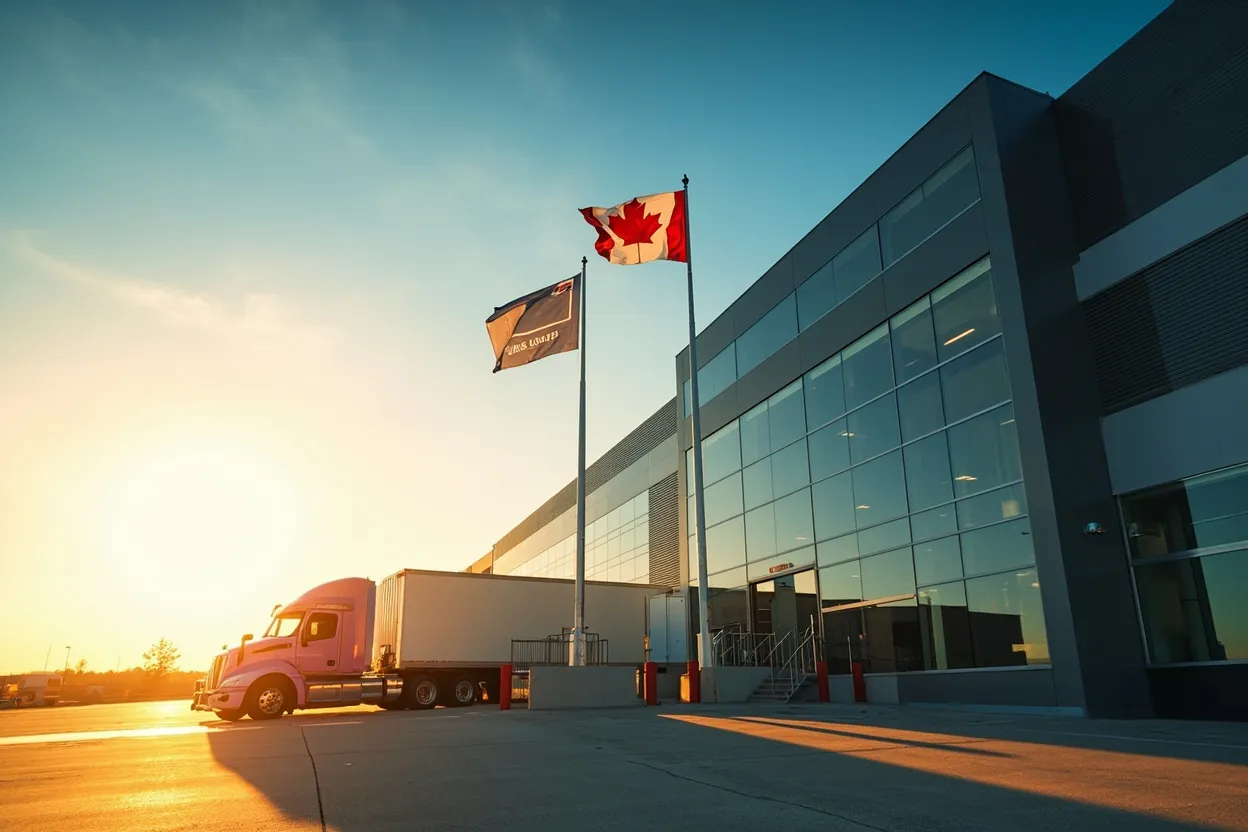
On April 2, 2026, GXO Logistics — the world's largest pure-play contract logistics provider — announced the opening of a new distribution center in Mississauga, Ontario, in partnership with Pandora, the world's largest jewelry brand. While a single facility opening might seem incremental, this expansion tells a much larger story about how global brands and their 3PL partners are fundamentally reshaping North American distribution networks in response to tariff uncertainty, trade policy volatility, and the relentless consumer demand for faster fulfillment.
The move deepens a global partnership that already spans distribution centers across the United States, the United Kingdom, and Continental Europe. More importantly, it reflects an industry-wide acceleration into Canadian fulfillment that is redefining how companies think about nearshoring — not just as a manufacturing strategy, but as a distribution one.
Why Canada, Why Now
The timing of GXO's Canadian expansion is far from coincidental. North American supply chains are under extraordinary pressure from overlapping trade disruptions. Tariff uncertainty between the U.S. and its trading partners has intensified, and companies are actively diversifying their fulfillment footprints to reduce exposure to any single trade corridor. Canada, with its USMCA advantages and proximity to major U.S. population centers, has emerged as a strategic distribution node.
As Michael Jacobs, President of Americas and Asia Pacific at GXO, stated in the announcement: "By establishing operations closer to the end customer and leveraging advanced technology solutions, we are reducing cross-border complexity while enabling a faster, more seamless and scalable customer experience."
This is the nearshoring playbook applied to distribution rather than manufacturing. Instead of routing all Canadian e-commerce orders through U.S.-based fulfillment centers — incurring cross-border delays, customs processing, and de minimis threshold complexities — brands like Pandora are building in-country fulfillment capabilities that serve local demand directly.
The Numbers Behind the 3PL Expansion Wave
The scale of global contract logistics growth underscores why moves like GXO's Canadian expansion are accelerating. The global 3PL market is estimated at $1.22 trillion in 2026 and is projected to reach $1.57 trillion by 2031, expanding at a CAGR of 5.27%. The contract logistics segment specifically is valued at $370.59 billion in 2026 and is forecast to reach $608.33 billion by 2032, growing at an 8.5% CAGR according to Research and Markets.
GXO itself is riding this wave aggressively. The company reported record quarterly revenue of $3.4 billion in Q3 2025, up 8% year over year, with organic revenue growth of 4%. New business wins hit $280 million in that quarter alone — up 24% year over year. By mid-2025, GXO had already secured over $700 million of incremental revenue for the year and an additional $300 million won for 2026.
These aren't the numbers of a company making cautious bets. GXO is expanding across more than 1,000 facilities totaling over 200 million square feet, with 150,000 team members globally. The Mississauga facility adds another node to what is becoming one of the most expansive contract logistics networks on the planet.
The Luxury Logistics Factor
The choice of Pandora as the partner for this Canadian expansion is itself instructive. Luxury and premium brands have distinct logistics requirements that elevate the complexity of 3PL relationships well beyond commodity warehousing:
- High-value inventory demands enhanced security protocols and chain-of-custody documentation
- Omnichannel fulfillment requires the same facility to service retail stores, e-commerce direct-to-consumer, and wholesale channels simultaneously
- Brand experience expectations mean packaging, presentation, and unboxing quality are fulfillment KPIs, not afterthoughts
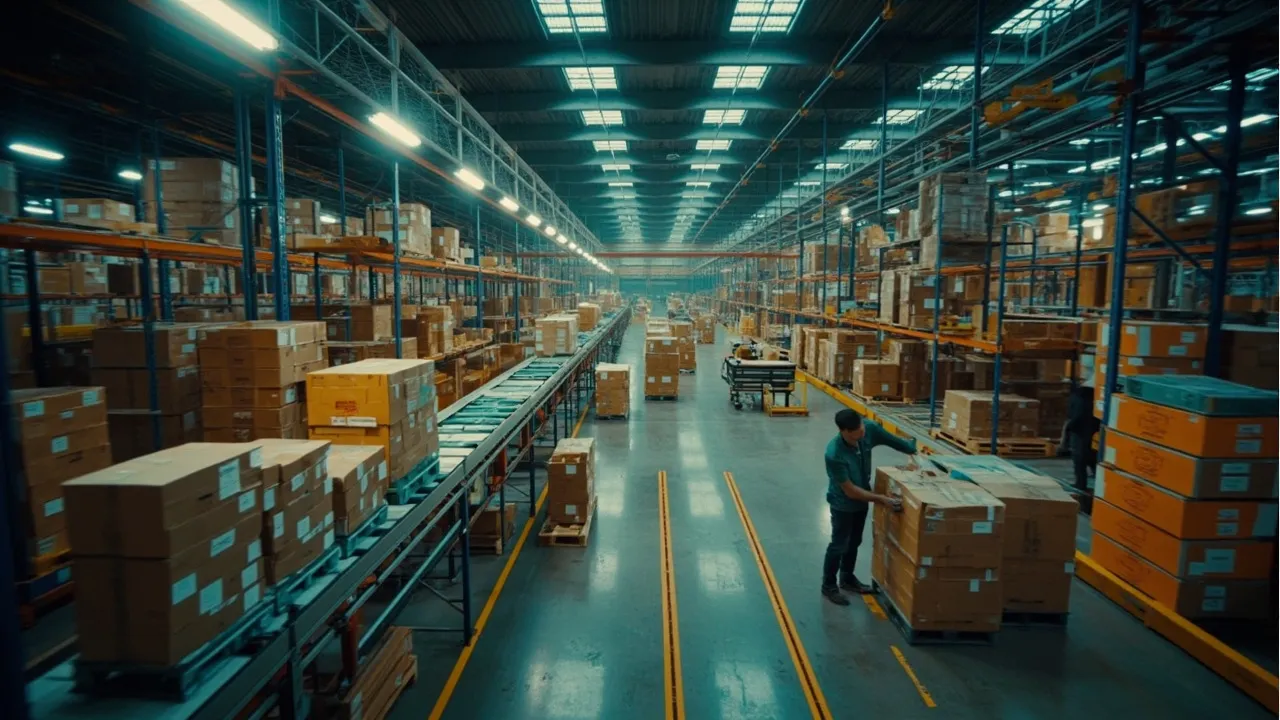
The Mississauga facility reflects these demands. GXO has equipped it with lighted picking systems for high-precision order assembly and video capture at pack-out for high-value shipments — technology that enhances accuracy, throughput, and visibility simultaneously. As Pandora's VP of Global Omni Operations Carsten Olsen noted, the site enables the brand to "serve our Canadian customers faster and more reliably while building a more agile and resilient supply chain network for the future."
This is the premium 3PL value proposition in action: not just warehousing and shipping, but technology-enabled fulfillment that meets the specific operational requirements of high-value product categories.
Nearshoring Is No Longer Just About Manufacturing
The traditional nearshoring conversation has centered on moving production closer to end markets — shifting manufacturing from Asia to Mexico or Central America, for instance. But the GXO-Pandora expansion highlights a parallel and equally significant trend: distribution nearshoring, where brands establish fulfillment infrastructure in secondary markets to reduce cross-border friction and improve service levels.
A recent industry study found that 84% of supply chain leaders expect to restructure their 3PL partnerships by 2026, driven by tariff exposure, technology gaps, and the need for greater geographic flexibility. The same research indicates that many retailers are accelerating regionalization efforts, building redundant fulfillment nodes across North America rather than concentrating operations in a single country.
Canada is a natural beneficiary of this trend. The country offers:
- USMCA trade framework that reduces tariff risk for goods moving within North America
- Proximity to major U.S. markets — Mississauga sits within a day's drive of over 100 million consumers
- Stable regulatory environment and strong transportation infrastructure
- Growing domestic e-commerce market that justifies localized fulfillment investment
For brands already operating through U.S.-based 3PLs, adding a Canadian distribution node doesn't replace existing infrastructure — it creates resilience. If trade policy shifts suddenly make cross-border fulfillment more expensive or slower, the Canadian facility can absorb demand that would otherwise face delays.
What This Means for Shippers
The GXO-Pandora model is a preview of where contract logistics is heading across the industry. Shippers evaluating their distribution strategies should consider several implications:
Multi-country fulfillment is becoming table stakes. Brands that serve Canadian customers exclusively from U.S. facilities face increasing cost and delivery disadvantages as competitors establish local fulfillment.
3PL partnerships are deepening, not just expanding. GXO's relationship with Pandora now spans four geographic regions. This kind of multi-market partnership creates operational efficiency that standalone, single-country 3PL relationships cannot match.
Technology is the differentiator. The Mississauga facility's lighted picking systems and video pack-out capture demonstrate that modern 3PL operations compete on technology, not just square footage and labor availability.
Cross-border visibility is critical. Managing inventory, orders, and shipments across multiple countries and fulfillment nodes requires real-time visibility platforms that can reconcile different regulatory environments, carriers, and service-level requirements.
How CXTMS Supports Multi-Country Distribution Operations
As brands expand into multi-country fulfillment networks, the complexity of managing transportation across borders, carriers, and regulatory frameworks multiplies dramatically. CXTMS provides the cross-border visibility and carrier management capabilities that shippers need to coordinate distributed 3PL operations effectively.
From multi-carrier rate comparison across Canadian and U.S. lanes to automated customs documentation workflows, CXTMS helps logistics teams maintain control as their distribution footprints grow. Whether you're managing a single domestic warehouse or coordinating fulfillment across North America, Europe, and beyond, having a unified transportation management platform ensures that expanding your network doesn't mean expanding your blind spots.
Ready to optimize your multi-country logistics operations? Request a CXTMS demo to see how real-time cross-border visibility can transform your distribution strategy.