Green Logistics in 2026: How Shippers Are Cutting Freight Emissions and Saving Millions

The green logistics market hit $1.63 trillion in 2025 and is growing at over 8% annually. By 2030, it will surpass $2.3 trillion. But this isn't just an environmental story — it's an economic one. Shippers who adopt sustainable freight strategies are discovering that cutting carbon and cutting costs often mean the same thing.
Freight Transport's Carbon Problem
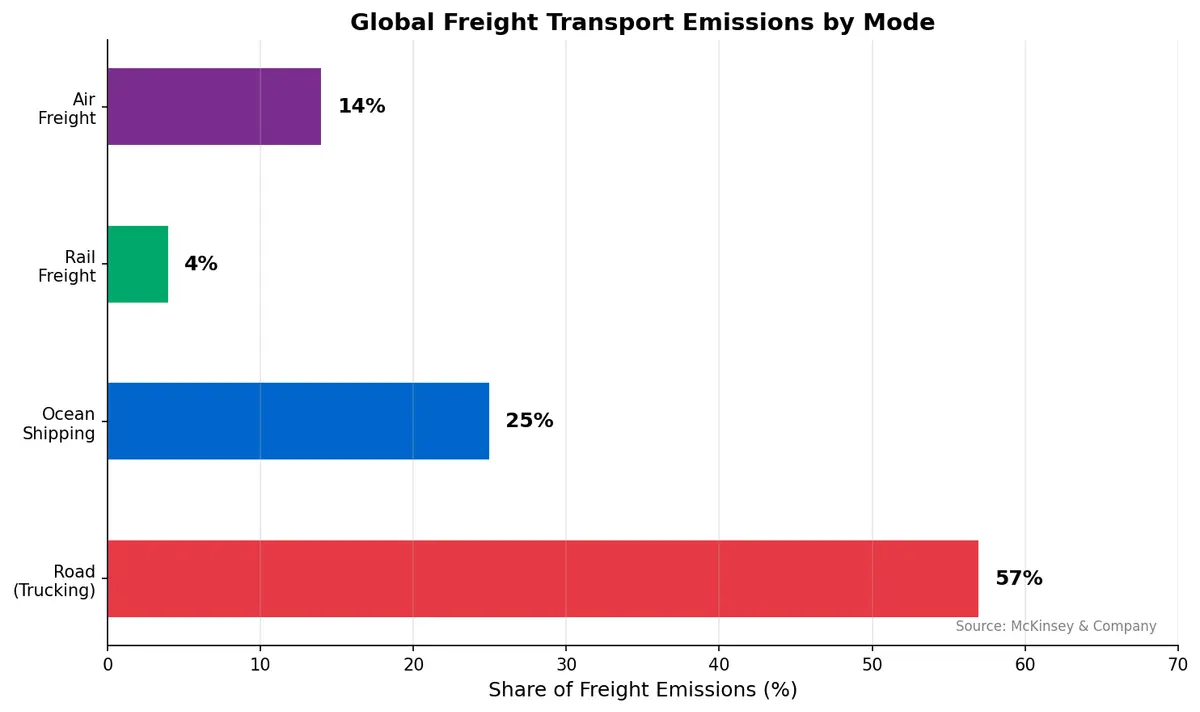
Logistics and freight account for roughly 7% of global greenhouse gas emissions, according to McKinsey & Company. Trucking alone drives 57% of all freight emissions, followed by air cargo at 14% and ocean shipping at 25%.
For shippers managing complex supply chains, these numbers aren't abstract — they translate directly into regulatory risk, rising carbon costs, and growing pressure from customers who demand sustainable sourcing.
The question is no longer whether to decarbonize freight operations, but how fast and at what cost.
A $2.3 Trillion Market Shift
The green logistics market is accelerating faster than most shippers realize. Mordor Intelligence projects the market will grow from $1.39 trillion in 2025 to $2.06 trillion by 2030 at an 8.29% CAGR. Grand View Research puts the 2030 figure even higher at $2.35 trillion.
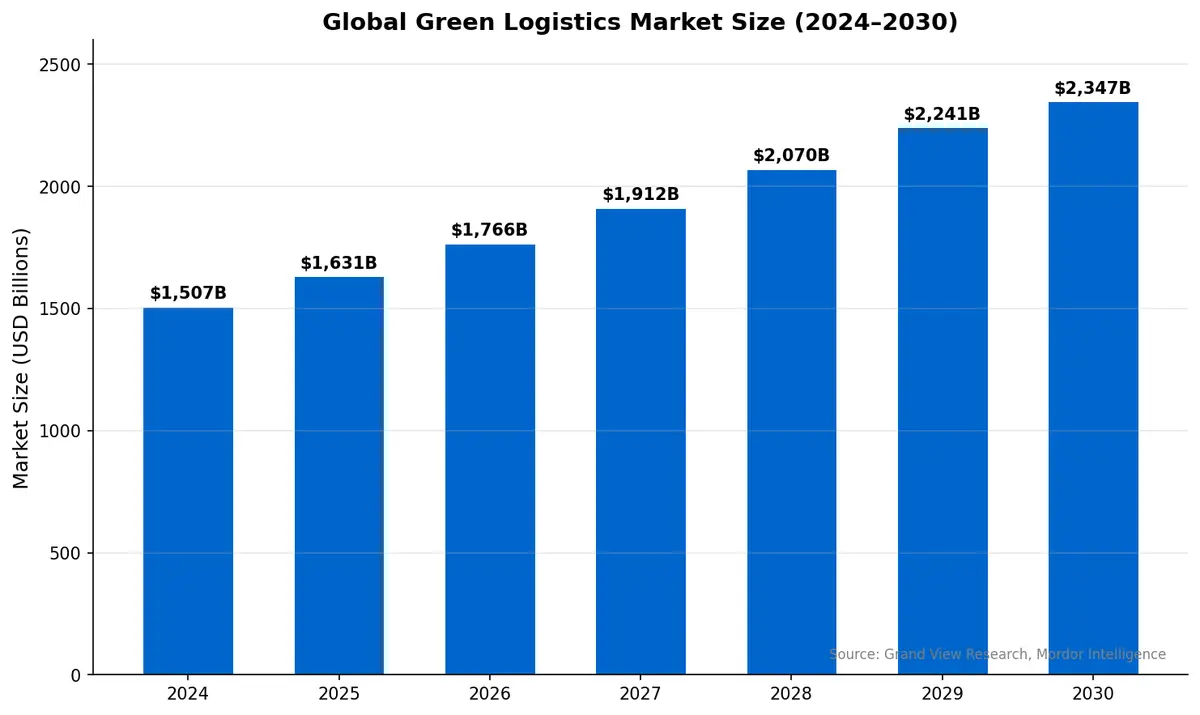
This growth is fueled by three converging forces:
- Regulatory pressure: The EU's Emissions Trading System now covers maritime shipping, and EPA SmartWay standards are tightening across North America.
- Customer mandates: Major retailers and manufacturers require Scope 3 emissions reporting from logistics providers.
- Cost alignment: Fuel-efficient and optimized operations are inherently cheaper to run.
Six Strategies That Cut Carbon and Costs
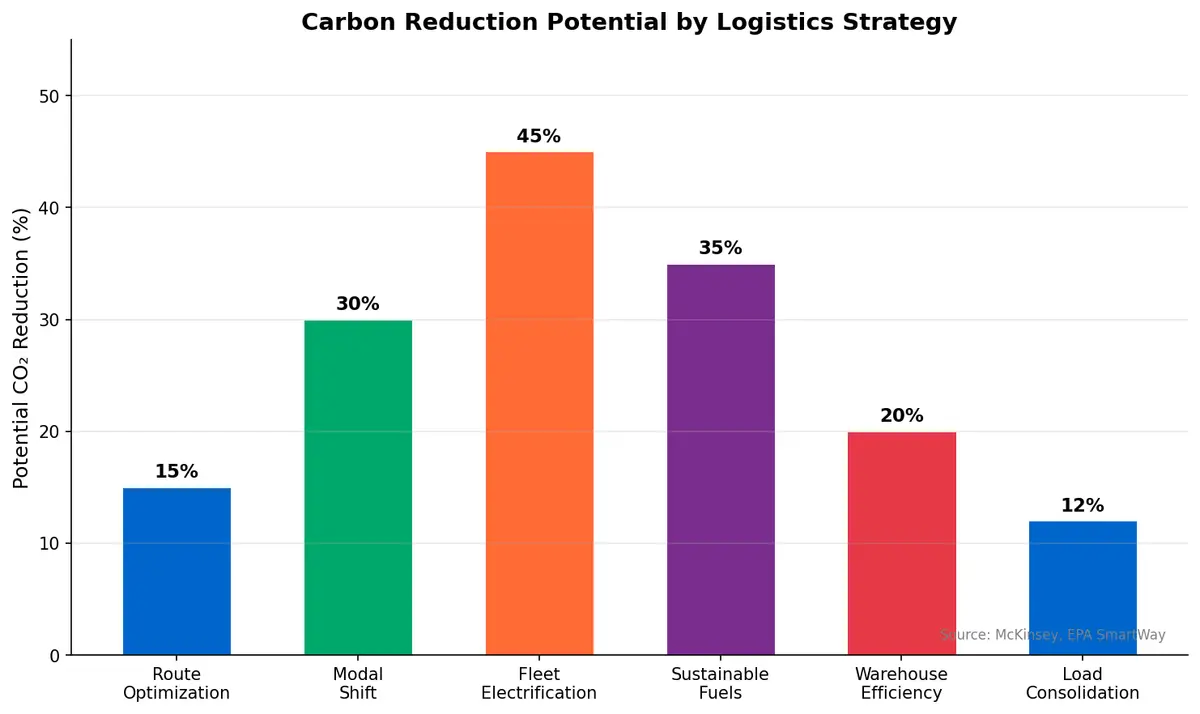
The best decarbonization strategies aren't sacrifices — they're optimizations. Here's where shippers are seeing the biggest returns:
1. Modal Shift (Up to 30% Reduction)
Shifting freight from road to rail or intermodal can slash emissions by up to 30%. McKinsey's research shows that rail freight is more than five times more emissions-efficient than road transport, and ocean shipping is even better.
For domestic shippers moving goods over 500 miles, converting even 20% of truckload volume to intermodal can yield six-figure annual savings while dramatically cutting carbon output.
2. Fleet Electrification (Up to 45% Reduction)
Electric vehicles are no longer a future promise. Last-mile delivery fleets are electrifying rapidly, with zero tailpipe emissions and lower total cost of ownership over a vehicle's lifetime. For regional distribution, electric Class 6 and 7 trucks are hitting price parity with diesel when fuel and maintenance savings are factored in.
3. Sustainable Aviation and Marine Fuels (Up to 35% Reduction)
Sustainable aviation fuel (SAF) and low-sulfur marine fuels are bridging the gap for modes that can't easily electrify. While SAF currently costs 2–4x conventional jet fuel, blending mandates in the EU are driving down premiums through scale.
4. Route Optimization (Up to 15% Reduction)
AI-powered route optimization eliminates empty miles, reduces idle time, and consolidates shipments. A modern TMS with machine learning capabilities can reduce fuel consumption by 10–15% through smarter routing alone — no fleet changes required.
5. Warehouse Energy Efficiency (Up to 20% Reduction)
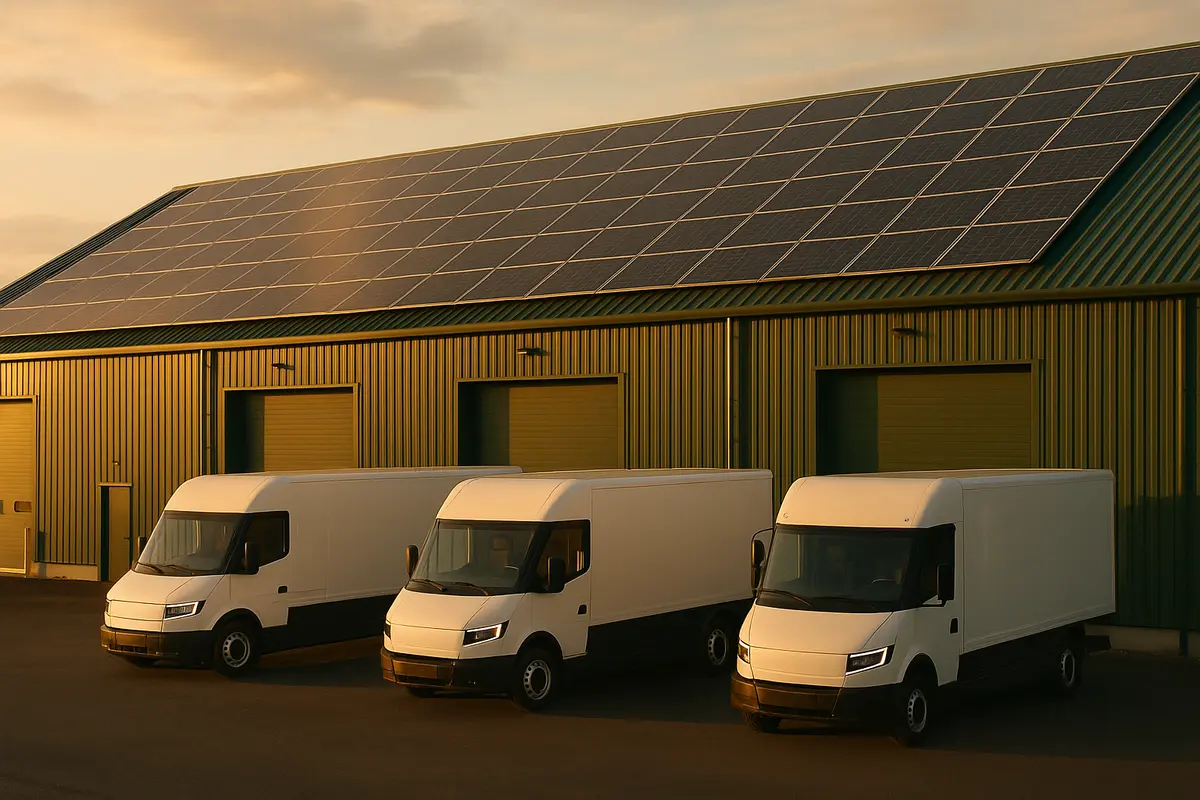
Solar-powered distribution centers, LED lighting, automated climate control, and energy-efficient material handling equipment can cut warehouse emissions by 20%. Many of these investments pay for themselves within 2–3 years.
6. Load Consolidation (Up to 12% Reduction)
Running full trucks instead of partial loads is the simplest sustainability win. Advanced load planning tools can increase average trailer utilization from 65% to over 85%, cutting per-unit emissions and freight spend simultaneously.
The Green Premium Is Shrinking
Front-running shippers have indicated they're willing to pay a 5–10% premium for sustainable logistics services, according to McKinsey interviews with major shippers. But the real story is that the premium is disappearing.
As electric vehicles reach cost parity, as route optimization software becomes standard, and as intermodal networks expand, the cost of green logistics is converging with — and in many cases falling below — conventional operations.
Shippers who wait for sustainability to become mandatory will pay more than those who adopt it while the competitive advantage is still available.
What a TMS Makes Possible
The common thread across every decarbonization strategy is data visibility. You can't optimize what you can't measure. A modern transportation management system provides:
- Carbon tracking per shipment — Know your Scope 3 emissions in real time, not quarterly estimates.
- Modal optimization — Automatically identify shipments that can shift from truck to rail or intermodal.
- Route intelligence — AI-driven routing that minimizes both miles and emissions.
- Carrier scoring — Evaluate carriers on sustainability metrics alongside cost and service.
- Consolidation engine — Maximize load utilization across your entire network.
The EPA's Supply Chain Guidance emphasizes that buyer-supplier collaboration is essential for emissions reduction — and a shared TMS platform is the infrastructure that makes that collaboration possible.
The Bottom Line
Green logistics isn't a cost center. It's a $2.3 trillion market opportunity where operational efficiency and environmental responsibility converge. The shippers winning this transition aren't choosing between profitability and sustainability — they're using one to drive the other.
The tools exist. The economics work. The only question is timing.
Ready to measure and reduce your freight emissions? Contact CXTMS for a demo of our sustainability-integrated TMS platform.