Freight Forwarders Have a Decision-Quality Gap, Not Just a Data Gap

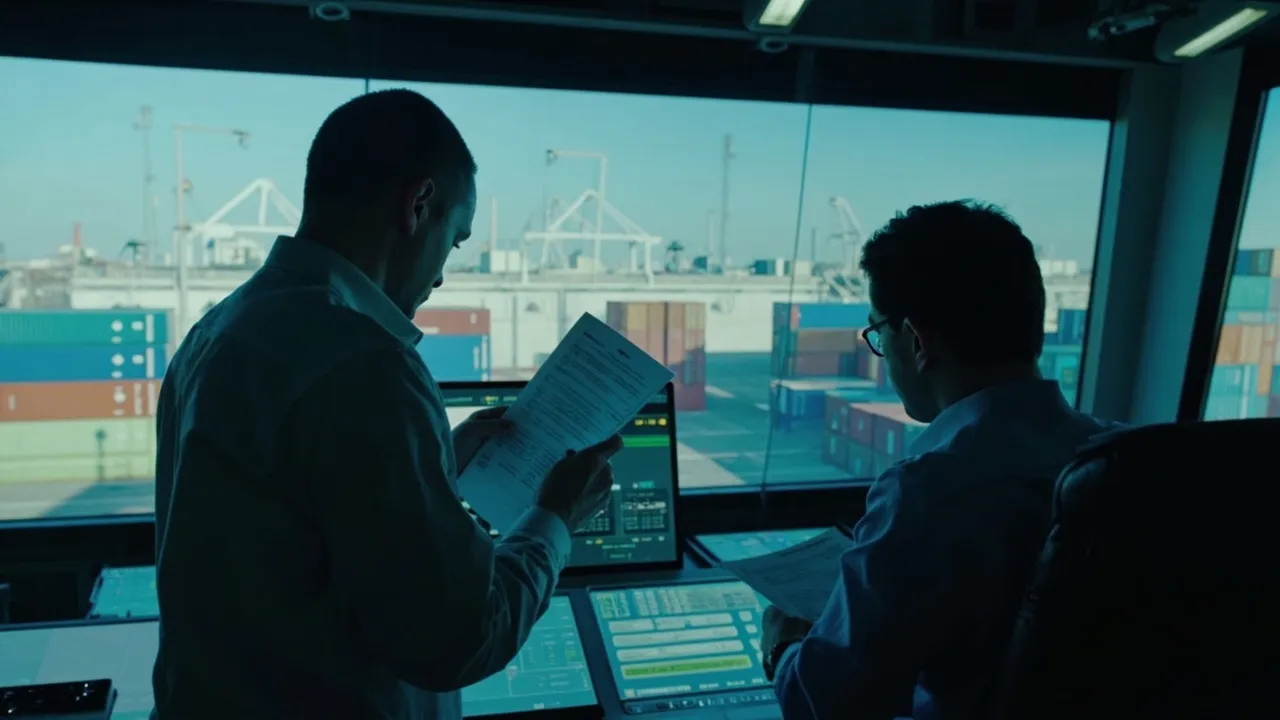
Freight forwarders and customs brokers do not need another reminder that the market is uncertain. They live it every day in booking changes, late documents, tariff questions, customs holds, carrier exceptions, and customers asking for answers before the file is complete.
The more useful question is why so much available data still fails to become a good decision.
Logistics Management reported on a Magaya and Adelante SCM study of 125 freight forwarders and customs brokers. The headline number is blunt: only 13% of respondents rated their organizations as excellent at data-driven operational decision-making. The same report found that two-thirds said uncertainty is higher than it was three years ago, while just 11% rated their organizations as highly integrated across customers, carriers, partners, and regulatory systems.
That is not only a technology adoption problem. It is an operating-design problem.
Forwarding teams already sit on top of booking data, commercial documents, customs entries, carrier events, warehouse milestones, invoices, customer commitments, and margin signals. The failure point is often the space between those signals. A file can contain data and still leave the operator guessing which exception matters first, who owns the next step, what the customer impact is, and whether the decision changes revenue, margin, or compliance exposure.
More Data Is Raising the Decision Burden
Regulatory pressure is making the problem more visible. Supply Chain Dive reported that U.S. Customs and Border Protection issued an interim final rule requiring more detailed data for U.S.-bound mail imports valued at $2,500 or less. The requirements include merchandise descriptions, all 10-digit Harmonized Tariff Schedule codes, and quantity and weight when they affect duties. Most elements take effect July 24.
CBP estimates the rule will lead to more than $100 million in additional duties each year. The filing party must be an owner, purchaser, or licensed customs broker, and the article notes that about half of qualified parties are currently brokers.
That kind of rule change creates more than a compliance checklist. It changes the decision workload for importers, postal operators, consolidators, brokers, and forwarding teams. A missing HTS code is no longer just a data-quality defect. It can delay entry, shift duty exposure, force broker involvement, create customer-service noise, and require a commercial decision about whether to hold, amend, reclassify, or escalate.
The same pattern shows up in duty recovery. Supply Chain Dive reported that CBP will move to all-electronic refunds starting Feb. 6, saying the change should reduce costs and delays, improve security, and simplify the process for importers, brokers, and refund recipients. The agency is also upgrading the Automated Commercial Environment portal and adding more automation around refund authorization and importer account applications.
That sounds like a process improvement, and it is. But it also raises the bar for the data behind every claim. Refund work depends on entry records, payer details, tariff status, supporting documents, customer authorization, and timing. The forwarder or broker that cannot connect those pieces quickly will still struggle, even if the government process is more digital.
The Gap Is Decision Quality
Forwarders often describe their pain as a data gap. In practice, the harder gap is decision quality.
Decision quality has five parts.
First, the event must be trusted. A late milestone, missing document, customs message, or carrier update needs a source, timestamp, shipment context, and confidence level. If operators do not trust the event, they work around the system.
Second, the exception needs ownership. A shipment file can pass through sales, operations, brokerage, warehouse, carrier management, accounting, and customer service. When ownership is unclear, the work slows down even when everyone can see the same problem.
Third, the team needs escalation thresholds. Not every missing document deserves management attention. Not every customs question should wait until the customer calls. Forwarders need rules for severity: service failure, regulatory risk, margin exposure, customer impact, and cutoff risk.
Fourth, the decision needs financial context. A mode change, storage charge, rework fee, customs correction, or duty exposure can turn a profitable shipment into a loss. Operators need to see the likely cost of action and inaction before they decide.
Fifth, the customer impact must be visible. The internal milestone is only half the story. The customer wants to know whether delivery, clearance, inventory availability, production, or a promised sale is affected.
When those five elements are missing, more dashboards do not fix the workflow. They simply give people more places to look while the decision remains informal.
What Better Forwarding Decisions Look Like
Forwarders and brokers should treat decision support as an operating layer above shipment visibility.
Start with standard event definitions. "Document received," "entry ready," "carrier confirmed," "customs hold," "released," and "delivery scheduled" should mean the same thing across teams and branches. If every office uses a slightly different interpretation, integration will not produce a clean operating picture.
Then map exception ownership by situation, not department. A classification issue belongs to brokerage. A missed sailing may belong to ocean operations. A customer-driven hold may belong to account management. A margin-impacting recovery plan may need finance approval. The workflow should route the decision to the owner automatically, with enough context to act.
Next, define escalation thresholds before the shipment is in trouble. A low-value delay on a flexible shipment should not receive the same treatment as a customs hold on critical inventory. The system should distinguish between routine noise and decisions that affect compliance, cost, or customer commitments.
Forwarders should also connect operational events to margin. If a shipment is delayed, the team should know whether storage, detention, demurrage, rebooking, duty correction, or premium transport is likely. Decision speed matters, but speed without financial awareness can be expensive.
Finally, customer communication should be generated from the same operating facts that drive the internal workflow. Customers do not need every event. They need the current status, the reason, the impact, and the next committed action.
The Role of a Decision-Support TMS
For freight forwarders and customs brokers, a transportation management system should be more than a shipment database. A database records what happened. A decision-support layer helps the team decide what to do next.
That means connecting shipment milestones, customs data, document status, carrier events, customer commitments, and financial exposure into one operational view. It also means creating workflows that assign owners, trigger escalations, preserve audit trails, and show the cost and service consequences of each exception.
The Logistics Management findings make the case clearly. If only 13% of forwarders and customs brokers rate their data-driven operational decisions as excellent, and only 11% see themselves as highly integrated across the systems that shape those decisions, the industry does not just have a visibility problem. It has a decision-quality problem.
CXTMS is built for that layer of freight execution. It helps forwarding teams connect shipment data, document status, customs milestones, exception ownership, customer communication, and financial visibility so operators can move from "what happened?" to "what do we do next?" faster. If your forwarding team has more data than decision confidence, schedule a CXTMS demo to see how CXTMS helps turn freight visibility into operational control.