DSV's Rockford Air Cargo Bypass Turns Secondary Airports Into a Reliability Strategy

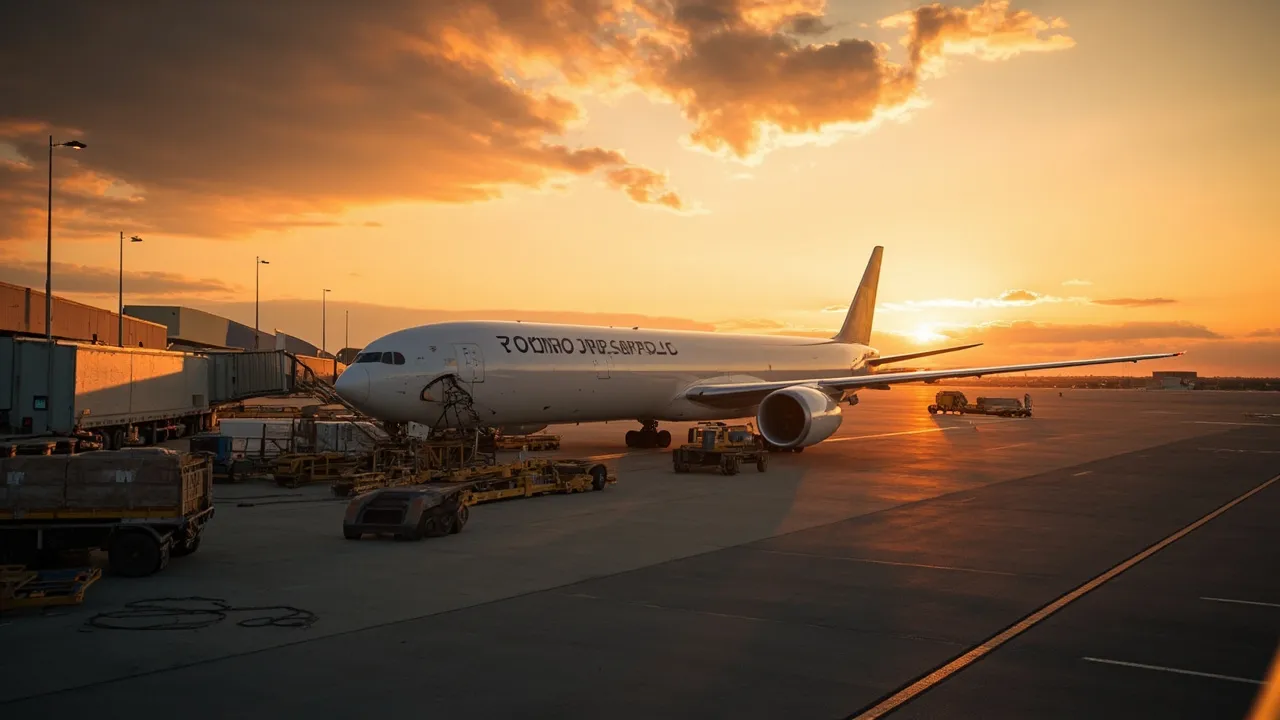
The airport with the shortest truck transfer is not always the gateway that delivers freight fastest. When ramp congestion, handling queues, customs delays, and unreliable pickup windows accumulate, a secondary airport can outperform the primary hub on door-to-door service.
DSV is putting that idea into practice at Chicago-Rockford International Airport (RFD). The forwarder has expanded a charter network that avoids Chicago O'Hare, roughly 70 miles to the east, while still serving the Midwest market. The strategy turns airport selection from a default routing choice into a measurable reliability decision.
Rockford is becoming a network node, not an overflow field
DSV began weekly Shanghai-Rockford charter flights in November and added an inbound service from Luxembourg in June. Its newest operation adds a weekly Seoul service through the end of August. According to FreightWaves' report on the expansion, Atlas Air operates the flights, including Boeing 777 and 747 freighters, and DSV now accounts for eight flight operations per week through RFD. Healthcare customers are a primary source of demand.
That schedule matters because a secondary gateway only becomes strategically useful when capacity is repeatable. A one-off diversion can solve an emergency; recurring flights, predictable ground handling, and onward truck connections create a routable product. DSV uses a multi-client terminal operated by Menzies Aviation to move cargo between aircraft and trucks serving its local warehouses. The company also plans a Chennai connection later in 2026 to support technology-sector demand.
Rockford has enough scale to support that role. It handled 498,432 metric tons of cargo in 2025, a 10.8% annual increase, and ranked 19th in North America for cargo volume. The FAA placed it 12th among U.S. airports by landed weight. UPS, Amazon Air, and Maersk Air Cargo already anchor substantial operations there.
This is not a choice between a major airport and an empty runway. It is a choice between two different operating systems.
Measure total elapsed time, not distance alone
O'Hare's connectivity and proximity to Chicago-area facilities are formidable. Rockford adds a longer road leg for many destinations. FreightWaves places RFD about 70 miles west of O'Hare, so the bypass must recover enough time and predictability elsewhere to justify that transfer.
The comparison should begin when the aircraft approaches the airport and end when freight reaches the consignee—not when wheels touch the runway. Track these components for each gateway:
- airborne schedule variance and probability of a slot-related delay;
- taxi time, parking-stand availability, and time from landing to first unload;
- breakdown, documentation, customs-release, and freight-availability timestamps;
- truck check-in, loading, gate-out, road transit, and final delivery;
- handling, storage, transfer, toll, fuel, and recovery costs.
RFD officials say carriers can save up to 25 minutes in taxi time compared with O'Hare. Less-crowded roads and direct access to airside cargo terminals can produce further gains after landing. Those savings must be tested shipment by shipment against the additional truck distance.
Average transit time is not enough. If one gateway averages six hours but frequently takes 14, while another averages seven hours and rarely exceeds nine, urgent healthcare or production freight may be better served by the second option. Compare the 90th- or 95th-percentile result, missed-delivery probability, and recovery time alongside the mean.
Use four tests before selecting a secondary gateway
First, test capacity control. A forwarder-controlled charter provides greater authority over schedules, allocation, and routing than space tendered across multiple commercial airlines. It is most valuable when shipment volume is stable enough to support regular lift or when the cost of a capacity failure is high.
Second, test ground handling and customs readiness. Confirm hours of operation, staffing, screening capability, cold-chain infrastructure, broker coverage, inspection procedures, and the airport's record with the relevant commodity. A fast ramp does not help if freight waits for a specialist release or temperature-controlled pickup.
Third, test inland reach. Model actual destinations, appointment windows, driver availability, and backhaul options. Rockford can be attractive for western Chicago, Wisconsin, Iowa, and other Midwest flows, but every lane has a different breakeven point. Include disruption cases such as snow, construction, and a late-night release.
Fourth, test network resilience. The secondary airport should be a planned alternative with rates, handlers, brokers, and trucking capacity established in advance. SupplyChainBrain argues that resilience comes from creating options before disruption and assessing service, capacity, and cost across a portfolio rather than purchasing each mode in isolation. That same principle applies to gateways: optionality is operational only when it can be activated.
Preserve an airport-to-airport scorecard in CXTMS
The best gateway choice changes with commodity, season, flight schedule, and final destination. CXTMS can retain each option as a complete door-to-door route rather than comparing airport rates in isolation.
For every routing, record the origin airport, operating carrier, aircraft, planned arrival, destination gateway, handling agent, customs broker, recovery facility, truck lane, appointment, and final delivery requirement. Store quoted and actual charges for airfreight, handling, screening, storage, customs, transfer, fuel, tolls, and detention.
Milestones should include landing, on-block, first unload, breakdown complete, documents received, customs released, freight available, truck checked in, gate-out, and delivered. Once those events are consistent, teams can compare median and tail transit time, milestone variance, cost per kilogram, exception frequency, and on-time delivery by airport option.
Create decision rules around the scorecard. A shipment might favor RFD when charter allocation is confirmed, the handler can meet the commodity requirement, and its predicted door-to-door arrival beats O'Hare at the required confidence level. It might remain at O'Hare when a connecting flight, specialized facility, or much shorter local delivery outweighs congestion risk.
Reliability is a product shippers can buy
DSV's Rockford network shows that a secondary airport is not merely a backup for a crowded hub. With committed aircraft, capable handling, customs support, and coordinated trucking, it can become the primary design for selected flows.
The right question is not whether Rockford is universally better than O'Hare. It is which gateway produces the best total result for a specific shipment—and whether the evidence is captured well enough to make that choice again.
Want to compare gateway cost, milestones, and service risk in one workflow? Request a CXTMS demo and build airport alternatives into every airfreight plan.