EU ETS2 Extends Carbon Pricing to Road Transport: What European Freight Cost Increases Mean for Global Shippers

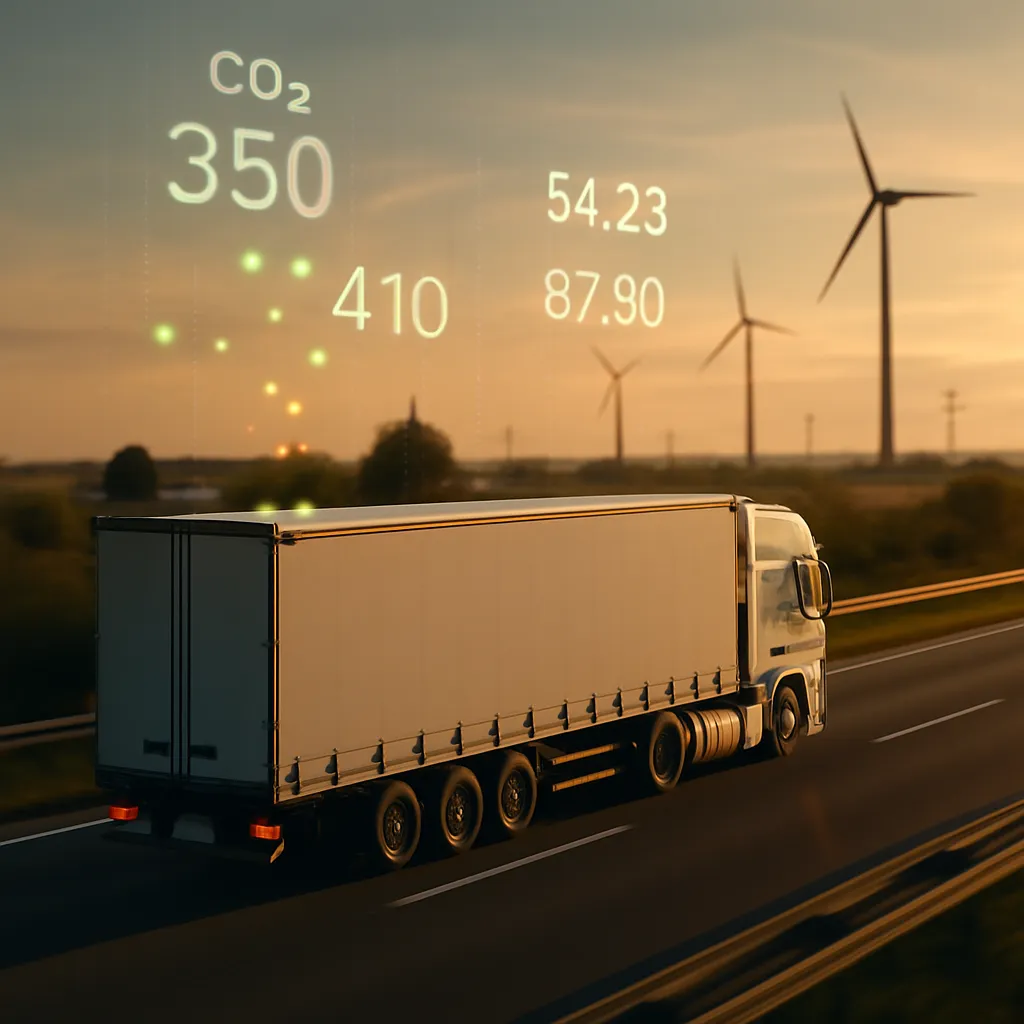
For decades, European road freight operated outside the reach of carbon pricing. Maritime shipping entered the EU Emissions Trading System in 2024. Aviation has been covered since 2012. But trucking—responsible for roughly 26% of the EU's total transport emissions—remained untouched by cap-and-trade mechanisms.
That era ends in 2027.
The EU's second Emissions Trading System, known as ETS2, will extend carbon pricing to road transport, buildings, and small industry for the first time. For any shipper moving goods by truck across Europe, this regulation represents a structural shift in the cost of doing business—one that demands immediate planning.
What Is ETS2 and How Does It Work?
ETS2 is a separate emissions trading system created under the EU's Fit for 55 legislative package. Unlike the original ETS, which targets power plants, heavy industry, and shipping, ETS2 operates upstream: it applies to fuel distributors rather than individual trucking companies or fleet operators.
Here's the mechanism: fuel suppliers must purchase carbon allowances for every tonne of CO₂ embedded in the diesel and gasoline they sell. Those costs then flow downstream through fuel prices to carriers and, ultimately, to shippers.
The European Commission has set the 2027 cap at 1,036 million allowances (1,036 MtCO₂), calculated from average emissions in the covered sectors between 2016 and 2018. Starting in 2028, that cap will decline by 5.1% annually, tightening the supply of allowances and driving prices upward over time.
To prevent price shocks in the early years, the system includes a price stability mechanism: if carbon prices exceed approximately €45 per tonne (in 2020 prices, roughly €58 in 2027 terms), additional allowances are released from a market reserve. But this safety valve is temporary—and as Reuters reported on the EU's price control plans for the new carbon market, expert projections suggest allowance prices will climb to €100–€150 per tonne by 2030–2031 as the cap tightens.
The Timeline Shippers Must Understand
ETS2 is not a distant future concern. The implementation is already underway:
- 2025: Monitoring and reporting obligations begin. Fuel suppliers across all 27 EU member states must track and report emissions data.
- 2027: Carbon pricing launches. First allowance auctions begin with a 30% higher volume to ease market liquidity.
- 2028: Annual cap reductions of 5.1% begin, progressively tightening supply.
- 2030–2031: Allowance prices projected to reach €100–€150 per tonne as caps bite harder.
Member states are currently transposing the ETS2 directive into national law—a process that adds country-specific variations in implementation and enforcement.
How Much Will European Freight Actually Cost More?
This is the question keeping logistics managers awake. The math is straightforward but sobering.
At a carbon price of €140 per tonne of CO₂, diesel prices would increase by approximately 22.6%, according to analysis from LOTS Group. Given that fuel costs typically constitute 30% of total road freight expenses, the cascading impact on total freight rates is significant.
Industry estimates from Logistics Viewpoints suggest total freight costs could rise by 3 to 8 percent, depending on:
- Fleet efficiency: Carriers operating newer Euro VI-compliant trucks will absorb less cost than those running aging diesel fleets.
- Route structure: Longer hauls through multiple member states accumulate more carbon cost.
- Regional energy mix: Countries with higher renewable energy penetration may see smaller fuel price increases.
- Modal split: Shippers already using intermodal rail-road combinations will face lower per-tonne carbon costs.
These increases will arrive as new carbon surcharges on freight invoices—a line item that didn't exist before and that will grow year over year as the cap tightens.
The Germany Factor: Where ETS2 Meets Existing Carbon Tolls
Germany adds a particularly complex layer. The country already implemented a CO₂-based truck toll (Maut) in December 2023, adding approximately €200 per tonne of CO₂ to heavy goods vehicle toll rates. When ETS2 launches in 2027, German carriers will face dual carbon pricing: the national Maut surcharge plus the EU-wide ETS2 cost embedded in fuel prices.
Austria and the Czech Republic have similar CO₂-linked toll structures. For shippers routing freight through Central Europe—which accounts for the bulk of intra-EU truck traffic—the compounding effect creates a pricing environment where carbon costs could represent 8–12% of total freight spend on affected lanes by 2030.
The RoRo and Multimodal Intersection
ETS2 doesn't operate in isolation. Shippers using Roll-on/Roll-off (RoRo) services that combine short-sea shipping with road transport face carbon costs from two separate systems: the original ETS covering maritime legs and ETS2 covering the road segments.
A truck moving goods from Spain to the UK via a RoRo ferry, for example, would now carry carbon costs on the road haul to port (ETS2), the sea crossing (ETS1), and the onward road delivery (ETS2 if within EU, or UK ETS if applicable). Modeling these layered costs requires granular visibility into each transport segment.
The Social Climate Fund: Where the Revenue Goes
Unlike many regulatory programs, ETS2 comes with a massive redistribution mechanism. The EU has established a Social Climate Fund that will mobilize at least €86.7 billion between 2026 and 2032 to support vulnerable households and micro-enterprises affected by carbon pricing.
For the freight industry, this means a portion of the carbon costs paid by carriers and shippers will fund clean transport investments—including electric vehicle charging infrastructure, alternative fuel stations, and public transport improvements. The long-term effect should accelerate the availability of zero-emission freight options, but the short-term reality is higher costs.
Strategic Playbook for Global Shippers
The shippers who will navigate ETS2 most effectively are those who start modeling carbon costs into their European freight budgets now—not in 2027 when the bills arrive.
1. Audit Your European Carrier Mix Assess each carrier's fleet age, fuel efficiency, and decarbonization roadmap. Carriers investing in LNG, biofuels, or electric trucks will offer lower carbon-cost exposure.
2. Model Carbon Scenarios by Lane Map your European freight lanes and apply carbon cost projections at €45, €100, and €150 per tonne to understand your exposure range. Lanes through Germany, Austria, and the Czech Republic need special attention due to compounding toll structures.
3. Accelerate Modal Shift Analysis Rail freight in Europe generates roughly 75% fewer emissions per tonne-kilometer than road transport. ETS2 makes the economics of intermodal solutions more compelling than ever for lanes where transit time allows.
4. Negotiate Carbon-Transparent Contracts Insist on freight contracts that itemize carbon surcharges separately from fuel surcharges. This transparency enables benchmarking across carriers and prevents cost padding.
5. Benchmark Carrier Carbon Performance As ETS2 matures, the carbon intensity of your carrier base becomes a direct cost driver. Lower-emission carriers will offer structurally lower freight rates—a reversal of the historical dynamic where sustainability was a premium rather than a savings opportunity.
How CXTMS Helps Model European Carbon Costs
CXTMS provides the analytical framework shippers need to navigate ETS2's impact across their European freight networks. Our carbon cost modeling tools allow you to overlay ETS2 price scenarios onto existing lane data, compare carrier emissions profiles, and identify modal shift opportunities that reduce both carbon exposure and total freight spend.
With carbon pricing now covering 75% of EU greenhouse gas emissions from 2027 onward, the era of carbon-blind freight procurement is over. The question isn't whether ETS2 will affect your European logistics costs—it's whether you'll be prepared when it does.
Request a CXTMS demo → to see how our European freight analytics can help you model ETS2 cost scenarios and optimize your carrier and modal mix for a carbon-priced future.