The Containerized Green Hydrogen Economy: How H2 Transport Logistics Is Creating a New Billion-Dollar Freight Category

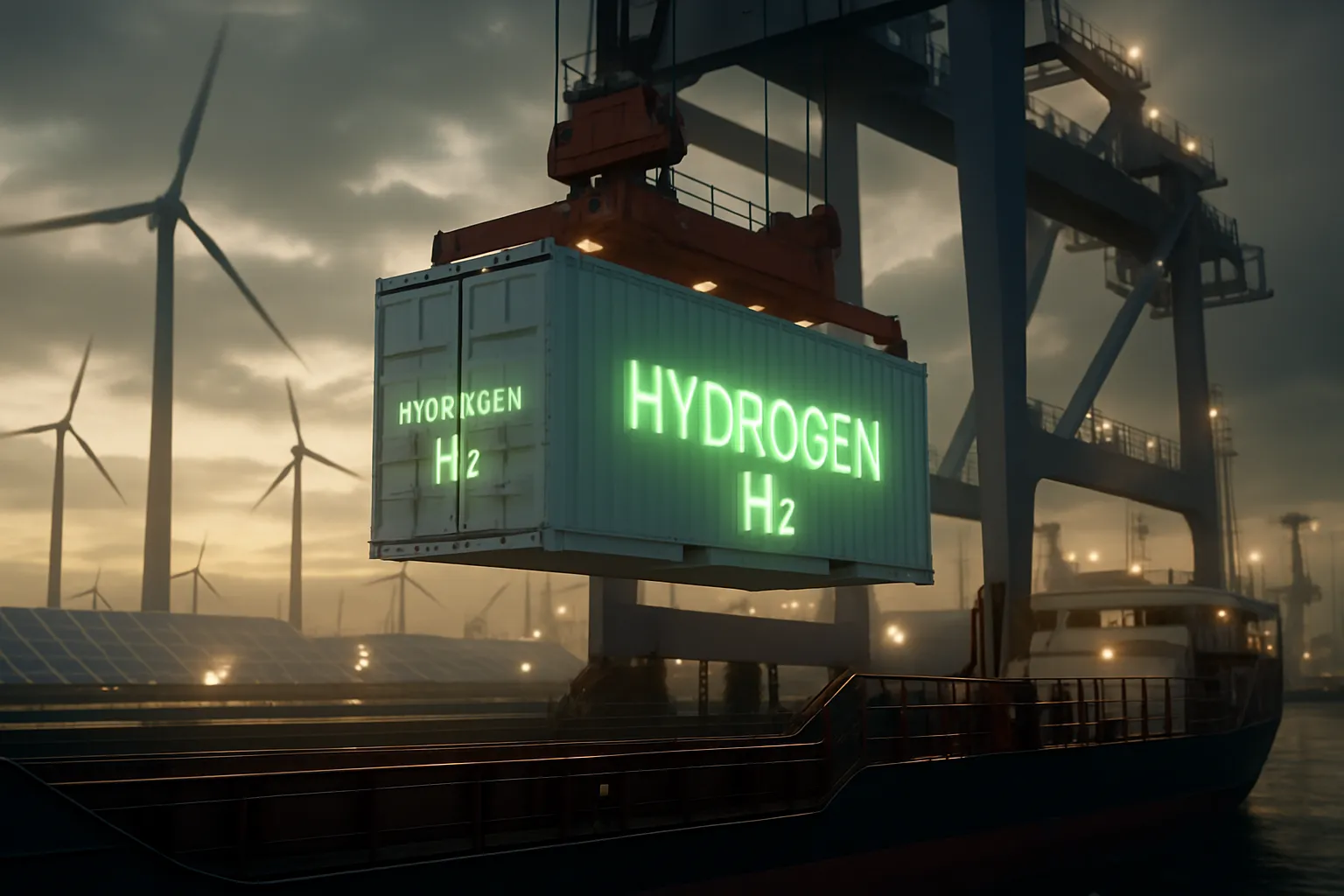
Hydrogen has been in the logistics conversation for years — mostly as a fuel for trucks and forklifts. But in 2026, a fundamentally different hydrogen story is emerging: hydrogen as cargo. As green hydrogen production scales faster than pipeline infrastructure can keep up, the logistics industry is staring at a brand-new freight category that demands specialized containers, handling protocols, and supply chain expertise.
The hydrogen storage tanks and transportation market is valued at approximately $1.6 billion in 2026 and is projected to reach over $21 billion by 2036, according to recent industry analyses. That kind of growth doesn't just create opportunity — it reshapes how carriers, 3PLs, and freight brokers think about hazmat logistics, specialized equipment, and new revenue streams.
Why Moving Hydrogen Is Fundamentally Different From Other Freight
Hydrogen is the lightest element in the universe, and that creates a logistics nightmare. At standard atmospheric pressure, you'd need a tank the size of a house to hold the energy equivalent of a single diesel tank. Hydrogen molecules are so small they can permeate through steel, embrittling metals over time. It's colorless and odorless, making leak detection challenging. And its flammability range — 4% to 75% concentration in air — is far wider than natural gas.
These physical properties mean that traditional tanker trucks, railcars, and ISO containers simply cannot handle hydrogen without extensive modification. Every link in the supply chain, from production facility to end user, requires purpose-built equipment and rigorous safety protocols governed by DOT, IMO, and IATA hazmat classifications.
Four Ways to Move Hydrogen: The Transport Modality Landscape
The industry has converged on four primary methods for transporting hydrogen, each with distinct logistics implications:
1. Compressed Gas Tube Trailers
The most established method uses steel or composite cylinders pressurized to 200–500 bar. Modern tube trailers carry roughly 300–1,000 kg of hydrogen per load. They're ideal for regional distribution within 200 miles of a production hub, but energy density remains low — a full trailer carries the energy equivalent of just 10% of a conventional fuel tanker.
2. Liquid Hydrogen (LH2) Tankers
Cooling hydrogen to –253°C converts it to a cryogenic liquid with significantly higher energy density. A single LH2 tanker truck can carry 4,000 kg — roughly four times more than compressed gas. However, the cryogenic infrastructure is expensive, and boil-off losses of 0.3–1% per day mean the logistics clock is always ticking. This method dominates long-haul and port-to-port trade corridors.
3. Ammonia Conversion (NH3)
Converting hydrogen to ammonia for transport, then cracking it back to H2 at the destination, leverages existing global ammonia shipping infrastructure. With 17.6% hydrogen content by weight and established maritime handling protocols, ammonia is emerging as the leading candidate for intercontinental hydrogen trade. In June 2025, AM Green and the Port of Rotterdam Authority signed a memorandum of understanding to develop a green hydrogen supply chain from India to Northwestern Europe, targeting up to 1 million tons of annual green ammonia exports.
4. Liquid Organic Hydrogen Carriers (LOHCs)
LOHC technology — championed by companies like Honeywell — binds hydrogen to organic liquids like dibenzyl toluene (DBT) or methylcyclohexane (MCH). The result is a liquid that can be transported at ambient temperature and pressure using existing tank truck and rail infrastructure. While the reconversion process consumes energy, LOHCs enable hydrogen transport using conventional logistics equipment, removing the need for cryogenic or high-pressure systems entirely.
The Containerized Revolution: ISO Tanks Change the Game
The real inflection point for hydrogen freight is the emergence of ISO tank containers designed specifically for H2 transport. These standardized 20-foot containers can move seamlessly across truck, rail, and ocean vessel — the same intermodal advantages that revolutionized global trade decades ago.
Multiple companies are now manufacturing hydrogen-rated ISO tank containers for both compressed gas and cryogenic liquid transport. This standardization is critical because it transforms hydrogen from a point-to-point pipeline commodity into a flexible, multimodal freight product that existing logistics networks can handle.
For 3PLs and freight brokers, this creates a new booking category. For carriers, it means potential equipment investments. For ports, it demands new handling infrastructure and safety zones.
Market Projections: Why This Freight Category Is Exploding
The math behind hydrogen transport growth is straightforward: electrolyzer buildouts are massively outpacing pipeline infrastructure.
According to the IEA's Global Hydrogen Review 2025, global installed water electrolyzer capacity reached 2 GW in 2024, with more than 1 GW added in the first half of 2025 alone. Announced electrolyzer capacity at final investment decision (FID) stands at 20 GW globally. China accounts for 65% of installed capacity, but Europe, India, the Middle East, and North America are accelerating deployments rapidly.
All that new production capacity needs transportation. While hydrogen pipelines are being planned — with 2,700 km of new pipeline projects announced globally — construction timelines stretch 5–10 years. In the interim, every kilogram of green hydrogen moving from production site to consumption market will travel by truck, rail, or ship in specialized containers.
Spain alone has committed $9.6 billion in hydrogen infrastructure investment. Spanish energy company Moeve recently approved a major green hydrogen project involving more than €1 billion in investment, with Abu Dhabi's Masdar as a minority partner. In the United States, the $6 billion HIF Global facility in Matagorda County, Texas will produce 1.4 million tons per year of e-methanol from green hydrogen.
Regulatory Framework: Navigating the Hazmat Landscape
Hydrogen transport falls under stringent hazmat regulations across every mode:
- Road (DOT): Class 2.1 flammable gas for compressed hydrogen; cryogenic liquid classification for LH2. Drivers require hazmat endorsements, and routes must avoid restricted tunnels and bridges.
- Maritime (IMO): The International Maritime Dangerous Goods (IMDG) Code classifies hydrogen under Class 2.1 with specific container certification, stowage, and segregation requirements.
- Air (IATA): Extremely limited air transport permissions, primarily for small research quantities. Commercial-scale air hydrogen freight remains impractical.
- Rail (AAR/FRA): Tank car specifications for compressed and liquefied hydrogen, with speed restrictions and placement rules within train consists.
For logistics providers, this regulatory complexity is both a barrier to entry and a competitive moat. Companies that invest in hydrogen transport compliance, driver training, and specialized equipment early will own a new market segment.
What This Means for Carriers, 3PLs, and Shippers
The emergence of hydrogen as a freight category creates concrete implications:
For Carriers: Equipment investment decisions are coming. Compressed gas tube trailers, cryogenic tankers, and hydrogen-rated ISO containers represent new capital allocation choices. Carriers serving regions with electrolyzer buildouts — Texas, the Gulf Coast, Northern Europe, Saudi Arabia, Western Australia — should evaluate market timing now.
For 3PLs: Hydrogen logistics expertise is a differentiator. Managing hazmat documentation, carrier qualification, specialized equipment matching, and multi-modal routing for hydrogen shipments requires capabilities that general freight brokers lack.
For Shippers: Companies producing or consuming green hydrogen need transportation partners who understand the unique constraints. Rate structures for hydrogen freight are still forming, creating both pricing risk and negotiation opportunity.
How CXTMS Supports Emerging Freight Categories
New freight categories demand flexible transportation management. CXTMS provides the multi-modal visibility, hazmat compliance workflows, and carrier management capabilities that hydrogen logistics requires — from specialized equipment matching and regulatory documentation to real-time tracking of high-value, time-sensitive shipments where boil-off and safety monitoring matter.
As green hydrogen reshapes the energy and logistics landscape, having a TMS that adapts to new freight categories isn't optional — it's essential.
Ready to future-proof your transportation management for emerging freight categories like hydrogen logistics? Request a CXTMS demo today and see how our platform handles the complexity that tomorrow's supply chains demand.