The Automated Material Handling Equipment Market Surges: How 5G-Enabled AMRs Are Driving 9.5% Annual Growth Through 2035

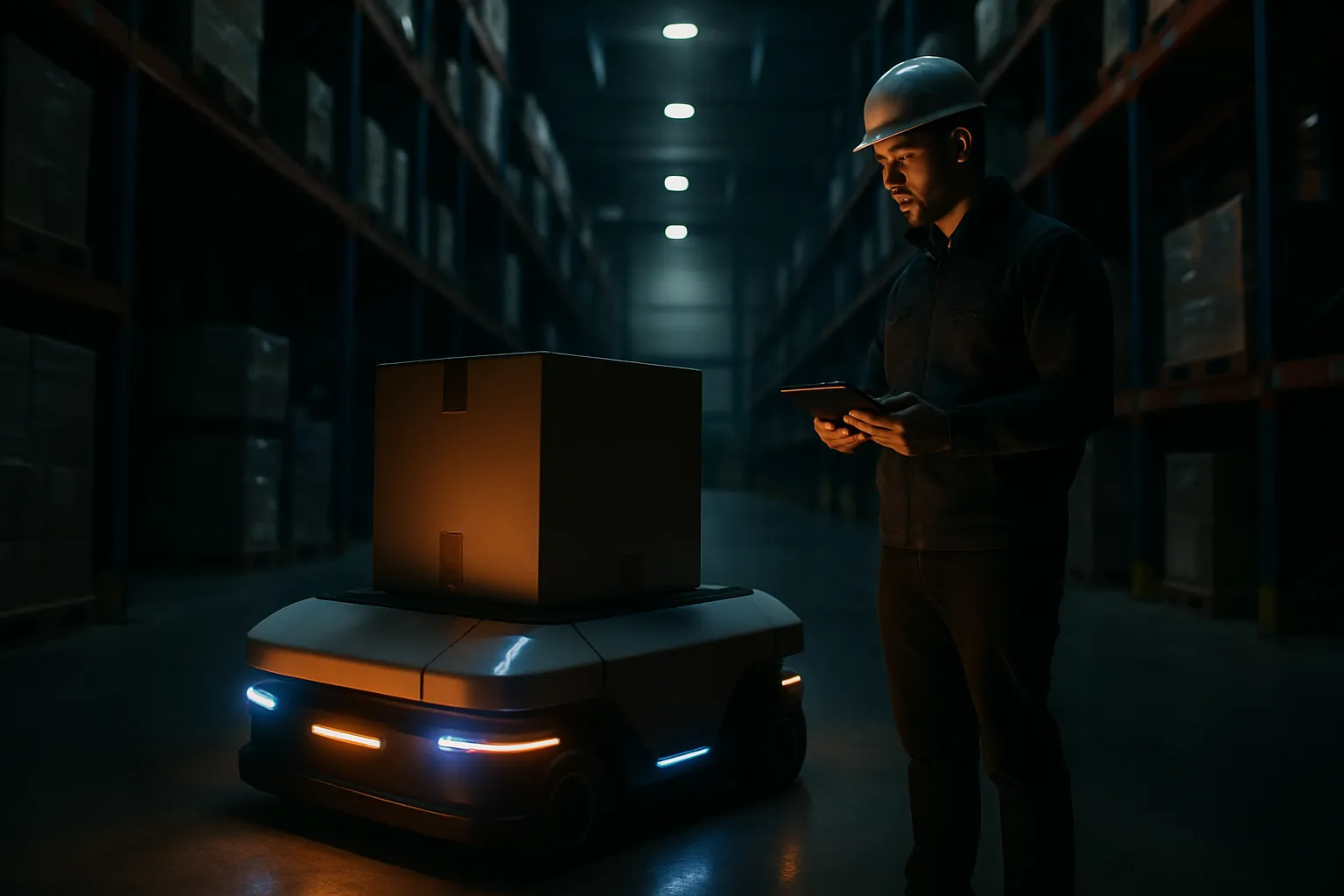
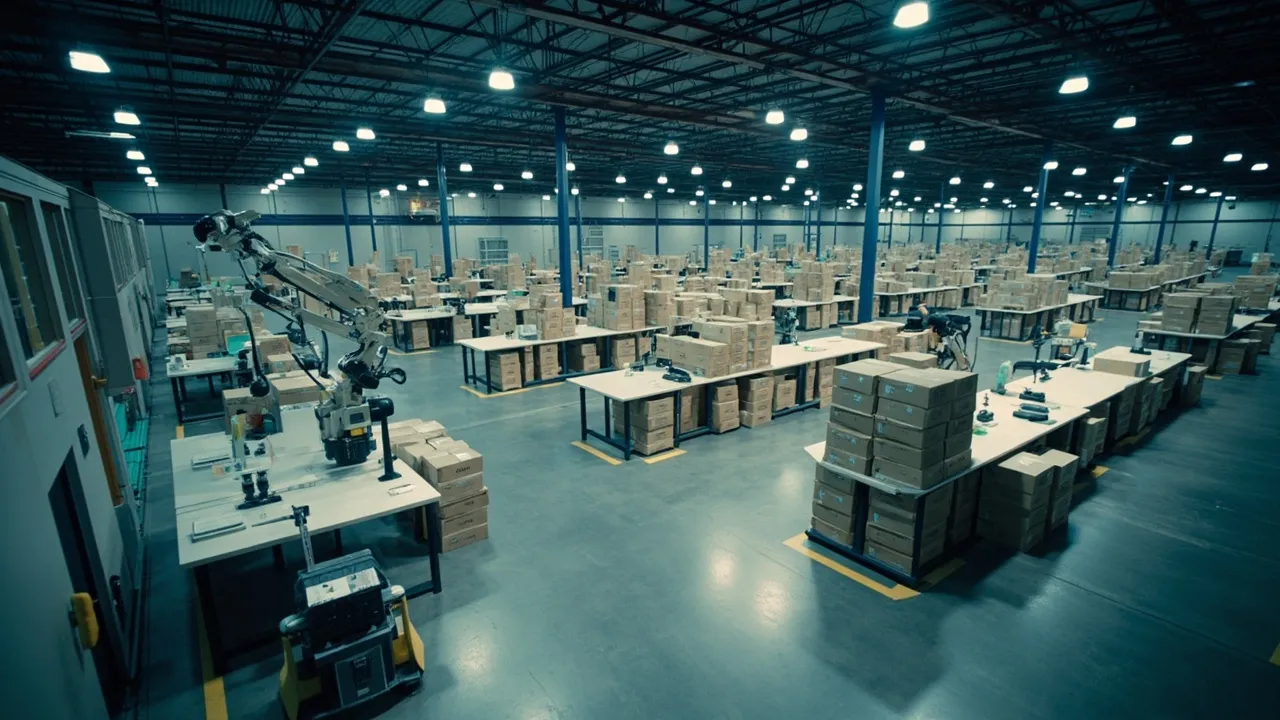
When most supply chain leaders think about warehouse automation, they picture robots—autonomous mobile robots (AMRs) gliding between racks, robotic arms picking parcels, humanoid machines stacking pallets. But robots are only one layer of a much larger category that's quietly reshaping logistics infrastructure: automated material handling equipment (AMHE).
This broader market—spanning conveyors, sortation systems, automated storage and retrieval systems (AS/RS), AGVs, programmable logic controllers (PLCs), variable frequency drives (VFDs), smart sensors, and human-machine interfaces (HMIs)—is projected to grow at a 9.5% compound annual growth rate from 2026 through 2035, according to Market Business Insights' March 2026 forecast. That acceleration is technically driven by the widespread adoption of 5G-enabled AMRs, which reduce network latency and allow for 20% higher fleet density in warehouse environments.
The numbers paint a picture of an industry in transformation. Separate estimates from Fortune Business Insights value the broader material handling equipment market at $278.83 billion in 2026, growing to nearly $490 billion by 2034 at a 7.3% CAGR. When you isolate the automated segment—the intelligent, connected, software-driven equipment—the growth rate climbs significantly higher because automation is eating into manual handling's share at an accelerating pace.
The 5G Inflection Point
The single biggest technology catalyst in the AMHE market isn't a new robot. It's private 5G networks.
Traditional warehouse Wi-Fi networks struggle with the density problem. As facilities deploy more AMRs, AGVs, sensors, and IoT devices, Wi-Fi congestion creates latency spikes that force fleet management systems to slow robots down or reduce fleet sizes. The result: operators hit a throughput ceiling long before they run out of floor space.
Private 5G changes the equation fundamentally. With latency under 10 milliseconds and the capacity to support thousands of simultaneous device connections, 5G-enabled warehouses can run 20% more AMRs in the same footprint without network degradation. Ericsson and T-Mobile have both demonstrated 5G-AMR solutions in production environments, with Ericsson's Private 5G (EP5G) platform enabling high-density device integration across manufacturing and logistics facilities.
For shippers evaluating warehouse partners or building their own distribution networks, 5G readiness is becoming a meaningful differentiator. A facility with private 5G infrastructure can scale its automation fleet dynamically—adding robots during peak season and pulling them back during slow periods—without the network bottlenecks that plague Wi-Fi-dependent operations.
Beyond Robots: The Conveyor-Sortation Renaissance
While AMRs capture headlines, the conveyor and sortation segment is experiencing its own renaissance. As Modern Materials Handling reported in its 2026 Equipment Report, fixed automation isn't disappearing—it's evolving through modular designs, smarter interfaces, and tighter orchestration with mobile robotics.
"Conveyor isn't going away. It's evolving, and what I'm really seeing is a focus on interface design," noted Phil Pletcher, VP of global solution automation at FORTNA, in MMH's analysis. The critical innovation is happening at handoff points where conveyors, robots, and human workers intersect.
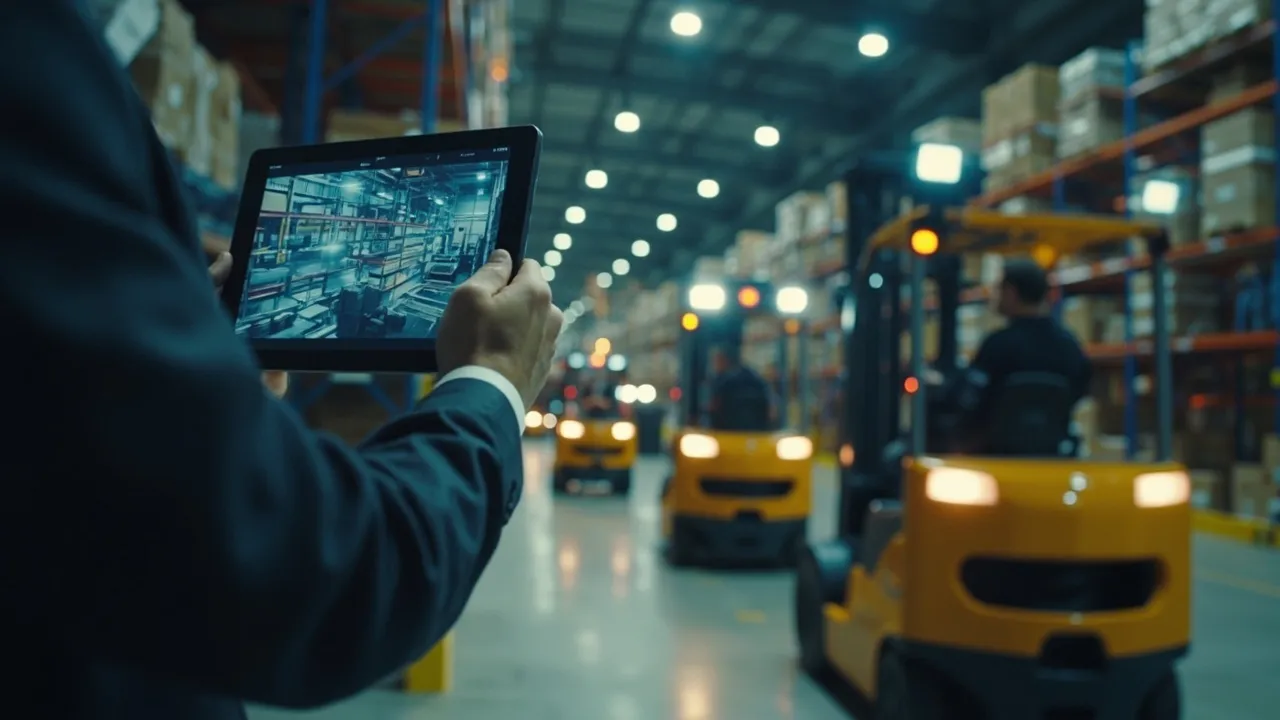
Modern conveyor systems are increasingly modular and reconfigurable. Solutions like Regal Rexnord's ModSort support phased expansion and quick reconfiguration, enabling warehouses to adapt to changing SKU profiles without ripping out fixed infrastructure. This modularity is essential for the hybrid warehouse model that's becoming the industry standard: conveyors handle sustained, high-volume throughput while AMRs provide flexible, on-demand movement.
Brad Perry, director of warehouse and distribution sales at Fives Intralogistics, offered a pragmatic view: operations frequently try to stretch AMRs beyond their design envelope, only to discover that a well-placed sorter handles the same throughput more efficiently. The future isn't robots or conveyors—it's intelligent orchestration of both.
Industry 4.0 Convergence: When Every Component Gets Smart
The AMHE market's growth isn't just about adding more equipment. It's about making every component intelligent.
PLCs and VFDs are evolving from simple motor controllers into edge computing nodes that process sensor data locally and communicate status to warehouse execution systems in real time. Smart sensors with embedded diagnostics can predict bearing failures, belt wear, and motor degradation weeks before they cause downtime. HMIs are shifting from static touchscreens to augmented reality interfaces that overlay equipment status onto a technician's field of view.
This convergence is what MHI—the material handling industry's international trade association—identified as a top supply chain trend for 2026. In its annual trends report, MHI concluded that companies are turning to automation, robotics, and AI-driven insights to build supply chains that are "responsive and agile to ensure operations can withstand disruptions and workforce shortages while meeting fluctuating customer demands."
The talent gap is accelerating this shift. As experienced maintenance technicians and warehouse operators retire, facilities can't simply hire replacements with the same institutional knowledge. Smart equipment that self-diagnoses, self-optimizes, and guides less-experienced workers through maintenance procedures is becoming a workforce multiplier rather than a workforce replacement.
Vertical Demand Drivers
The 9.5% CAGR isn't uniformly distributed across industries. Several verticals are pulling the market forward:
E-commerce remains the dominant demand driver, with same-day and next-day delivery expectations forcing distribution centers to maximize throughput per square foot. High-speed sortation systems capable of processing 15,000+ parcels per hour are becoming table stakes for e-commerce fulfillment.
Automotive is investing heavily in AS/RS and AGV systems to support just-in-sequence manufacturing, where parts arrive at the assembly line in the exact order they're needed. The shift to electric vehicle production, with its different component mix and battery handling requirements, is driving additional MHE investment.
Food and beverage operations face unique challenges—temperature-controlled environments, strict hygiene requirements, and perishable inventory—that are pushing adoption of washdown-rated conveyors, cold-storage AMRs, and automated case-picking systems.
Pharmaceutical warehouses are investing in micro-fulfillment systems and unit-level tracking to comply with serialization mandates while managing the explosion of specialty drug SKUs that require precise temperature and humidity control.
What This Means for Shippers
For logistics and supply chain leaders evaluating their material handling strategies, the market data suggests several actionable takeaways:
Don't evaluate robots in isolation. The ROI of an AMR fleet depends on the conveyor, sortation, and control infrastructure it integrates with. Evaluate the complete material handling ecosystem, not individual technology categories.
Ask about 5G readiness. Whether you're selecting a 3PL partner or designing your own facility, private 5G infrastructure will determine how far your automation can scale. Facilities locked into legacy Wi-Fi will hit throughput ceilings sooner.
Plan for hybrid, not all-or-nothing. The most successful automation deployments combine fixed throughput (conveyors, sorters) with flexible capacity (AMRs, cobots). Design your facility for both from day one, even if you phase the investment.
Prioritize unified control systems. As Pletcher noted, many facilities still manage conveyors and mobile automation through separate systems. Moving toward a single warehouse execution system that orchestrates all equipment types—fixed and mobile—eliminates coordination gaps and unlocks higher throughput.
Building the Connected Warehouse with CXTMS
The convergence of 5G-enabled AMRs, intelligent conveyors, and Industry 4.0 sensor networks is creating warehouses that generate unprecedented operational data. CXTMS helps shippers translate that data into logistics decisions—connecting warehouse execution metrics with transportation planning, carrier selection, and delivery performance to create end-to-end visibility from the pick face to the customer's door.
Whether you're scaling an existing facility or evaluating automation-ready 3PL partners, request a CXTMS demo to see how integrated material handling intelligence connects to your broader supply chain strategy.
The automated material handling equipment market is entering its most dynamic growth phase in decades. The organizations that treat MHE as a strategic capability—not just a capital expense—will build the resilient, scalable logistics networks that define the next era of supply chain competition.