AI-Native Supply Chain Operating Systems: Why BackOps' $26M Raise Signals a New Platform Category


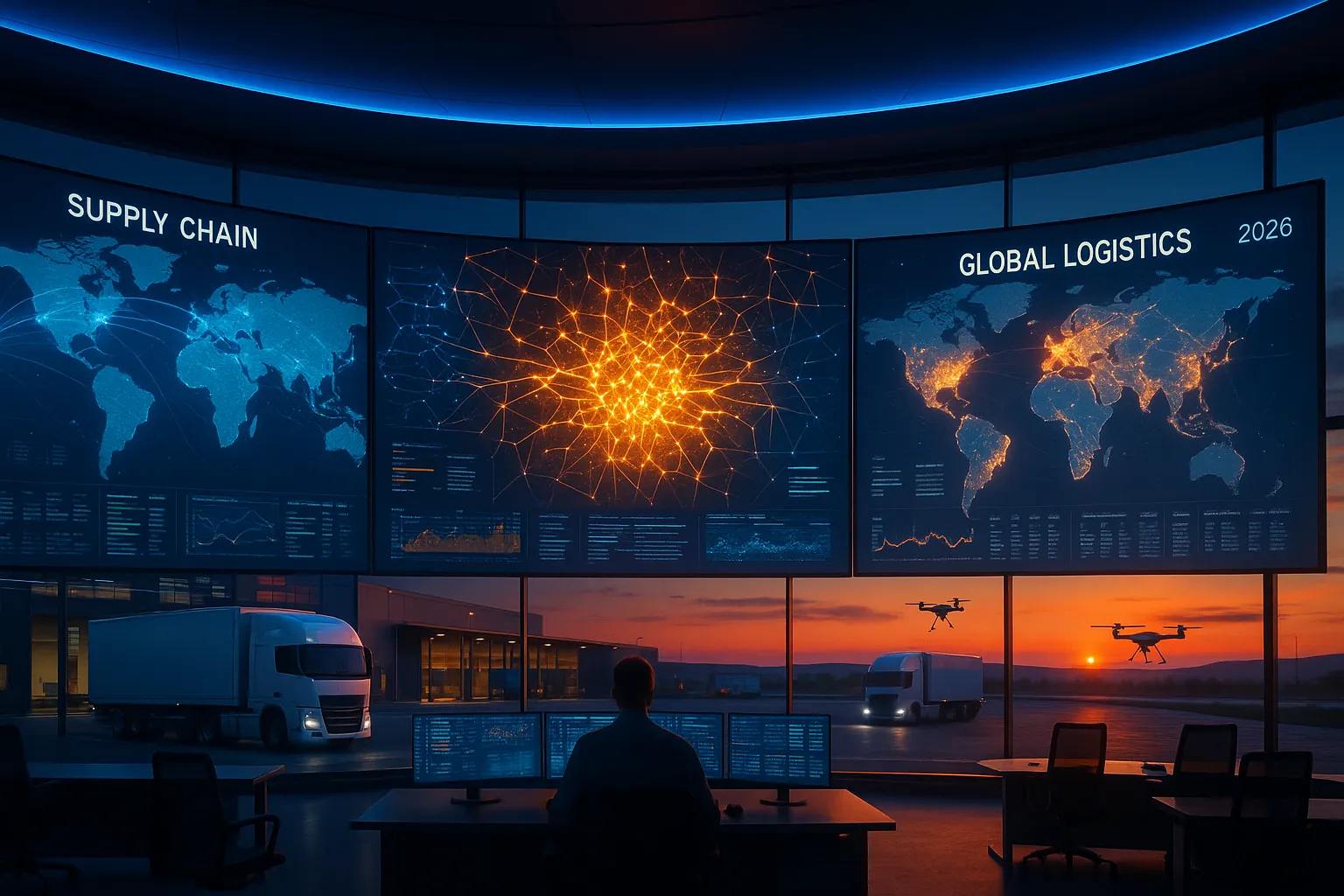
There's a quiet revolution underway in supply chain software. Not in the tools that have dominated logistics technology for the past two decades — TMS platforms, WMS suites, ERP modules — but in a new category entirely: the AI-native supply chain operating system.
Last week, San Francisco-based BackOps announced a $26 million Series A led by Theory Ventures, with participation from Gradient, Construct Capital, and 10VC. The round follows a $6 million seed in June 2025 and signals that venture investors see something fundamentally different about how supply chains will be managed in the years ahead.
What makes this noteworthy isn't the dollar figure. It's the category definition.
What "AI-Native" Actually Means — And Why It Matters
The supply chain software market is projected to reach $36.39 billion in 2026, growing at a 9.01% CAGR through 2031, according to Mordor Intelligence. Yet for all that spending, the vast majority of logistics work remains stubbornly manual.
BackOps CEO Sean McCarthy, who previously worked with warehouse operations teams at Amazon, has quantified this gap as a "$100 billion inefficiency" in manual logistics labor. And he's not exaggerating — consider what happens when a shipment goes wrong today:
- A carrier misses a delivery window
- Someone notices (maybe hours later) via email or a tracking dashboard
- A logistics coordinator manually files a claim
- Another person initiates a reshipment
- A customer service rep drafts an apology and updated ETA
- A finance team member updates the cost accounting
Every step is a different tool, a different person, a different workflow. The AI-native approach collapses these into a single automated sequence — not as a feature bolted onto an existing platform, but as the foundational architecture of the system itself.
The Two Products Driving the Category
BackOps offers two core products that illustrate what an AI-native supply chain OS looks like in practice:
AI Process Center functions as the central nervous system, connecting disparate data sources — ERPs, carrier APIs, warehouse systems, communication channels — into a unified operational layer. Rather than requiring logistics teams to context-switch between fifteen different dashboards, the Process Center synthesizes signals and triggers actions.
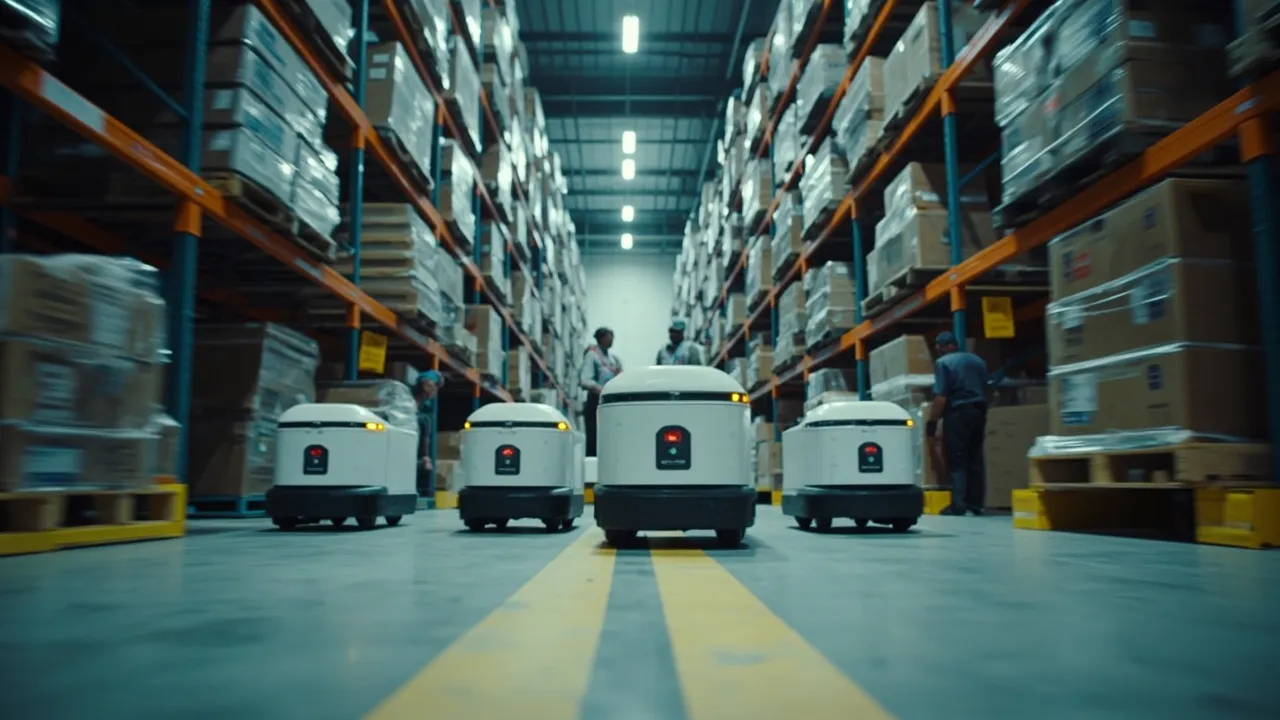
Relay, the company's flagship product, operates across communication channels like email and Slack to detect supply chain issues and resolve them automatically. It can file carrier claims, initiate reshipments, and respond to customer inquiries — all while maintaining a "human in the loop" approach that lets teams define approval points and escalation paths.
The platform has demonstrated a 93% acceleration in customer response times for its early adopters, according to the company.
Why Investors Are Betting on the "Operating Layer"
Tomasz Tunguz, General Partner at Theory Ventures and a widely followed enterprise SaaS investor, framed the opportunity bluntly: "Supply chains are the backbone of the global economy, but most of the work that keeps them running is painfully manual."
He's betting that BackOps represents "the intelligent operating layer for logistics" — a distinction worth unpacking.
Traditional supply chain software is transactional: it records what happened. A TMS logs a shipment. A WMS tracks inventory locations. An ERP posts a financial entry. Each system excels at its narrow function, but none of them act on the information they capture.
An AI-native operating system sits above these transactional layers. It doesn't replace your TMS or WMS — it orchestrates across them. When Relay detects a carrier delay via a tracking API, it simultaneously:
- Alerts the customer with an updated delivery window
- Evaluates whether a reshipment from a closer warehouse is cost-effective
- Files a claim against the carrier's SLA
- Updates the financial impact in the ERP
This is the difference between AI-bolted-on (adding a chatbot to your existing dashboard) and AI-native (building the entire workflow engine around intelligent automation from day one).
The Broader VC Signal: Physical AI Is Hot Again
BackOps isn't raising capital in a vacuum. The supply chain AI funding landscape in early 2026 tells a clear story:
- Gather AI raised $40 million in Series B funding in February 2026 for its AI-powered logistics platform, led by Smith Point Capital Management with participation from Bain Capital Ventures
- BackOps closed $26 million in Series A, led by Theory Ventures
- Y Combinator's latest batch features multiple supply chain AI startups attacking everything from freight bill auditing to demand forecasting
After two years of AI investment concentrated almost exclusively in foundation models and developer tools, venture capital is flowing back into applied AI — software that solves specific, measurable problems in industries where manual labor still dominates.
Supply chain and logistics is the perfect target. The industry generates enormous volumes of structured and unstructured data, operates under constant time pressure, and still relies heavily on email, spreadsheets, and phone calls for exception management.
AI-Native vs. AI-Bolted-On: A Framework for Shippers
For mid-market shippers evaluating new supply chain technology, understanding this distinction is critical. Here's a practical framework:
| Dimension | AI-Bolted-On | AI-Native |
|---|---|---|
| Architecture | AI features added to legacy codebase | Built from scratch around AI workflows |
| Data Model | Structured data in siloed tables | Unified data graph across all systems |
| Exception Handling | Alerts humans to act | Acts autonomously within defined guardrails |
| Integration | Point-to-point API connections | Orchestration layer across entire stack |
| Learning | Static rules updated manually | Continuously improves from operational data |
The key question shippers should ask any vendor claiming AI capabilities: "Does your AI recommend actions, or does it take them?"
If the answer is "it provides insights for your team to act on," you're looking at a bolt-on. If the answer is "it resolves exceptions automatically within the parameters you define," you're looking at something closer to AI-native.
What This Means for Mid-Market Shippers
The emergence of AI-native supply chain platforms has significant implications for companies running $10 million to $500 million in annual freight spend:
The build-vs-buy calculus is shifting. Historically, mid-market companies cobbled together point solutions — a TMS here, a visibility tool there, a spreadsheet connecting them. AI-native platforms promise to collapse that fragmentation into a single orchestration layer, potentially reducing both software costs and the labor required to manage multiple systems.
Talent requirements are changing. When exception management is automated, logistics teams shift from reactive firefighting to strategic oversight. The skill set moves from "can work 12 systems simultaneously" to "can define business rules and evaluate AI performance."
Speed becomes a competitive advantage. If your competitor resolves carrier exceptions in minutes while your team takes hours, that gap compounds across thousands of shipments per month into meaningful differences in customer satisfaction and operational cost.
The CXTMS Perspective: Intelligence Built Into the Platform
At CXTMS, we've been building toward this same vision — a logistics platform where AI isn't a feature you toggle on, but the engine that drives every workflow. Our approach emphasizes:
- Automated exception resolution that escalates to humans only when business rules require it
- Cross-system orchestration that connects carrier networks, warehouse operations, and financial systems in real time
- Continuous optimization that learns from every shipment to improve routing, carrier selection, and cost management
The BackOps raise validates what we've believed since our founding: the future of supply chain software isn't smarter dashboards. It's platforms that think and act on behalf of logistics teams, freeing them to focus on strategy rather than firefighting.
Ready to see what an AI-native logistics platform looks like in practice? Request a CXTMS demo and discover how intelligent automation can transform your supply chain operations.