The Aftermarket Auto Parts Supply Chain Is Breaking: How First Brands' Bankruptcy and NAPA's Robotics Pivot Signal a Distribution Revolution

The aftermarket auto parts industry — a $457 billion global market projected to reach $604 billion by 2034 — is experiencing a simultaneous crisis and transformation that will reshape how parts reach the 290 million vehicles on American roads. On one side, the bankruptcy of First Brands Group is ripping apart supplier networks that distributors have relied on for decades. On the other, NAPA is deploying more than 100 AI-powered robots at a new distribution facility, signaling that the era of manual parts fulfillment is ending.
These two events aren't coincidental. They're symptoms of an aftermarket distribution model that simply can't keep up with modern demand.
The Crisis: First Brands Group Bankruptcy Tears Apart Supplier Networks
In late January 2026, First Brands Group announced it was winding down its Autolite, Brake Parts Inc., and Cardone subsidiaries — iconic brands that have supplied spark plugs, brake components, and remanufactured parts to distributors and repair shops across North America for decades. The company's founders were subsequently charged with a multibillion-dollar fraud scheme, and by early March, 1,267 workers had received layoff notices with facility closures set for April 30, 2026.
For aftermarket distributors, the fallout is immediate and severe. First Brands' portfolio included some of the most widely stocked SKUs in the industry — the kind of parts that every auto care center expects to have available same-day. When a supplier of that scale collapses, it doesn't just create a gap in inventory. It creates a cascading disruption across thousands of distribution points that must rapidly qualify alternative suppliers, renegotiate contracts, and reconfigure fulfillment networks.
The U.S. aftermarket automotive parts market alone is valued at approximately $238.75 billion in 2026, growing at a 4.12% CAGR through 2031. That growth makes the distribution challenge even more acute: more vehicles on the road means more parts variations, more delivery urgency, and less tolerance for supply disruptions.
Why Aftermarket Parts Distribution Is Uniquely Hard
If you've worked in e-commerce fulfillment or general warehouse operations, aftermarket auto parts distribution looks like a different universe. Consider the complexity:
-
Massive SKU proliferation: NAPA's distribution centers carry approximately 800,000 parts, accessories, and supplies. Unlike consumer goods where a few thousand SKUs cover most demand, auto parts catalogs must account for every make, model, and year on the road — and the average age of vehicles in the U.S. has reached a record 12.6 years, meaning older and more obscure parts remain in active demand.
-
Irregular physical dimensions: Auto parts range from tiny O-rings to full bumper assemblies, transmission cases to air filter elements. This makes standard bin-and-shelf automation difficult — every pick path and storage configuration must accommodate wildly different item geometries.
-
Demand unpredictability: Unlike seasonal consumer goods, parts demand is driven by vehicle failures, accidents, and maintenance schedules that don't follow neat forecasting curves. A cold snap triggers heater core and battery demand. A pothole epidemic spikes suspension component orders. Traditional demand planning models struggle in this environment.
-
Speed expectations: Professional repair shops expect same-day or next-morning delivery. A technician with a vehicle on the lift can't wait three days for a water pump. This creates fulfillment pressure that rivals or exceeds Amazon Prime expectations, but with far more complex inventory.
NAPA's Response: 100+ Brightpick Robots at Scale
Against this backdrop of supplier disruption and fulfillment complexity, NAPA — a subsidiary of Genuine Parts Company with a network of 6,000 auto parts stores and over 16,000 auto care and collision centers — is making a decisive bet on warehouse robotics.
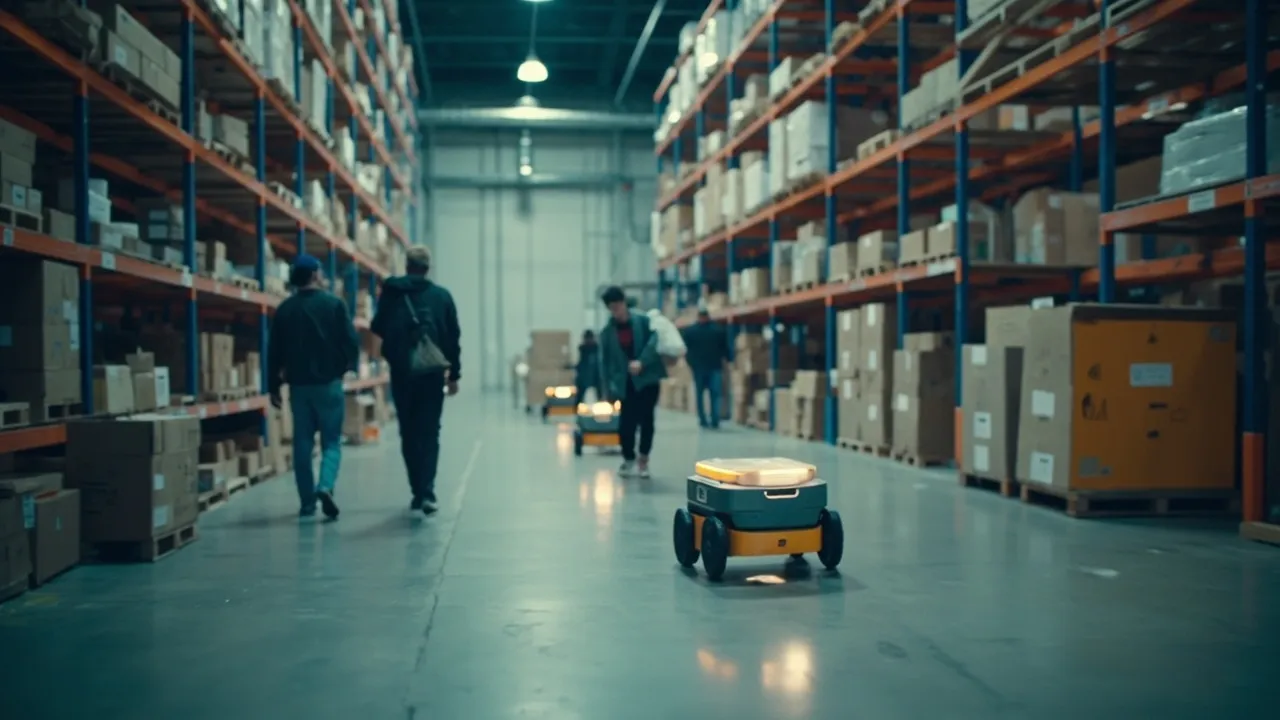
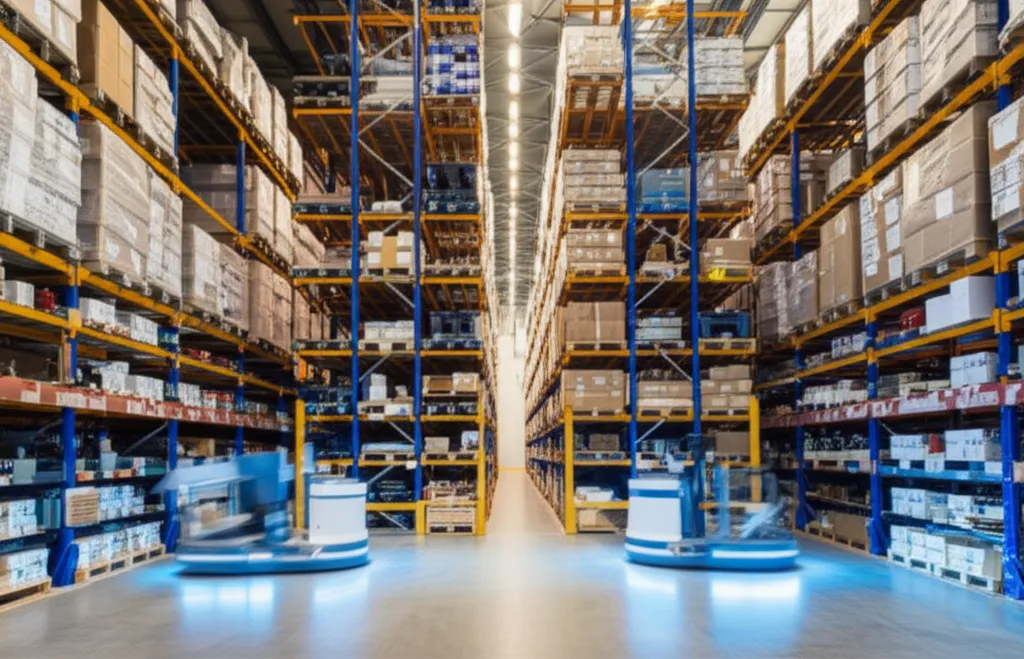
After running a successful pilot project with Brightpick since 2025, NAPA signed an agreement in early 2026 to deploy more than 100 AI-powered mobile robots at a new facility, with potential for future installations at additional locations.
Brightpick's goods-to-person robots are designed to eliminate the most time-consuming element of warehouse operations: human walking. In a traditional auto parts distribution center, pickers can walk 10 to 15 miles per shift navigating aisles of irregularly sized components. Brightpick's robots bring inventory bins directly to picking stations, where workers can focus on accurate order assembly rather than physical retrieval.
"Brightpick's expertise in warehouse automation will help optimize our store network's handling, replenishment, and overall performance to support the growing demand for fast and reliable auto parts delivery," said Justin Ducharme, EVP of distribution and logistics at NAPA.
What makes this deployment particularly significant is that Brightpick is entering the automotive aftermarket for the first time through this partnership. The company is tailoring its automation system specifically for NAPA's warehouse environments and integrating with existing technologies — a recognition that auto parts distribution requires purpose-built solutions, not off-the-shelf e-commerce fulfillment setups.
The Robotics-as-a-Service Model Opens the Door for Mid-Market Distributors
NAPA's scale — backed by Genuine Parts Company's $23 billion in annual revenue — makes a 100-robot deployment financially feasible. But the broader aftermarket distribution landscape includes thousands of mid-market and regional distributors who can't justify seven-figure capital expenditures on automation.
This is where the robotics-as-a-service (RaaS) model is changing the calculus. As Supply Chain Dive reported, warehouse robotics adoption is expanding beyond large enterprises. Companies like Superior Communications and other mid-market distributors are following the playbook that large retailers pioneered — deploying scalable robot fleets through subscription models that convert capital expenditure into operational expenditure.
For aftermarket parts distributors watching First Brands' collapse ripple through their supply networks, the math is straightforward: automation that increases pick accuracy and throughput isn't just an efficiency play — it's a resilience strategy. When supplier disruptions force rapid inventory reconfiguration, automated systems can adapt picking routes and storage assignments far faster than manual operations.
What Parts Distributors Should Prioritize Now
The convergence of supplier instability and automation maturity creates a clear action framework for aftermarket parts distributors:
-
Audit supplier concentration risk. If First Brands products represented more than 15% of your inventory by SKU count, you need alternative sourcing locked in before the April 2026 facility closures take effect.
-
Map your fulfillment bottlenecks. Before investing in automation, identify whether your constraints are in receiving, putaway, picking, or shipping. Most aftermarket distributors find that picking labor accounts for 50-60% of their warehouse operational costs.
-
Evaluate RaaS economics. Compare the total cost of ownership for goods-to-person robotics against your current per-pick labor costs. For operations running 800,000+ SKUs like NAPA, the complexity premium makes automation even more compelling.
-
Integrate inventory visibility across channels. Professional customers, walk-in retail, and e-commerce all pull from the same inventory pool. Real-time visibility across all channels prevents the overselling and stockout situations that erode customer trust during supply disruptions.
How CXTMS Helps Parts Distributors Navigate the Disruption
The aftermarket auto parts distribution revolution isn't just about warehouse robots — it's about connecting every node in the supply chain with real-time visibility. CXTMS provides parts distributors with unified logistics intelligence across inbound supplier shipments, warehouse operations, and outbound store and shop deliveries.
When a major supplier like First Brands goes offline, CXTMS helps distributors quickly identify alternative shipping lanes, compare carrier rates for expedited transfers from backup suppliers, and maintain delivery commitments to their store networks. The platform's multi-modal rate comparison and route optimization capabilities are purpose-built for the kind of rapid supply chain reconfiguration that aftermarket distributors now face.
The aftermarket parts supply chain is breaking — but it's breaking toward something better. The distributors who combine robotics automation with end-to-end logistics visibility will emerge from this disruption stronger, faster, and more resilient than ever.
Ready to build resilient parts distribution logistics? Request a CXTMS demo to see how real-time visibility and intelligent routing can protect your supply chain from the next disruption.