Construction Supply Chains Need Material Risk Registers Before the Jobsite Calls


The jobsite calls because a switchgear delivery missed the crane window. A subcontractor arrives before the material does. A long-lead component is still waiting on a permit, a route survey, a supplier confirmation, or a customs document. By the time the problem reaches the superintendent, the project has already converted a supply chain exception into idle labor, idle equipment, resequencing work, and cost exposure.
That is the wrong moment to start asking who owns the recovery plan.
Deloitte's 2026 engineering and construction outlook reported that recent tariffs on steel and aluminum reached up to 50%, while the effective tariff rate for construction goods climbed to a 40-year high of 25% to 30% in 2025. Deloitte also noted an 88.2% year-over-year increase in project abandonment activity for August 2025, and cited Autodesk survey data showing nearly half of E&C executives now classify their supply chains as fragile due to geopolitical tensions.
Those numbers matter because construction logistics has little tolerance for late discovery. A construction delay can stop the next trade from starting.
Fragile Supply Chains Become Schedule Risk
Construction materials move through a different operating model than standard finished-goods freight. The shipment is not only serving demand. It is enabling a sequence.
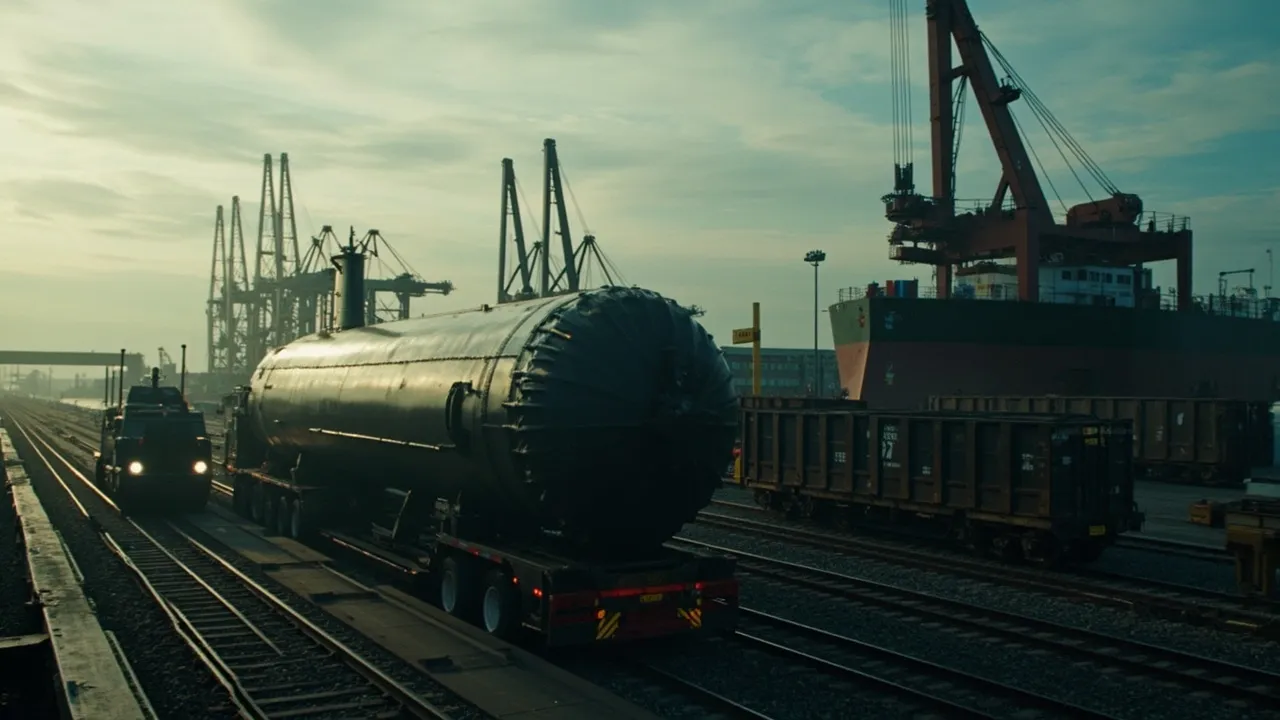
Steel, electrical gear, HVAC equipment, prefab assemblies, elevators, specialty glass, pumps, generators, fixtures, and modular components often sit on a critical path. Some are custom ordered, some move as oversized freight, and some cannot be substituted without design, warranty, code, or owner approval.
That means normal logistics visibility is not enough. Knowing that a load is "in transit" is useful, but it does not answer the project-control question: can this shipment still protect the schedule milestone it supports?
The same pressure is showing up across broader logistics markets. FreightWaves reported that the 2026 State of Logistics Report found U.S. business logistics costs totaled $2.4 trillion, or 7.8% of GDP, and framed volatility as a permanent operating condition rather than a temporary disruption. The report identified structural forces including geoeconomic realignment, labor and productivity constraints, energy price volatility, and frequent tariff changes.
For construction firms, that volatility lands directly in project execution. A tariff update can change landed cost. A port disruption can stretch a lead time. A driver shortage can threaten a site appointment. A supplier delay can force resequencing. The risk is not just that freight gets more expensive. The risk is that the job plan loses its assumptions.
Disruption Does Not Stay in the Supply Chain
Supply chain disruption also has a habit of lingering. SupplyChainBrain described 2026 as a year in which war risk, trade talks, and persistent disruptions are forcing companies to rethink how goods move. Its coverage of the Strait of Hormuz highlighted confirmed crossings rising from 34 on June 23 to 70 the following day, with commercial traffic accounting for 53 transits, before daily transits dropped back to 22 by June 28.
That instability is not limited to ocean freight. It illustrates the planning problem facing construction supply chains: the status of a route, supplier, cost assumption, or regulatory condition can change faster than a project team can rewrite the schedule.
Construction teams therefore need a material risk register before the jobsite calls, not after. The register should connect procurement, transportation, project controls, site operations, and finance around the materials that can actually disrupt the work.
Build the Construction Material Risk Register
Supplier geography is the first field. Where is the component made, assembled, staged, or sourced? A domestic distributor may still depend on imported subcomponents, so the register should not stop at the invoice address.
Critical path date comes next. The record should show which activity the material enables and the latest safe arrival date, not only the purchase order due date. A delivery that is technically on time to the warehouse may still be late for the crane, subcontractor, inspection, or commissioning sequence.
Freight mode belongs in the same record. Air, ocean, flatbed, step deck, heavy haul, parcel, LTL, and dedicated truckload each carry different constraints. Oversized moves may need permits, escorts, route surveys, weather windows, and daylight restrictions. Those requirements should be visible before tendering.
Site constraint is where logistics becomes construction-specific. Does the jobsite have dock access, laydown space, gate restrictions, union labor rules, security check-in, crane availability, neighborhood delivery limits, or limited receiving hours? A shipment that arrives without the right unloading plan is not really delivered.
Substitution rule is often ignored until it is too late. If the specified material is unavailable, who can approve an alternate? Does the substitute affect code compliance, warranty coverage, installation labor, cost, or schedule? The register should distinguish materials that are commercially substitutable from those locked by design or regulation.
Delay cost should be attached before the exception hits. Some late materials create inconvenience. Others idle a crew, extend equipment rental, miss a milestone payment, trigger liquidated damages, or delay revenue from the finished asset. Logistics teams make better recovery decisions when they can see the financial consequence of waiting.
Escalation owner is the final control. Every critical material needs a named person or role that can approve recovery action: expedite spend, alternate supplier, mode shift, split shipment, resequencing request, customer communication, or executive escalation. Without that owner, the risk register becomes another report instead of an operating tool.
Connect Freight Milestones to Project Milestones
The practical goal is not paperwork. It is earlier intervention.
If a long-lead component slips at the supplier, the transportation team should know whether the project can absorb the delay. If a permit window moves, the project manager should know which site activity is exposed. If a carrier appointment is missed, finance should know whether premium recovery is cheaper than idle labor.
That requires one connected record across supplier milestones, freight execution, site readiness, documents, appointments, and exceptions.
CXTMS helps freight forwarders and logistics companies manage that operating layer by connecting shipments, carriers, documents, milestones, exceptions, rates, and customer commitments in one transportation workflow. For construction logistics, that means a material delay can be tied to the project consequence it creates, not treated as an isolated tracking event.
Construction supply chains will not become calm in 2026. Tariffs, geopolitical uncertainty, labor constraints, and energy volatility are already too embedded in the operating environment.
If your team needs clearer control over project freight, long-lead materials, site delivery windows, and exception escalation, schedule a CXTMS demo. We will show how connected logistics execution helps protect the construction milestones that depend on freight arriving exactly when the job is ready.