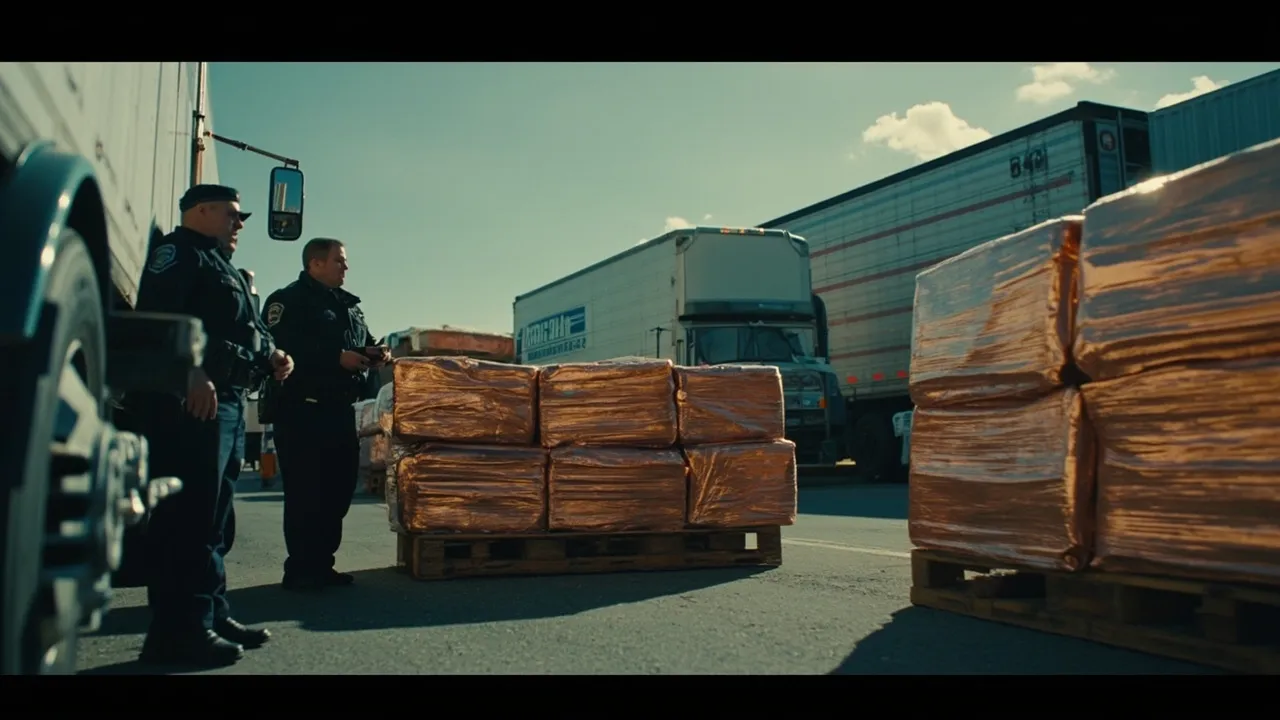
CORCA Turns Cargo Theft Reporting Into a Transportation Data Problem


Cargo theft legislation is usually framed as a law-enforcement story. CORCA makes it something else for shippers, brokers, carriers, and 3PLs: a transportation data problem.
FreightWaves reported that the Combating Organized Retail Crime Act, better known as CORCA, passed the House by a 348-60 vote and now awaits Senate action. The debate following the bill is not about whether organized cargo theft exists. It is about what the numbers actually capture.
That distinction matters. CORCA supporters argue that today's reporting system captures only a fraction of organized supply chain theft. Critics argue the documented losses are small compared with the total volume of freight moved across the United States. Both sides are looking at cargo theft data, but they are asking different questions: Is the data too small to justify federal coordination, or incomplete because the industry does not report incidents consistently?
For freight operators, the practical answer is blunt. If a theft record is incomplete, late, fragmented, or trapped in email, it is weak evidence. It may be weak for law enforcement, weak for insurance, weak for carrier review, and weak for internal prevention.
CORCA Is About Coordination
The FreightWaves report explains that CORCA would create an Organized Retail and Supply Chain Crime Coordination Center within Homeland Security Investigations. The center would coordinate organized retail crime and organized supply chain crime investigations across law enforcement agencies and private industry. It would also identify organized theft trends, improve information sharing, provide training and technical assistance, and publish annual reports on organized retail and supply chain crime.
That structure exposes the industry's data gap. A coordination center can only coordinate what gets reported clearly enough to compare, investigate, and trend. The same article notes that Congress cited CargoNet data showing cargo theft incidents increased 27% in 2024 and that the average theft exceeded $202,000. Those are serious numbers, but the reporting debate is really about confidence: whether the documented cases represent the visible edge of a larger operating risk.
Logistics Management reported that 24 freight, retail, and manufacturing stakeholders urged the Department of Justice to implement dedicated enforcement capacity for cargo theft, organized retail crime, and related financial schemes. The same coverage cited ATA President and CEO Chris Spear saying cargo theft costs the trucking industry about $18 million per day, and that cargo theft is estimated to cost up to $35 billion annually.
Whether a company uses the lower reported-loss number or the higher total-cost estimate, the operating lesson is the same. Cargo theft reporting cannot remain a loose after-action exercise.
The Theft File Starts Before the Theft
Most companies think of a cargo theft file as something created after freight disappears. That is too late. The useful theft file starts when the shipment is planned, tendered, scheduled, released, tracked, and delivered.
The first field is the shipment ID. Every investigation needs one stable record that connects the order, load, bill of lading, carrier, equipment, commodity, value, seal, facility, and customer promise.
The second field is broker and carrier identity. A clean record should show who tendered the load, which carrier accepted it, which authority was used, which insurance was on file, and which driver or equipment was expected at pickup. Identity proof should be tied to the shipment, not stored as a static onboarding artifact that nobody checks at the dock.
The third field is the facility handoff. Theft often becomes possible when a warehouse, yard, broker, carrier, or driver acts on a slightly different version of the plan. The record should show the appointment, gate arrival, release authorization, driver verification, tractor and trailer numbers, seal application, and any late change approved by a named owner.
The fourth field is the incident timestamp. A vague "load stolen sometime Friday night" is operationally thin. Teams need the last known good event, missed milestone, geofence exception, failed check call, unplanned stop, route deviation, detention event, seal exception, and first internal escalation.
The fifth field is the law-enforcement reference. If a police report, agency contact, HSI referral, insurer notice, or recovery lead exists, it belongs on the shipment record. The same is true for claim owner, evidence submitted, and final recovery outcome.
Reporting Quality Changes Prevention
Better cargo theft reporting is not only useful after a loss. It improves prevention because it turns messy incidents into searchable risk patterns: exposed commodities, suspicious appointment changes, repeated route exceptions, carrier authority changes, pickup contact changes, identity mismatches, and claim history.
That is where CORCA's reporting debate becomes operational. If the industry wants better public data, companies need better private records first.
The 2026 logistics environment makes that discipline more urgent. Logistics Management's 37th State of Logistics coverage reported that U.S. business logistics costs totaled $2.4 trillion, or 7.8% of GDP, and that logistics performance now depends less on demand recovery and more on resilience, pricing discipline, and digital productivity. In that environment, cargo theft is part of total cost avoidance, insurance exposure, carrier qualification, and customer trust.
What the Workflow Should Capture
A practical cargo theft reporting workflow should include the same fields every time: shipment ID, broker identity, carrier identity, driver verification, facility handoff, appointment record, commodity and value, seal event, geofence exception, incident timestamp, law-enforcement reference, claim owner, evidence submitted, recovery status, and the person who made each exception decision.
Those fields are not bureaucracy. They are the operating memory of the shipment. They help law enforcement understand what happened, insurers evaluate the claim file, transportation teams score carrier risk, and warehouses tighten release controls without slowing every normal load.
Where CXTMS Fits
CXTMS helps freight teams build auditable shipment histories before a theft becomes a claims scramble. Shipment records, carrier documents, appointment details, exception logs, seal events, geofence alerts, and proof-of-delivery files can live in one operating workflow instead of scattered across inboxes, spreadsheets, portals, and phone notes.
That matters because organized cargo theft exploits fragmentation. A criminal does not need every system to fail. They need one handoff where the release team cannot see the tender history, one carrier change that never reaches the dock, one missed geofence exception, or one claims file that starts three days too late.
CORCA may improve federal coordination if it clears the Senate. Freight teams still need their own reporting discipline now. Cleaner incident records, stronger carrier identity proof, controlled pickup authorization, and claims-ready evidence are no longer administrative details. They are part of freight security.
If your team is ready to make cargo theft prevention part of daily transportation execution, schedule a CXTMS demo. CXTMS helps logistics teams connect shipment history, carrier controls, exception monitoring, and evidence management before a theft turns into an expensive reconstruction exercise.