Grocery Outlet's AI Ordering Push Shows Assortment Volatility Is Now a Planning Problem

Grocery Outlet runs on surprise. The discounter's business model hinges on buying excess inventory from manufacturers at steep discounts and passing those deals to consumers before the products expire or the window closes. It's a model that generates deal traffic, builds loyalty, and keeps margins intact — but it makes traditional replenishment planning nearly impossible.
That's the tension at the center of Grocery Outlet's announcement this week that it will deploy AI ordering technology from Afresh across its full store base — fresh, center store, and general merchandise — covering approximately 550 stores across 16 states. It's the first retailer to use Afresh's multi-category, full-store AI ordering platform, and the move signals something broader: assortment volatility is no longer a niche operational quirk. It's a core planning challenge that demands smarter systems.
Why Opportunistic Assortment Breaks Static Rules
Traditional grocery replenishment assumes some level of predictability. You know what you stock. You know how fast it moves. You set par levels, review forecasts, and place orders against projected demand. The system assumes the assortment is relatively stable, even if individual SKUs come and go.
Opportunistic assortments break that assumption entirely. When a store's mix changes week to week — sometimes day to day — based on what deals came through, static replenishment rules have nothing to anchor against. The algorithm that says "reorder widget X when inventory hits 10 cases" is useless if widget X was a two-week wonder that just left the shelf and won't be back for months.
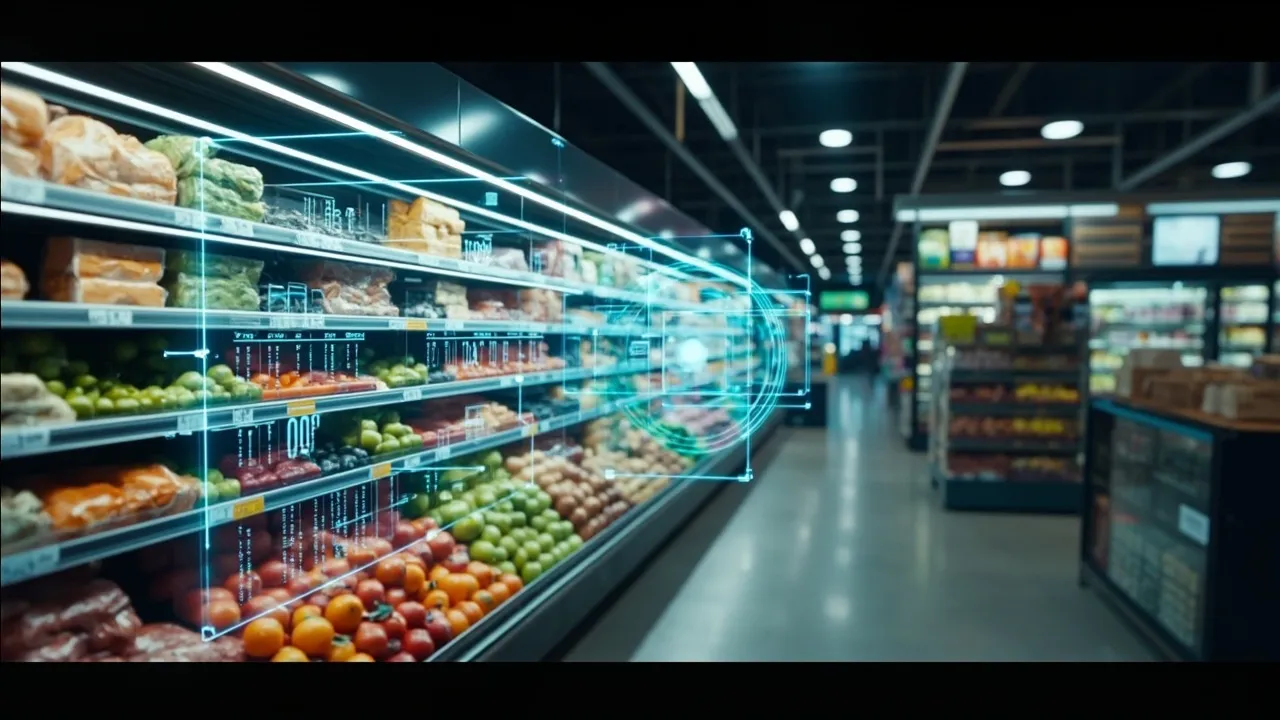
This is the problem Afresh is specifically built to handle. Across its partnerships, the company reports that workers halve the time spent on ordering decisions. Retailers using Afresh's technology average a 3% increase in sales and a 25% reduction in shrink — the costly problem of inventory that spoils, breaks, or becomes unsellable before it moves. That's material. Shrink alone typically runs 1-2% of sales in grocery, so a 25% reduction on that baseline is meaningful margin recovery.
The system's adherence rate — how closely actual supply chain execution aligns with planned targets — sits at 94%. That means the AI is hitting its own forecasts most of the time, which is what gives store managers confidence to trust the recommendations instead of overriding them based on gut feel.
Store-Level Ordering Is a Freight Problem
Here's where logistics teams feel the ripple effect: when every store's assortment is potentially different, every store's ordering needs are potentially different. That has direct implications for transportation cadence, inbound freight planning, and distribution center operations.
A standard grocery DC model assumes relatively uniform demand signals flowing from stores back to a central replenishment system. When each of 550 stores has its own demand profile based on locally-executed opportunistic deals, those signals become much more granular and much more noisy. A truck that expected to deliver 200 cases of a given SKU to a cluster of stores might find that three of those stores already moved that SKU through a flash deal and don't need it this week — while two neighboring stores just picked up a new opportunistic line and need an emergency cross-dock delivery.
This is where store-level ordering data has to connect to transportation execution. A TMS that only sees purchase orders and ship dates misses the real-time demand shifts happening at the store level. Without that connection, freight planning runs on yesterday's assortment, not tomorrow's.
Grocery Outlet's corporate teams will have visibility into store-level ordering and performance through Afresh's dashboards. That's a step toward solving the information gap — but visibility only helps if the logistics systems downstream can act on it. Routing guides need to flex. Drayage windows need to accommodate compressed timelines. DC staffing needs to anticipate non-standard inbound patterns.
Perishability, Supplier Variability, and Transportation Cadence as One Loop
The challenge gets harder when you layer in freshness requirements. Grocery Outlet's model spans fresh produce, refrigerated dairy and deli, and ambient center store goods. Each category has different lead time requirements, different shelf life constraints, and different supplier variability profiles.
An opportunistic deal from a produce supplier might deliver within 48 hours and need to be on the shelf and sold within five days. A center store opportunistic buy might have weeks of runway. General merchandise might sit longer. Planning these as separate problems misses the interaction: the truck that delivers produce on Monday might have capacity on Tuesday for a center store fill-in. The warehouse that runs dairy deliveries on Wednesday might be able to absorb a late opportunistic dairy deal without a dedicated run.
The most advanced grocers are starting to think of ordering, inventory, and transportation cadence as a single planning loop rather than separate functions. AI handles the demand signal and recommendation layer. Execution systems need to close the loop on the physical movement. If those systems don't share data, the AI recommendation gets orphaned — the algorithm says order it, but logistics can't get it there in time.
AI as Exception Triage, Not Crystal Ball
The practical limit of AI ordering in volatile assortment environments is worth naming: AI handles the predictable parts and flags the exceptions. Across Grocery Outlet's store base, Afresh's system flags inventory situations that need manager review rather than processing every order automatically. Workers spend less time building orders from scratch because the system handles the baseline, and human attention focuses on the edge cases.
That's the right framing for logistics AI too. The goal isn't to predict every opportunistic deal before it arrives. It's to reduce the manual lift on routine replenishment so planners can focus on the exceptions — the urgent cross-dock, the compressed lead time, the supplier that missed a window — that actually drive freight cost and service failures.
For that to work, the exception triage has to extend past the four walls of the store or DC. A logistics platform needs to see the same demand signals the AI is acting on, understand which orders are exception-flagged versus routine, and adjust transportation plans accordingly. When exception triage is isolated to the store level but logistics runs on separate systems and separate timelines, the benefit of AI ordering partially dissipates in execution.
What This Means for Shippers
Grocery Outlet's rollout doesn't just affect one retailer. It reflects a broader shift in how fast-moving consumer goods move through the supply chain: assortments are less predictable, categories are more interconnected, and the gap between planning and execution is shrinking.
For shippers supplying grocery, the practical implications:
- Demand signals are getting noisier. Store-level AI ordering means individual store demand profiles matter more. Shippers who can access and act on store-level data will manage allocations better than those working from regional aggregates.
- Lead time flexibility is becoming a competitive factor. Opportunistic deals compress timelines. Suppliers who can respond faster — or pre-position inventory near DCs — capture deals that slower competitors miss.
- Data connection to logistics execution is the missing link. Having AI that tells you what to order is only half the battle. Getting that signal into a TMS, routing guide, and carrier schedule without manual re-entry is what closes the loop.
The stores that figure this out first will win on assortment variety without paying a freight penalty for it.
Source: Supply Chain Dive
Want to see how CXTMS connects ordering signals to transportation execution? Request a demo to see how our platform handles the data handoff between planning and execution.