DHL’s Asia-U.S. Heavy Air Cargo Expansion Shows Why Forwarders Need a Mode-Switch Playbook

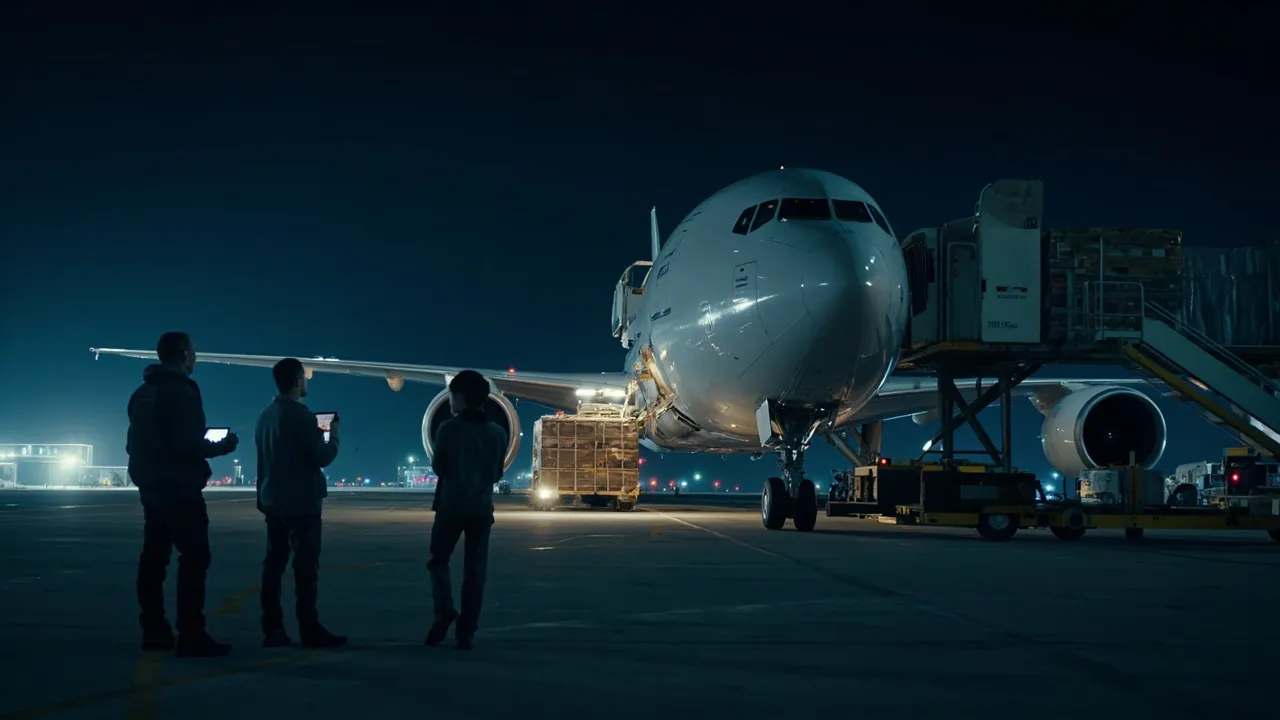
DHL Global Forwarding is adding dedicated Asia-U.S. heavy air cargo capacity in June, and the move says something bigger than “more lift is coming.” It shows how freight forwarders are turning controlled air capacity into a resilience product for shippers stuck between ocean disruption, high fuel costs, and customer promises that still have hard dates attached.
According to FreightWaves, DHL Global Forwarding will launch three widebody flights per week on June 1 for non-parcel, heavy B2B cargo moving between Southeast Asia and the United States. The service will operate Hanoi-Taipei-Anchorage-Chicago/Cincinnati-Seoul-Hanoi using Boeing 777 freighters flown by Kalitta Air, with U.S. destinations alternating between Chicago and Cincinnati.
That is a specific capacity decision on a specific trade lane. But for shippers, the strategic question is broader: when should freight move from ocean to air, direct air to sea-air, or standard routing to controlled charter capacity? Without rules, mode switching becomes panic. With rules, it becomes advantage.
Why this capacity matters now
The DHL service is aimed at heavy freight, not parcel overflow. FreightWaves reported that DHL Express sells excess network capacity to logistics companies with heavy B2B shipments, and DHL Global Forwarding is the largest buyer of that excess capacity. By securing controlled charter aircraft, forwarders can offer customers more reliable capacity and service than they get by tendering into ordinary scheduled passenger and all-cargo networks.
Reuters captured the current pressure clearly. In April, Reuters reported that some shippers were using unexpected routings as high jet fuel prices and congestion in Middle East waterways persisted. WorldACD Market Data said air cargo capacity to the Middle East had shrunk by more than 50% year over year over the prior two weeks. Reuters also cited long-term contract rates from Vietnam to Europe that had almost doubled to $6.27 per kilogram compared with pre-war levels, while Los Angeles-to-Paris air cargo rates were up only 8% as passenger belly capacity improved.
Those numbers explain why the old binary choice, ocean or air, is too blunt. The cheapest mode may be too slow; the fastest may be too expensive. A hybrid routing through a different gateway may beat both, but only if the forwarder can compare cost, transit time, capacity risk, customs exposure, and customer priority in one workflow.
Air freight is a tool, not a reflex
The danger in a volatile market is treating air freight as a universal solution. It is not. Air is a resilience tool when it protects margin, revenue, production uptime, service, or customer retention. It is an expensive panic move when triggered by poor planning, late exception detection, or unclear approval rules.
That distinction matters because fuel and capacity are not behaving like demand-only markets. FreightWaves reported that global freight markets were being reshaped by fuel costs and Middle East disruption even as underlying demand remained relatively soft. In the same report, air freight pressure points included airspace closures across the Middle East, reduced capacity at Dubai and Doha, and global widebody capacity down 11% versus pre-Lunar New Year levels. FreightWaves also cited jet fuel as up 78% since the beginning of the crisis, with carriers applying fuel surcharges quickly and longer routing reducing payload capacity.
That is the definition of a market where mode-switch discipline matters. If air cargo rates are high because of fuel, rerouting, and capacity constraints, shippers cannot simply “buy speed” without knowing what problem they are solving. They need a playbook that tells teams when air is justified, how much inventory should move, which customers or orders qualify, and who approves the cost.
The mode-switch playbook forwarders need
Start with order criticality. Not every delayed container deserves an air move. A mode-switch rule should classify freight by business impact: line-down risk, promotional deadline, pharma sensitivity, customer penalty exposure, revenue value, or replacement availability. The loudest internal sponsor should not automatically jump the queue.
Second, define partial-air logic. Reuters noted that some companies were moving limited quantities by air to bridge a gap rather than converting entire flows. That is often the smartest answer. A shipper may only need two weeks of inventory, the highest-value SKUs, or the components needed to keep a production line running until ocean cargo arrives.
Third, compare total landed cost, not just freight rate. A direct air quote may look unacceptable until the cost of stockouts, penalties, detention, storage, production shutdowns, lost sales, or expedited domestic recovery is included. The reverse is also true: air may look heroic until finance sees the margin impact. The decision needs both logistics and commercial data.
Fourth, build gateway alternatives before the crisis. If Vietnam-Europe air rates spike while Los Angeles-Paris remains comparatively stable, as Reuters described, the forwarder needs routings, transload options, customs processes, carrier relationships, and customer communication templates ready before the first escalation call. A workaround discovered under pressure is usually slower and more expensive than one modeled in advance.
Fifth, automate exception approvals. A mode switch should not live in email threads. The workflow should capture reason codes, quote comparisons, service trade-offs, customer impact, approval authority, and final routing. Otherwise, teams will repeat the same debate shipment by shipment and lose the audit trail they need for finance, procurement, and customer service.
What CXTMS users should monitor
Track ocean exceptions early: vessel delays, rolled bookings, port congestion, blank sailings, customs holds, and missed origin cutoffs. The earlier a system flags risk, the more options remain besides full air conversion.
Connect rates to promise dates. A shipment may have five possible routings, but only two may protect the promised delivery date. CXTMS-style rules should combine lane, customer, SKU, appointment, milestone, and cost data so planners see the trade-off clearly.
Use approval thresholds. For example, air conversion under a defined margin impact can be approved by operations, while larger moves require finance or customer signoff. The rule should be embedded in the workflow, not remembered by whoever happens to be online.
Measure outcomes. After the shipment arrives, compare the estimated landed cost, actual cost, transit time, service result, and customer impact. A mode-switch playbook gets sharper when the system learns which decisions worked.
The takeaway
DHL’s new heavy air cargo flights are a useful signal: capacity control is becoming forwarder strategy, not just a peak-season patch. The same disruption that makes air expensive also makes disciplined air access valuable.
The winners will not be the teams that airfreight everything, or the teams that refuse to airfreight anything. The winners will be the teams that know exactly when to switch modes, how much freight to move, which gateway to use, who must approve the cost, and how the decision changes the customer promise.
If your mode-switch process still depends on spreadsheets, inbox approvals, and heroic planners, the market is going to keep punishing you. Request a CXTMS demo to see how connected transportation workflows can turn ocean, air, exception management, landed cost, and customer commitments into one decision system.