Ocean Freight Contracts Need Better Data, Not Just Tougher Negotiation Tactics

Ocean freight contracts in 2026 are not being won by whoever pounds the table hardest. They are being won by shippers with better data.
That is the real takeaway from Emser Tile’s TPM26 comments about working with BluSpark on a more data-driven carrier strategy. According to Supply Chain Dive, Emser is moving past one-dimensional rate discussions and evaluating carriers through a wider lens that includes vessel string, terminal performance, lane speed, and total landed-cost implications. That is a much smarter play than pretending a slightly lower base rate will save the day if freight gets rolled, rerouted, or buried under surcharges.
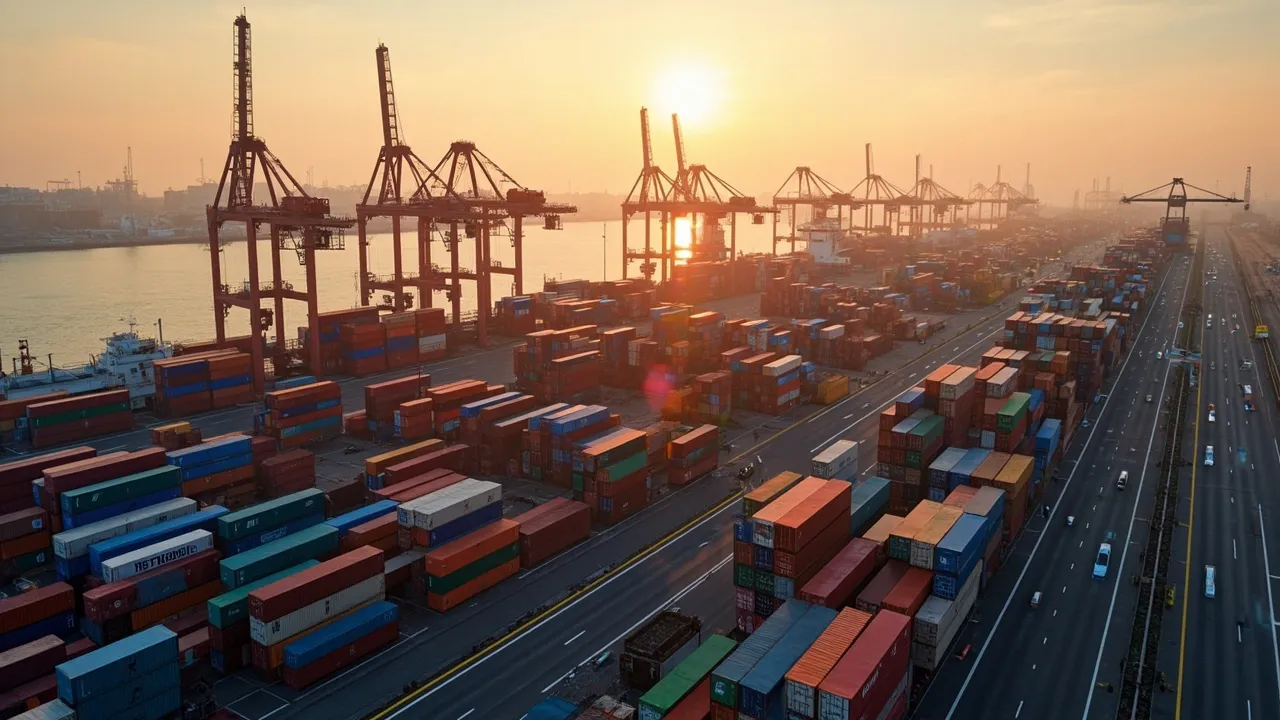
The market keeps reminding shippers why this matters. Logistics Management reported that the Port of Los Angeles handled 752,250 TEU in March, while the Port of Long Beach handled 774,935 TEU. For the first quarter, Los Angeles processed 2,388,843 TEU, down 4.6% year over year, and Long Beach processed 2,390,225 TEU, down 5.7% from the record-setting first quarter of 2025. Even with those declines, both ports are still operating at serious scale, and port leaders are warning that geopolitical disruption and tariff uncertainty are crushing planning visibility rather than making the market easier.
That is the trap. Softer volumes can make procurement teams think they have more leverage. Sometimes they do. But leverage without operational visibility is fake confidence.
Cost is still important, but it is no longer enough
Every shipper says they care about total landed cost. Fewer actually measure it in a way that can shape a contract.
Emser’s approach is useful because it treats cost and performance as inseparable. If one carrier gives you a slightly better rate but exposes you to more rolled cargo, weaker terminal performance, longer transit variability, or ugly surcharge behavior, that lower rate can become expensive fast. Construction-adjacent importers like Emser feel that pain immediately because late inventory is not just a freight problem. It becomes a customer service problem, a project timing problem, and eventually a margin problem.
That is why lane-level performance data matters more than procurement theater. A contract should reflect what actually happens after the booking is made, not just what looked pretty in a bid sheet.
The four data points that should drive the contract conversation
Shippers rebuilding ocean contracts for Q2 and Q3 should focus on four data categories.
1. Service reliability
Start with the obvious one: does the carrier move freight consistently on the lanes you actually use?
That means tracking transit-time variance, rolled bookings, blank sailing exposure, and how often promised routings turn into improvisation. Supply Chain Dive noted that Emser wants reassurance that freight will move consistently, which is exactly the right standard. Reliability is not some soft relationship metric. It is a hard operational input into inventory planning.
If a carrier misses often enough, your procurement team did not save money. They just outsourced chaos.
2. Surcharge exposure
Base ocean rate discussions are incomplete without a real view of surcharge behavior.
Logistics Management’s reporting from the Southern California ports showed how quickly broader disruption can turn into cost pass-through. Port executives cited the closure of the Strait of Hormuz, which carries about 20% of global oil, alongside oil prices hitting roughly $100 per barrel and energy prices rising 12.5% in March. They also pointed to rising fuel surcharges across transportation modes, including trucking fuel surcharges up 25%.
For importers, that means contracts need rules for surcharge transparency, escalation triggers, and periodic review. If you only negotiated the headline rate, you did not really negotiate the contract.
3. Allocation and rollover risk
When networks get stressed, contracted capacity can become theoretical.
This is where carrier allocation discipline, booking acceptance rates, and actual load priority matter. Shippers need to know which partners protect space during volatility and which ones quietly push cargo into the next sailing. A contract should not just specify capacity commitments. It should be informed by evidence of who honored those commitments when the market got ugly.
The point is simple: capacity promises are worth exactly as much as their performance during disruption.
4. Lane-specific volatility
Average performance is a liar.
One carrier may look fine in aggregate while being terrible on the exact trade lane that matters most to your business. That is why Emser’s focus on vessel string and terminal-level visibility is so smart. It acknowledges that a Shanghai to Los Angeles move is not interchangeable with a Vietnam to Southern California move, and neither should be scored with lazy portfolio averages.
Lane-specific data also sharpens sourcing decisions. Emser explicitly pointed to using better data to compare sourcing shifts, such as evaluating Vietnam against Turkey based on landed cost and time. That is not just procurement analytics. That is network design intelligence.
Better contracts connect procurement to inventory strategy
This is where a lot of transportation teams still think too narrowly.
An ocean contract is not just a buy-side exercise. It shapes replenishment timing, safety stock assumptions, customer promise dates, drayage coordination, and the number of ugly internal meetings everyone has to endure when inventory does not show up.
If port conditions are volatile, blank sailings are distorting schedules, and fuel-related charges are climbing, then procurement cannot operate as a silo. The contract playbook has to connect with inventory planning and routing resilience.
For example, if one carrier offers better schedule integrity into a terminal that consistently turns cargo faster, paying a modest premium may be the correct decision. The freight budget line might look slightly worse. The business outcome often looks much better.
A practical checklist for Q2 and Q3 ocean contract resets
If you are reworking ocean procurement right now, this is the checklist worth using:
- Score carriers by lane, not just network-wide averages
- Measure rolled bookings, transit variance, blank sailing exposure, and terminal performance
- Model surcharge scenarios, especially fuel and disruption-driven add-ons
- Compare contracted commitments against what each carrier delivered during recent disruption
- Tie carrier choices to inventory sensitivity, not just transportation budget targets
- Revisit sourcing and routing assumptions when landed-cost math changes by origin
- Build quarterly review points into contracts instead of assuming annual terms will hold still
None of this is glamorous. That is probably why it works.
The companies that come out ahead in 2026 will not be the ones bragging about how hard they negotiated. They will be the ones that know, with receipts, which carriers actually protect service, which lanes are becoming unstable, and which hidden costs are about to punch holes in margin.
Ocean freight contracts need fewer heroics and better information. That is the grown-up version of procurement.
If your team is trying to connect ocean procurement, inventory planning, and day-to-day transportation execution, book a CXTMS demo to see how CXTMS helps logistics teams make better network decisions with less guesswork.