Transformer Shortages Are Becoming a Heavy-Haul Planning Constraint for Industrial Growth

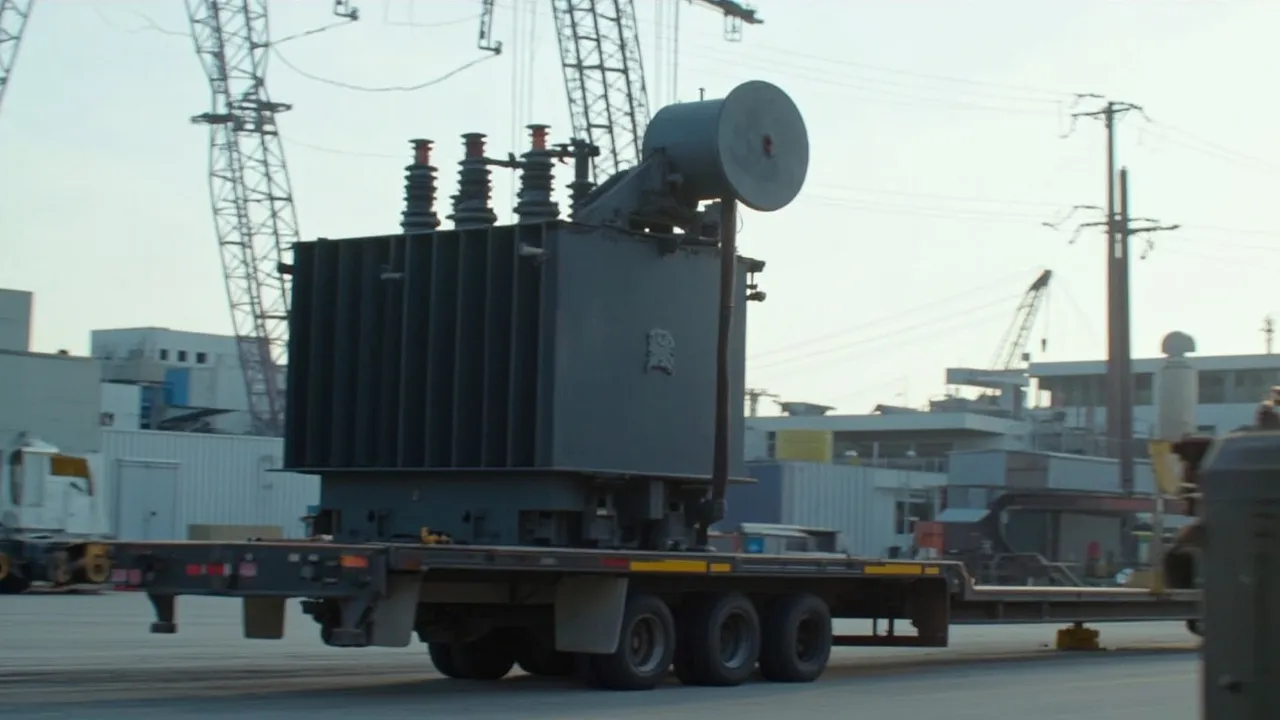
The transformer shortage is no longer just a procurement problem for utilities. It is becoming a logistics constraint on data centers, factories, renewable projects, grid upgrades, and industrial growth itself.
Reuters reported that U.S. demand for generator step-up transformers rose 274% from 2019 to 2025, while demand for substation power transformers increased 116%, according to Wood Mackenzie. Prices have climbed about 80% over the past five years. For some high-capacity units, lead times can stretch up to four years.
That is a brutal combination: more projects need the same specialized equipment, the equipment costs more, and the delivery clock now runs longer than many construction schedules. For freight forwarders and project-cargo teams, the message is blunt. A transformer cannot be treated as another oversized load to quote after the purchase order is signed. It has to become a managed milestone from the first project plan.
Transformers now define the schedule
Large power transformers sit on the critical path because they connect generation, substations, transmission systems, and end-user demand. A factory can pour concrete, a data center can finish its shell, and a renewable project can build out rows of generation assets, but if the transformer is missing, power cannot flow as planned.
Reuters quoted project experts warning that long transformer lead times can create out-of-sequence construction, deferred revenue, higher financing costs, and even stranded assets, such as completed transmission lines waiting idle for transformers. That is not an abstract supply chain delay. It is capital trapped in place because one oversized electrical component did not arrive, clear customs, move inland, pass inspection, and reach the site in the right construction window.
This is where logistics changes the risk profile. Heavy-haul moves require route surveys, bridge checks, axle-load planning, escort coordination, specialized trailers, crane availability, port handling, rail or barge options, permits, weather planning, and site readiness. Those tasks cannot be compressed safely at the end of a four-year procurement cycle. If the transportation plan starts late, the transformer shortage becomes worse because the move itself creates another bottleneck.
Imports make the logistics chain longer
Domestic manufacturing is expanding, but the shortage is not disappearing quickly. Reuters reported that many U.S. developers are relying on imported transformers as demand rises globally and key inputs such as copper and grain-oriented electrical steel remain constrained.
The import numbers are significant. Turkey's Astor Enerji announced contracts with four U.S. companies to ship $769 million worth of power transformers between 2026 and 2028. South Korea's LS Electric announced a $312 million contract with a U.S. utility to supply 525 kV extra-high-voltage transformers for a large data center in the southeastern United States between 2027 and 2029.
Those contracts create a logistics chain that is far more complex than a domestic truck move. Forwarders may need to coordinate factory release dates, ocean booking, breakbulk or heavy-lift capacity, port crane windows, customs documentation, temporary storage, inland heavy haul, and final-mile site access. Each handoff adds a failure point. Each delay can collide with construction crews, commissioning dates, customer commitments, or utility interconnection milestones.
The practical response is to build a transformer control plan before the unit is ready to ship: port of entry, discharge equipment, inland route, permits, staging yard, delivery window, inspection events, damage documentation, and escalation owner.
Manufacturing expansion helps, but not immediately
The market is responding. Reuters noted that Hitachi Energy has announced more than $1 billion in U.S. investment, including $457 million for a large transformer facility in South Boston due online in 2028 and $106 million for a transformer component plant in Alamo, Tennessee due for completion by mid-2027. Siemens increased planned manufacturing spending in North Carolina from $150 million to $421 million, including a new transformer factory in Charlotte.
Those investments matter, but they do not erase near-term logistics risk. New plants still need suppliers, skilled labor, production ramp-up, test capacity, outbound routing, and transportation partners. They also arrive into a market where demand is still accelerating. Reuters cited experts saying current expansions are unlikely to fully resolve the U.S. imbalance within five years because demand shows no signs of slowing.
That means industrial shippers should stop waiting for the market to normalize. The safer assumption is that transformers will remain scarce, expensive, and schedule-defining. Procurement, engineering, construction, and logistics teams need to plan around that reality instead of treating it as a temporary purchasing headache.
Labor shortages make missed windows more expensive
A second Reuters analysis showed why schedule discipline matters even more. The data center and grid buildout is also tightening the labor market for electricians, line workers, and EPC roles. Reuters reported that 41% of the current construction workforce is projected to retire by 2031, while Goldman Sachs Research estimated the U.S. power sector will need 207,000 additional transmission and grid connection workers plus 300,000 manufacturing, construction, and operations workers to add 300 GW of power capacity by 2030.
That makes transformer delays more costly. If a transformer misses its receiving window, the project may not simply reschedule a truck. It may lose crane crews, electricians, installation technicians, escorts, inspectors, or specialty contractors to another urgent job. In high-growth regions, that labor may not come back quickly.
For forwarders, this strengthens the case for milestone-driven project logistics. The shipment record should not stop at pickup, port arrival, or delivery appointment. It should connect freight status to construction dependencies: foundation readiness, crane booking, outage windows, inspection dates, and commissioning milestones.
A playbook for forwarders
Transformer scarcity rewards teams that move earlier and document better. A practical playbook includes:
- Flag transformers and major electrical equipment as critical-path cargo during bid and procurement, not after award.
- Validate dimensions, lifting points, shock limits, moisture controls, and handling requirements before selecting transport modes.
- Reserve heavy-haul capacity, port handling, escorts, and staging space around realistic production dates and buffer windows.
- Keep import documentation, insurance, customs entries, and inspection records tied to the shipment record.
- Model alternate ports, routes, and staging yards before disruption occurs.
- Share milestone status with construction, finance, procurement, and customer teams so schedule risk is visible early.
The winning forwarder is not the one that finds a truck at the last minute. It is the one that prevents a four-year procurement item from becoming a four-week jobsite crisis.
CXTMS keeps long-lead cargo under control
Transformer logistics is exactly the kind of work that exposes weak execution systems. Email threads, spreadsheets, and disconnected carrier updates cannot manage production slots, import milestones, heavy-haul permits, staging events, delivery appointments, and exception escalation across years of planning.
CXTMS gives freight teams one operating layer for complex industrial logistics: milestone tracking, document control, carrier coordination, exception workflows, cost visibility, and customer-facing status updates. When a transformer sits on the critical path, the shipment record needs to be more than a tracking number. It needs to be the control point for the project.
Want to manage heavy-haul milestones before they become project delays? Schedule a CXTMS demo and see how long-lead industrial freight can move with more visibility, fewer surprises, and tighter execution control.