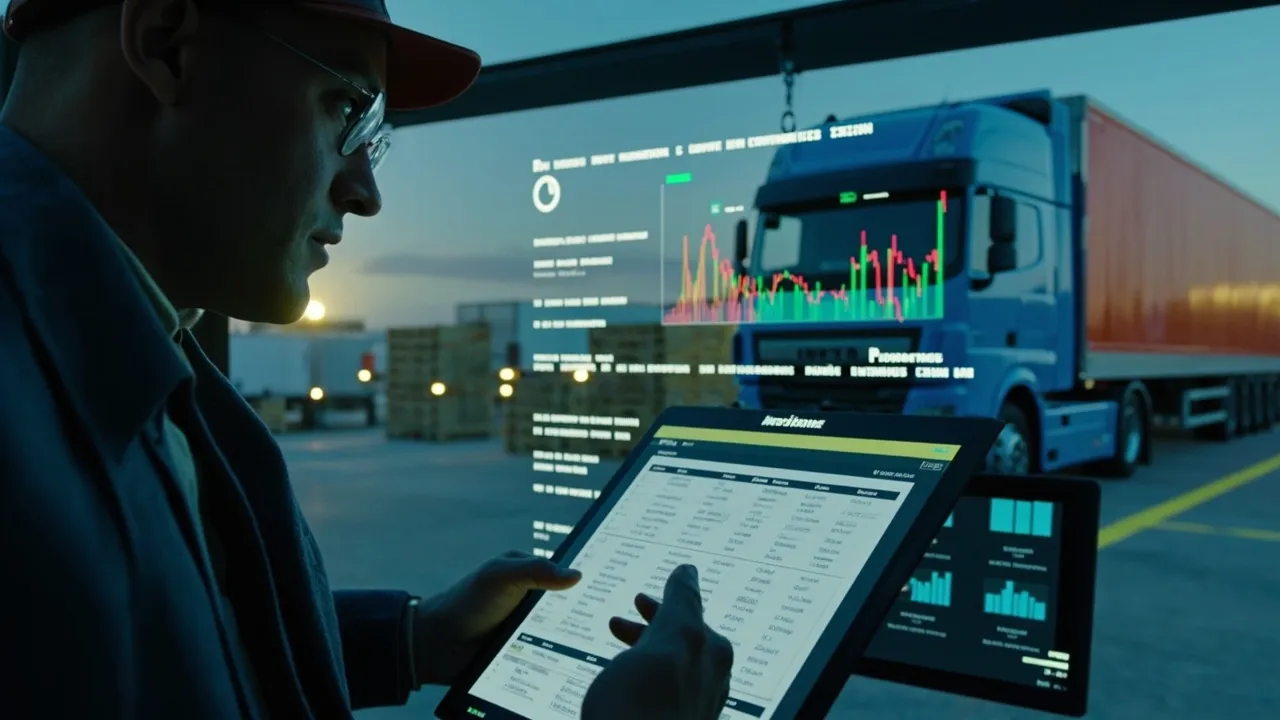
The TD Cowen-AFS Freight Index Shows Why Parcel, LTL, and Truckload Are All Getting More Expensive at Once


The ugly part of multimodal inflation is not that one mode gets expensive. It is that all the usual escape routes get worse at the same time.
That is why the latest TD Cowen-AFS Freight Index matters. Its core message is not subtle: parcel, LTL, and truckload costs are all under pressure together, and fuel is one of the main reasons the whole system feels tighter. For shippers, that is a much bigger problem than a one-mode truckload spike, because it kills the lazy fallback plan of simply shifting volume somewhere else and hoping finance will not notice.
Fuel is the cleanest place to start. According to the U.S. Energy Information Administration, the national average on-highway diesel price hit $5.608 per gallon on April 13, 2026, up from $5.401 on March 30 and $2.029 higher than the same week a year earlier. On the West Coast, diesel averaged $6.822 per gallon, while California hit $7.559 per gallon. When diesel moves like that, surcharge programs stop being background noise and start becoming a board-level cost problem.
That pressure is already showing up across transportation benchmarks. DAT’s March market update showed broad truckload tightening, with Van TVI at 253, up 12% month over month, Reefer at 196, up 7%, and Flatbed at 314, up 18%. DAT also reported fuel surcharges jumping hard, with the van surcharge rising from 41 cents to 61 cents per mile, reefer climbing to 67 cents, and flatbed reaching 73 cents. That is not just a truckload story. It is a sign that energy-driven cost inflation is bleeding into transportation planning everywhere.
The Cass data tells a similar story from a different angle. The March 2026 Cass report showed the shipments index at 1.007, down 4.5% year over year, while the expenditures index rose to 3.296, up 4.2% year over year. Translation: freight was getting more expensive even without a clean volume boom. That is exactly the kind of backdrop that makes a multimodal index like TD Cowen-AFS worth paying attention to. Rising costs are no longer isolated to one obvious bottleneck. They are spreading through the network faster than the topline demand story suggests.
Why multimodal inflation is harder to hedge
A lot of transportation teams still behave as if modal diversification is a natural hedge. In softer markets, that logic mostly works. If truckload rates jump, maybe LTL still gives you breathing room. If parcel accessorials get uglier, maybe you can redesign fulfillment flows or consolidate shipments. But when parcel, LTL, and truckload all move the wrong way together, the hedge gets pretty flimsy.
That is the real warning in the TD Cowen-AFS read. It suggests shippers are not dealing with one bad procurement pocket. They are dealing with system-wide cost pressure driven by fuel, tighter carrier discipline, and the accumulated effect of surcharges and accessorials that quietly compound across modes.
This is especially painful in parcel. Parcel invoices are already full of charges that finance teams barely trust and operations teams rarely audit in real time. When fuel surcharges rise on top of residential fees, delivery-area surcharges, oversized handling, and peak-style pricing behavior, the all-in cost of small-package shipping can drift upward long before anyone changes packaging design or order-routing logic.
LTL gets squeezed differently, but just as brutally. Higher fuel costs raise linehaul economics, but they also magnify the penalty for poor shipment characteristics. Bad classification discipline, avoidable reweighs, weak palletization, and preventable accessorials become more expensive when carriers have less reason to forgive sloppy freight.
Truckload, meanwhile, stays the most obvious pain point because its price moves are easier to see fast. But obvious does not mean isolated. If truckload capacity tightens while fuel remains elevated, more freight gets pushed into consolidation conversations, mode conversion experiments, and network redesign efforts. That sounds smart until those alternatives are already inflating too.
Freight audit is no longer a back-office chore
When every mode gets more expensive at once, freight audit stops being a clerical function and becomes a margin-protection function.
This is where a lot of shippers still screw it up. They separate freight audit from procurement, surcharge management from operations, and mode decisions from finance. That creates exactly the kind of blind spots multimodal inflation exploits.
A proper response starts with invoice-level discipline. Transportation leaders should know:
- how much current cost inflation is pure fuel versus base-rate movement
- which parcel surcharge codes are expanding fastest
- where LTL accessorials are recurring by facility or customer profile
- which truckload lanes are breaching routing-guide assumptions most often
- whether mode shifts are reducing cost or just moving pain into a different invoice bucket
Without that visibility, teams end up arguing about rates while accessorial leakage does the real damage.
The playbook for cost containment
If the TD Cowen-AFS signal is right, shippers need tighter controls now, not another month of commentary.
First, audit surcharge logic by mode. Not just the invoice totals, the actual mechanics. Many teams know fuel is up, but they cannot explain how their parcel, LTL, and truckload providers calculate recovery or where lag effects are distorting cost.
Second, tighten mode-governance rules. If shipments are being upgraded, split, or re-routed without clear thresholds, multimodal inflation will punish that behavior fast. The answer is not to ban flexibility. It is to force those decisions through guardrails tied to service, margin, and customer value.
Third, clean up shipment quality. In LTL, better dimensions, weights, packaging, and classification reduce the odds of paying premium rates for avoidable mistakes. In parcel, cartonization and order-consolidation discipline matter more when every surcharge dollar is amplified. In truckload, routing-guide compliance and lane-level carrier fit matter more when backup coverage gets expensive.
Finally, stop treating transportation data as a monthly reporting artifact. In a market where diesel can move sharply and cost pressure can spread across parcel, LTL, and truckload together, stale visibility is basically a tax.
The latest TD Cowen-AFS Freight Index should be read as a warning, not a curiosity. When all three core modes get more expensive at once, shippers lose the luxury of sloppy governance. Cost containment stops being about heroic renegotiation and starts being about disciplined execution, cleaner data, and faster intervention.
For teams that want tighter freight audit controls, better surcharge visibility, and clearer mode governance before multimodal inflation gets worse, book a CXTMS demo and see how CXTMS helps logistics teams control transportation spend with less guesswork.