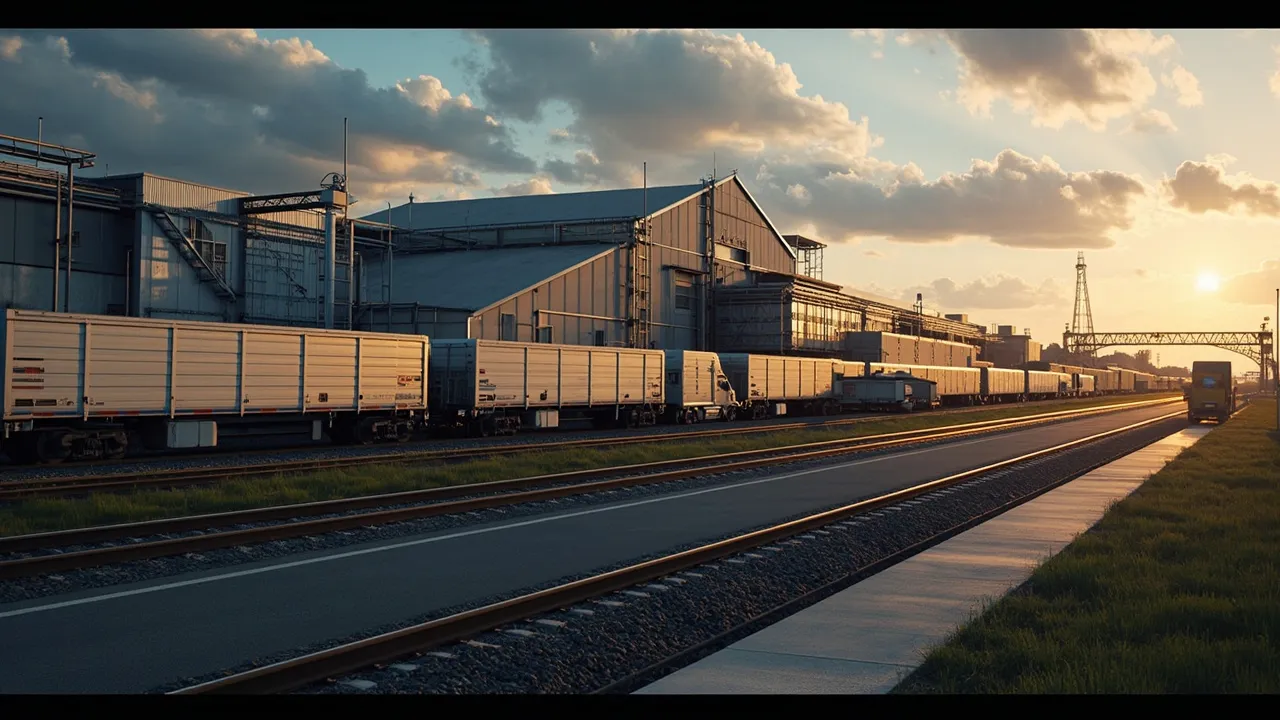
Rail Freight Volume Posts 1.8% Gain in Early 2026: How Intermodal Is Outperforming Carloads and What It Means for Shippers

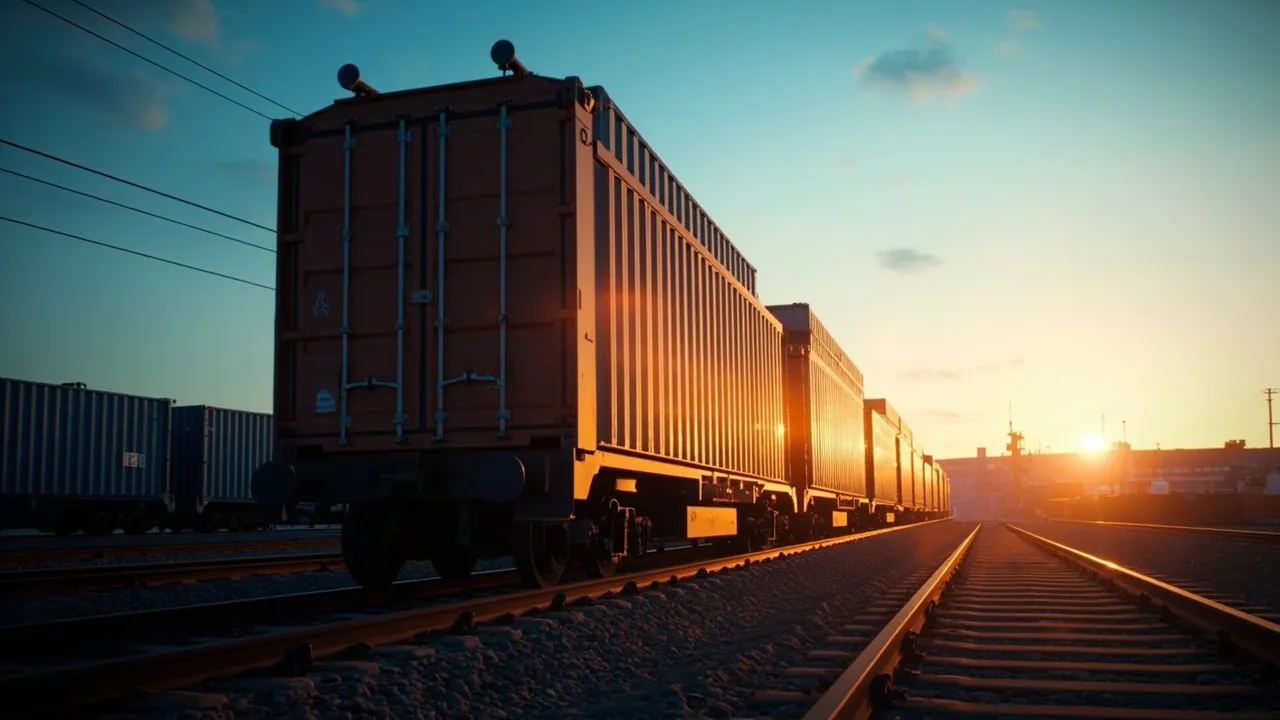
The $80B North American rail cargo market is showing unexpected resilience in 2026, with rail volumes posting a 1.8% gain through the first 12 weeks of the year according to the latest Association of American Railroads (AAR) data. More significantly, intermodal units are gaining competitive positioning against trucking, creating new opportunities for shippers navigating Q2 capacity constraints.
The Numbers Tell the Story
North American rail volume for the first 12 weeks of 2026 reached 8,245,424 carloads and intermodal units, up 1.8% from the same period in 2025. The real story lies in the modal breakdown: carloads have shown mixed performance with some declines, while intermodal units are demonstrating sustained growth despite January softness.
AAR's weekly reports reveal that for the week ending March 28, 2026, U.S. railroads reported cumulative volume of 2,684,108 carloads, up 4.2% year-over-year, and 3,311,403 intermodal units, showing modest improvement from earlier in the quarter. This intermodal performance comes as truckload spot rates hit multi-year highs, creating a classic modal shift scenario.
Intermodal's Strategic Rebound
Intermodal rail service rebounded in February 2026 after a soft January, with industry analysts noting that rail is gaining ground versus trucking for long-haul lanes. This shift isn't just about capacity constraints—it's about economics and reliability.
Rail transport offers several advantages that are becoming increasingly attractive in 2026:
- Cost stability: While truckload rates experience significant volatility, rail pricing remains more predictable
- Environmental considerations: Rail's lower carbon footprint aligns with corporate sustainability mandates
- Capacity preservation: Rail provides an alternative as trucking faces capacity constraints
CPKC's Trinational Game Changer
Canadian Pacific Kansas City's (CPKC) trinational single-line network is fundamentally reshaping intermodal competitive positioning. The railroad's ability to offer seamless service across Canada, the U.S., and Mexico is creating new efficiencies that were previously impossible.
Just weeks after the merger completion, CPKC secured major contracts with Schneider National and Knight-Swift for intermodal traffic between the U.S. and Mexico. This single-line service is enabling CPKC to compete effectively in the Chicago-Mexico corridor that had been dominated by Union Pacific and BNSF.
The railroad is also developing interline intermodal service with CSX that connects Mexico and Texas with points in the Southeast, further strengthening its competitive positioning against trucking for specific corridors.
Why Shippers Should Evaluate Rail in Q2
As Q2 2026 unfolds, shippers running lean networks should seriously evaluate rail as a capacity hedge against trucking volatility. Several factors make this particularly relevant:
1. Truckload Capacity Constraints
- Spot rates hitting multi-year highs
- Driver shortage issues persisting
- Equipment age concerns and maintenance challenges
2. Predictable Service Windows
- Rail schedules are more consistent than truckload spot markets
- Less susceptible to short-term capacity fluctuations
- Better for lanes where timing is predictable
3. Cost-Effectiveness for Specific Lanes
- For distances over 500 miles, rail often proves more economical
- Accessorial charges are typically lower and more predictable
- Fuel surcharge volatility affects rail less dramatically
The key insight is that rail shouldn't be viewed as a replacement for trucking, but rather as a strategic component of a diversified transportation network.
The Technology Transformation: ERP-WMS Convergence
Perhaps the most significant development for rail adoption is the modernization of the $80B North American rail cargo market through ERP-WMS convergence and real-time rail APIs.
Traditional rail freight suffered from information asymmetry and lack of visibility. Today's systems are changing that equation:
Real-time Visibility: Modern TMS platforms provide end-to-end visibility for rail shipments, including precise ETAs, location tracking, and exception management. This eliminates the traditional "black box" perception of rail service.
API-First Integration: New rail APIs are enabling seamless integration between transportation management systems, warehouse management systems, and enterprise resource planning platforms. This creates a unified data environment that supports better decision-making.
Predictive Analytics: Advanced platforms can now predict rail performance patterns, helping shippers optimize when to use rail versus other modes based on historical data and current conditions.
CXTMS: Enabling Rail Intermodal Success
For shippers considering rail intermodal adoption, having the right technology foundation is critical. CXTMS provides the tools needed to successfully implement rail strategies:
Multi-Modal Rate Benchmarking: Our platform allows shippers to compare rail versus truck rates on an apples-to-apples basis, including all accessorial charges and transit time considerations.
Lane-Specific Optimization: CXTMS uses machine learning to identify specific lanes where rail offers the best combination of cost, transit time, and reliability.
Carrier Performance Analytics: We track rail carrier performance metrics on-time delivery, equipment availability, and customer service, helping shippers make data-driven carrier selections.
Network Design Modeling: Our platform can model how rail integration affects overall network costs and service levels, helping shippers determine optimal rail penetration rates.
The Road Ahead
The 1.8% gain in rail freight volume through early 2026 represents more than just statistical growth—it signals a fundamental shift in how shippers think about modal choice. As trucking capacity remains tight and costs continue to climb, rail intermodal is emerging as a strategic alternative rather than just a cost play.
The integration of CPKC's trinational network, combined with technological improvements in rail visibility and reliability, creates a compelling case for shippers to reevaluate their transportation strategies. The key to success lies in understanding where rail provides the best value proposition and building the technological infrastructure to support optimal modal selection.
For logistics managers, the message is clear: ignoring rail intermodal in 2026 could mean missing significant cost savings opportunities while potentially compromising service reliability. The time to develop a comprehensive rail strategy is now, before capacity constraints become even more acute.
Ready to explore how rail intermodal can optimize your transportation network? Schedule a CXTMS demo to see our multi-modal optimization platform in action.