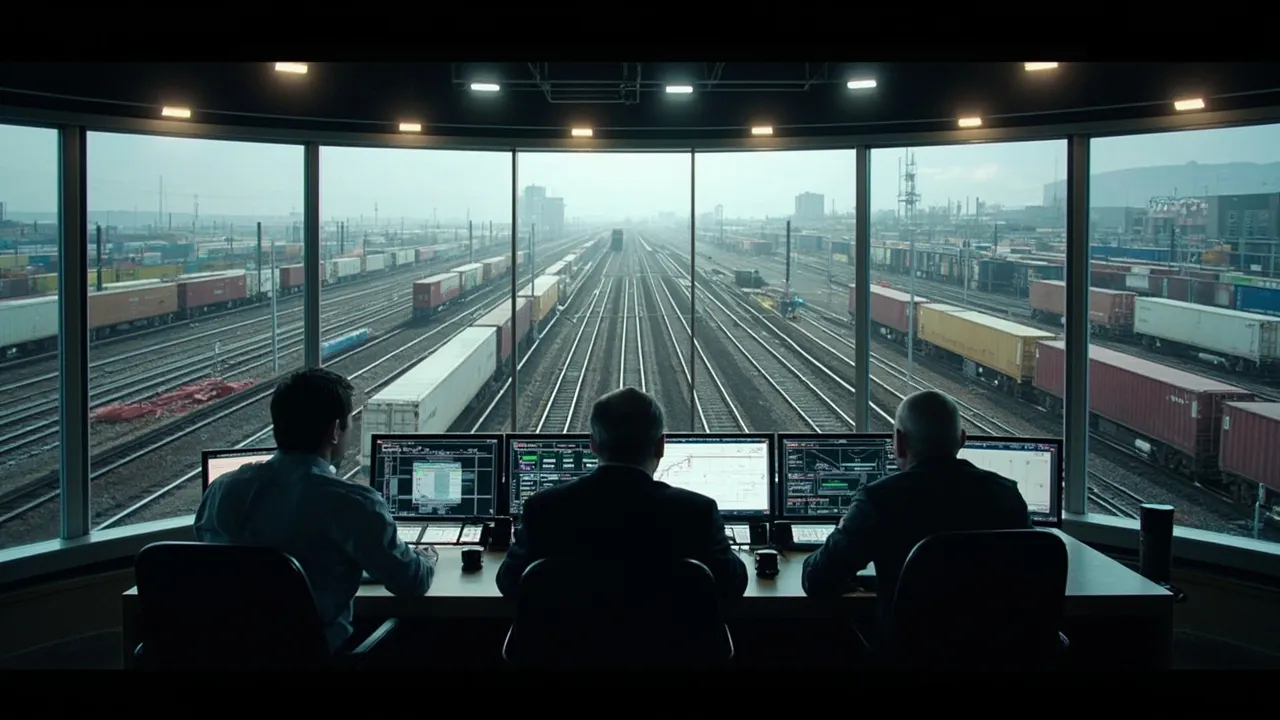
Predictive Scheduling Laws Are Coming for Warehouses: What Logistics Operators Need to Know in 2026

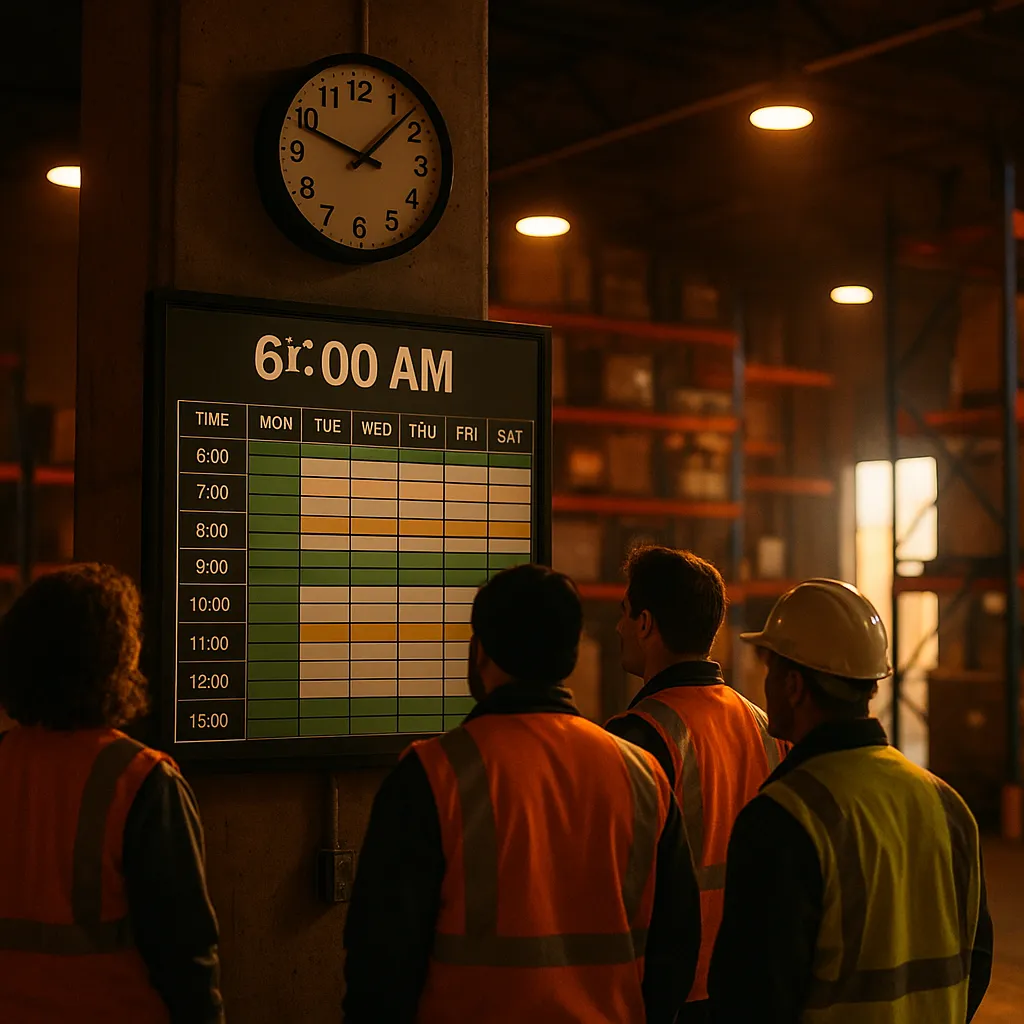
The warehouse floor runs on flexibility. Peak seasons surge without warning. E-commerce spikes rewrite staffing plans overnight. A delayed inbound container means a shift that was supposed to start at 6 AM now starts at 10 PM—or gets canceled entirely.
For decades, that kind of just-in-time scheduling was simply how distribution operations worked. But a growing wave of predictive scheduling laws—also called fair workweek ordinances—is rewriting the rules, and warehouse operators who aren't paying attention are walking into a compliance minefield.
The Regulatory Landscape: Where the Laws Already Apply
Predictive scheduling legislation started in San Francisco in 2015 and has been steadily expanding. As of early 2026, the following jurisdictions have enforceable fair workweek laws that explicitly cover warehouse services:
- Chicago, IL — The Fair Workweek Ordinance covers seven industries including warehouse services. Employers with 100+ employees globally must provide schedules 14 days in advance and pay predictability premiums for last-minute changes. Covered employees earn $30.80/hour or less.
- New York City — The Fair Workweek Law applies to retail and fast food, with ongoing legislative pressure to extend coverage to warehouse and distribution operations in the five boroughs.
- Los Angeles County, CA — The 2025 fair workweek ordinance targets retail employers with 300+ employees, requiring 14-day advance scheduling and rest period protections. Warehouses operated by qualifying retailers fall within scope.
- Oregon — The statewide predictive scheduling law covers retail, hospitality, and food service employers with 500+ employees. While warehouses aren't explicitly named, distribution centers operated by covered retailers are increasingly subject to enforcement.
Several states including Connecticut, Massachusetts, and New Jersey have introduced predictive scheduling bills in 2025–2026 legislative sessions that would expand coverage to logistics and warehousing for the first time.
What These Laws Actually Require
While specifics vary by jurisdiction, the core obligations are remarkably consistent:
Advance Schedule Notice. Employers must post work schedules 14 days before the start of the work period. In some jurisdictions, the notice window started at 10 days and has already escalated—Chicago moved from 10 to 14 days in 2022.
Predictability Pay. When schedules change after posting, employers owe premium compensation. Under Chicago's ordinance, adding more than 30 minutes to a shift, changing shift times, or canceling a shift within the 14-day window triggers one hour of additional pay per affected employee.
Right to Rest. Employees can decline any shift that begins less than 10 hours after their previous shift ended. If they agree to work a "clopening" (close-then-open) shift, employers must pay a premium—typically 1.25x to 1.5x the regular hourly rate.
Good Faith Estimates. New hires must receive a written estimate of expected weekly hours, on-call expectations, and scheduling patterns at the time of hire.
Why Warehouses Are Uniquely Exposed
Predictive scheduling compliance is challenging for any employer. For warehouse and distribution operators, it's an order of magnitude harder.
Demand volatility is the business model. Unlike a retail store with relatively stable foot traffic patterns, a distribution center's labor needs are driven by inbound shipment timing, carrier schedules, and order volume that can swing 40% or more day-to-day. A Supply Chain Dive report on Walmart's AI-driven supply chain illustrates how even the largest operators rely on sophisticated AI forecasting to predict demand—and still face unexpected surges that require rapid workforce reallocation.
Turnover amplifies the problem. Warehouse worker turnover averages approximately 36–45% annually, according to industry workforce research, with replacement costs ranging from 25% to 150% of annual salary depending on role complexity. High churn means constant scheduling adjustments as new workers are onboarded and trained.
Multi-shift operations create clopening risk. Warehouses running two or three shifts face inherent rest-period conflicts. When a second-shift worker is asked to cover a first-shift absence the next morning, that's exactly the kind of scheduling pattern these laws penalize.
Peak season is a compliance trap. The holiday surge from October through January—when warehouses commonly increase headcount by 30–50%—creates a perfect storm of last-minute schedule changes, extended shifts, and compressed rest periods. Every one of those adjustments is a potential predictability pay trigger.
The Penalty Math Gets Expensive Fast
The financial exposure for non-compliance scales quickly in warehouse environments. Consider a 200-person distribution center in Chicago:
- A single shift cancellation within the 14-day window triggers one hour of predictability pay per affected worker
- If 50 workers have shifts modified during a peak week, that's 50 hours of premium pay—per occurrence
- Repeat violations can trigger enforcement investigations, with penalties up to $1,000 per affected employee under some municipal ordinances
- Class-action litigation risk is real: New York's fair workweek enforcement has generated multimillion-dollar settlements against retail employers, and warehouse operators are next in line
According to a SupplyChainBrain analysis, more than 90% of warehouse operators are now using some form of AI or advanced automation—but most of that investment targets picking, packing, and inventory. Labor scheduling compliance remains a dangerous blind spot.
Building a Compliance-Ready Scheduling Operation
Logistics operators don't have to choose between operational flexibility and legal compliance. The solution lies in predictive labor planning—using data-driven forecasting to build schedules that satisfy both advance-notice requirements and operational needs.
Demand-driven schedule generation. Instead of building schedules reactively, operators should use historical volume data, inbound shipment forecasts, and seasonal patterns to generate compliant schedules 14+ days out. This requires tight integration between warehouse management systems, transportation management platforms, and labor scheduling tools.
Automated compliance guardrails. Scheduling software should automatically flag rest-period violations, clopening conflicts, and predictability pay triggers before schedules are published—not after. The best systems track jurisdiction-specific rules across multi-site operations.
Voluntary standby lists. Oregon's law explicitly allows employers to maintain opt-in standby lists for workers willing to pick up shifts on short notice. This creates a compliant mechanism for handling demand spikes without triggering premium pay obligations.
Documentation and audit trails. Every schedule publication, modification, and employee consent must be documented. When enforcement agencies investigate, the burden of proof falls on the employer.
How CXTMS Supports Warehouse Scheduling Compliance
CXTMS labor planning tools integrate directly with shipment and order data to generate demand-driven workforce forecasts that look 14+ days into the future. By connecting transportation schedules, inbound container ETAs, and historical volume patterns, CXTMS helps warehouse operators build compliant schedules that reflect actual operational needs—not yesterday's guesswork.
The platform's compliance engine automatically enforces jurisdiction-specific scheduling rules across multi-site operations, flagging rest-period violations and predictability pay triggers before schedules are finalized. Integrated audit trails capture every schedule change and employee acknowledgment, creating a defensible compliance record.
The regulatory trend is clear: predictive scheduling laws are expanding, not retreating. Logistics operators who build compliance into their scheduling workflows now will avoid the penalties, litigation, and operational disruption that catch unprepared competitors off guard.
Ready to future-proof your warehouse scheduling compliance? Request a CXTMS demo and see how demand-driven labor planning keeps your operations flexible and compliant.