Lean Warehouse Management Goes Digital: How AI Is Reinventing Toyota Production Principles for 2026 Fulfillment Operations

The Toyota Production System (TPS) revolutionized manufacturing seven decades ago with a deceptively simple mandate: maximize value, eliminate waste. In 2026, those same principles are experiencing a renaissance inside warehouse and fulfillment operations—but this time, they're powered by artificial intelligence that can detect inefficiencies humans never could and iterate improvements at machine speed.
As BD CEO Tom Polen told Fortune in February 2026, his company scaled from 50 kaizen projects to 1,500 in a single year by combining lean methodology with digital tools. His advice to logistics leaders: "If you're not doing lean, do lean first. Get those systems and capabilities and then start applying AI on top of solid processes. AI with lean is where you get the power."
That philosophy is now reshaping how fulfillment operations run—and the data backs it up.
The Lean Warehouse Renaissance
Lean principles—kaizen (continuous improvement), kanban (pull-based replenishment), muda elimination (waste removal), and the 5S framework (Sort, Set, Shine, Standardize, Sustain)—were designed for factory floors. But modern warehouses face the same fundamental challenges: excess motion, overprocessing, waiting, defects, and misallocated inventory.
The difference in 2026 is scale and speed. E-commerce fulfillment operations process thousands of SKUs daily across complex pick paths, and the margin for inefficiency is razor-thin. According to MHI's Top Supply Chain Trends for 2026, AI and automation rank among the top three forces reshaping supply chain operations this year, with MHI CEO John Paxton noting that "2026 marks a turning point where supply chains are not just reacting to disruption—they're anticipating it."
Traditional lean relied on human observation: gemba walks, paper kanban cards, and manual value-stream mapping. Digital lean replaces observation with omniscient data collection and replaces intuition with algorithmic optimization.
Digital Kanban: AI-Driven Pull Systems Replace Manual Triggers
The kanban system—Toyota's iconic signal-based replenishment method—was originally a physical card attached to bins on the production line. When a worker emptied a bin, the card triggered a replenishment order. Simple, elegant, and effective.
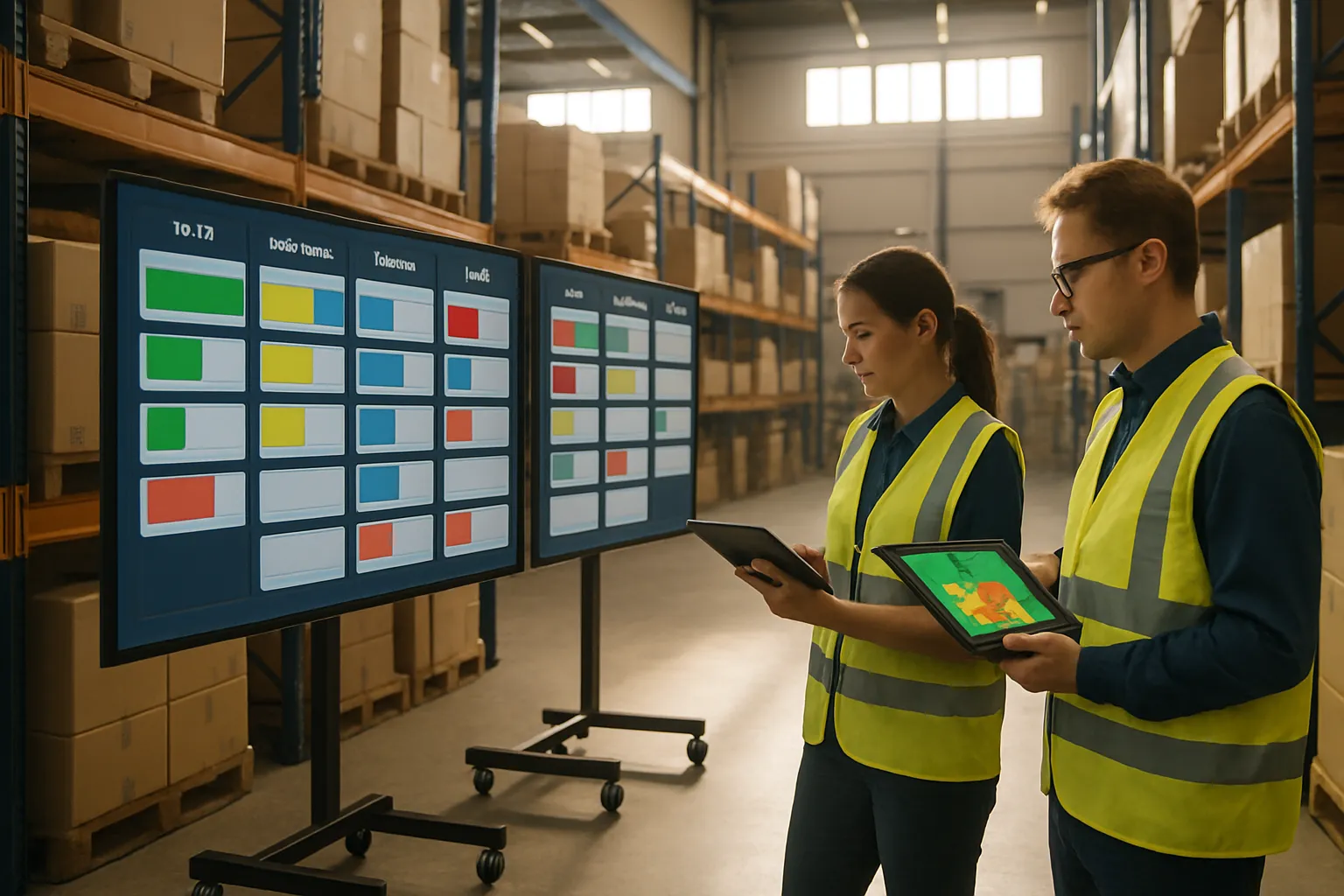
Digital kanban in 2026 warehouses takes this concept to an entirely different level. IoT sensors on shelves, bins, and pick faces continuously monitor inventory levels in real time. When stock reaches a dynamically calculated reorder point—adjusted automatically based on current demand velocity, incoming orders, and seasonal patterns—the system triggers replenishment without human intervention.
The AI layer adds predictive intelligence. Rather than waiting for a bin to empty, machine learning models analyze order patterns across hundreds of variables—time of day, day of week, promotional calendars, weather forecasts affecting demand—to pre-position inventory before it's needed. The result is a pull system that anticipates demand rather than merely responding to it.
For warehouses running thousands of SKUs, this eliminates the chronic problem of stockouts at pick faces that force workers into costly secondary retrievals from bulk storage.
AI-Powered Muda Detection: Finding Hidden Waste at Scale
In lean terminology, muda refers to seven categories of waste: transportation, inventory, motion, waiting, overprocessing, overproduction, and defects. Traditional lean practitioners identify waste through direct observation—walking the warehouse floor, timing processes, and interviewing workers.
AI-powered muda detection operates continuously and at a granularity impossible for human observers. Research from Deposco found that traditional warehouses waste approximately 30% of worker time hunting for inventory—a staggering motion waste that, in a 100,000-square-foot facility alone, represents over $200,000 in recoverable annual costs.
Computer vision systems track picker movements through the warehouse, identifying inefficient travel patterns, unnecessary backtracking, and congestion hotspots. Machine learning algorithms analyze pick-path data to detect when workers consistently bypass the suggested route—often a signal that the suggested path doesn't account for real-world obstacles or that slotting assignments are suboptimal.
Inventory placement optimization—a direct digital analog to lean's concept of organizing workstations for flow—uses AI to continuously reassess where products should be slotted based on velocity, co-pick frequency, and ergonomic factors. High-velocity items migrate toward golden zones automatically, while slow movers shift to less accessible locations.
Continuous Improvement at Machine Speed: AI Kaizen
Kaizen—the practice of continuous, incremental improvement—is perhaps the most culturally significant lean principle. In traditional settings, kaizen events are periodic workshops where teams identify problems and implement solutions over days or weeks.
AI kaizen compresses this cycle from weeks to hours. Warehouse management systems with embedded AI can test layout modifications, pick-path algorithms, and labor allocation strategies in simulation, evaluate results against real-time performance data, and implement changes within the same shift.
McKinsey research shows that 67% of companies now report revenue increases from AI deployed in supply chain and inventory management—one of the highest ROI rates across all business functions. Much of that return comes from the compounding effect of continuous micro-improvements: a 2% pick-path efficiency gain here, a 3% reduction in replenishment cycle time there, accumulating into transformative throughput improvements over quarters.
The key insight is that AI doesn't replace the kaizen mindset—it accelerates it. Every warehouse transaction becomes a data point that teaches the system something new about optimal operations, creating a flywheel of improvement that traditional lean practitioners could only dream about.
The 5S Framework Meets IoT: Digital Housekeeping
The 5S framework—Sort, Set in Order, Shine, Standardize, Sustain—is lean's housekeeping methodology. In a digital warehouse, each element gets an IoT-powered upgrade:
- Sort: AI inventory analytics continuously identify dead stock, obsolete SKUs, and misplaced items, flagging them for removal or relocation without manual audits.
- Set in Order: Dynamic slotting algorithms ensure every item has an optimal location based on current demand patterns, not historical assumptions set during warehouse commissioning.
- Shine: Predictive maintenance sensors on conveyors, sortation systems, and material handling equipment detect degradation before failures occur, keeping infrastructure in peak condition.
- Standardize: Digital standard operating procedures displayed on wearable devices or pick-to-light systems ensure consistent execution across shifts and skill levels.
- Sustain: Real-time dashboards and automated compliance monitoring ensure lean standards don't decay over time—the most common failure mode in traditional lean implementations.
Data-Driven vs. Assumption-Driven Warehouses in 2026
The gap between warehouses that have digitized lean principles and those still operating on assumptions is widening rapidly. Organizations implementing AI-driven warehouse management report labor productivity gains of 30–50% through better planning and allocation, along with shipping cost reductions of 15–25% from optimized inventory positioning.
Meanwhile, MHI's 2026 analysis highlights the workforce talent gap as the number-one supply chain challenge—making it even more critical to amplify the productivity of every worker through intelligent systems rather than simply adding headcount.
The warehouses winning in 2026 aren't choosing between lean methodology and AI technology. They're recognizing that lean provides the operational discipline and waste-elimination framework, while AI provides the speed, scale, and analytical depth to execute those principles at a level human-only systems never could.
How CXTMS Integrates Lean Analytics into Warehouse Management Workflows
At CXTMS, we believe the most efficient supply chains combine proven operational methodology with cutting-edge technology. Our platform helps shippers apply lean principles across their logistics operations by providing real-time visibility into warehouse performance, automated identification of waste and inefficiency, and data-driven recommendations for continuous improvement.
Whether you're digitizing kanban systems, optimizing pick paths, or building a culture of AI-accelerated kaizen, CXTMS gives you the analytical foundation to make lean warehousing a reality.
Ready to eliminate waste from your warehouse operations? Request a CXTMS demo today and see how digital lean principles can transform your fulfillment performance.