ISM Reports Autonomous Supply Chains Are No Longer Optional: Why AI-Driven Disruption Management Is Replacing Human Response Teams

For years, supply chain disruption management followed the same playbook: a crisis hits, an analyst spots the problem in a dashboard, a war room convenes, and a team of planners manually reroutes shipments, qualifies alternate suppliers, and updates customers one by one. That model worked when disruptions were occasional and isolated.
In 2026, they are neither.
The Institute for Supply Management (ISM) published a supply chain news roundup in March that made the case bluntly: organizations can no longer manage today's overlapping disruptions—tariff escalations, geopolitical conflicts, climate events, and port congestion—without real-time analytics and automated risk analysis. The manual response team model is breaking under the weight of simultaneous, fast-moving crises that exceed human processing capacity.
The Gartner Prediction That Changes Everything
The ISM findings align with a striking prediction from Gartner released the same month: by 2031, 60% of supply chain disruptions will be resolved without human intervention as AI enables increasingly autonomous supply chains.
That statistic deserves a pause. It means that within five years, the majority of freight rerouting decisions, supplier substitutions, inventory rebalancing actions, and customer notifications triggered by disruptions will happen automatically—without a human approving each step.
According to Gartner's press release, a survey of 509 supply chain leaders conducted in October 2025 found that "changes in ways of working driven by advancements in AI and agentic AI" will be the most influential driver of future supply chain performance over the next two years.
Julia von Massow, Director Analyst in Gartner's Supply Chain practice, put it this way: "As more frequent and complex disruptions continue to test response capacity, organizations are moving toward AI that can sense and act in real time to improve the consistency and speed of decisions."
Why 2026 Is the Inflection Point
Three converging forces are pushing supply chains past the tipping point where manual disruption management becomes structurally inadequate:
1. Trade policy complexity has exploded. The U.S.-China tariff war, EU carbon border adjustments, USMCA compliance requirements, and shifting sanctions regimes create a regulatory environment that changes weekly. No human team can model every tariff scenario across thousands of SKUs in real time.
2. Geopolitical conflicts are multiplying simultaneously. Red Sea shipping disruptions, ongoing Russia-Ukraine trade impacts, and Taiwan Strait tensions aren't sequential—they're concurrent. Each one generates cascading effects across different trade lanes, and the compound impact exceeds any manual team's ability to track and respond.
3. Disruption frequency has permanently increased. According to Inbound Logistics' 2026 AI outlook survey, supply chain leaders rated AI's usefulness at an average of 8 out of 10 for 2026, with several executives calling it "transformative" for predictive intelligence and integrated decision-making. The industry consensus has shifted from "AI is interesting" to "AI is required."
What "Autonomous" Actually Means in Practice
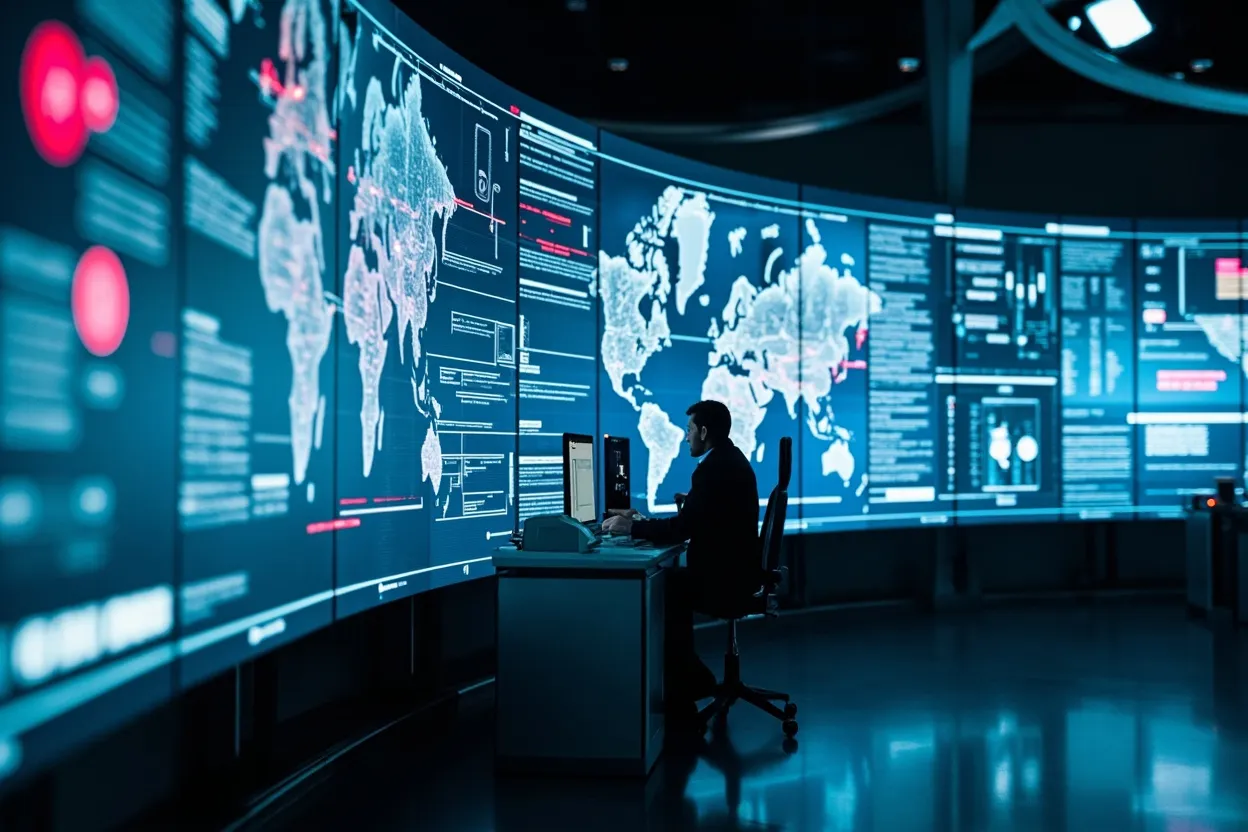
When ISM and Gartner talk about autonomous disruption management, they're describing a specific operational loop that replaces the traditional war room:
Detection: AI systems continuously monitor thousands of data feeds—weather patterns, port congestion indices, carrier performance metrics, geopolitical risk signals, commodity prices, and regulatory changes—to identify disruptions before they impact operations.
Assessment: Within seconds of detection, the system evaluates impact across the entire supply network: which shipments are affected, which customers face delays, which inventory positions need adjustment, and what the financial exposure is.
Response: The system autonomously executes pre-approved actions—rerouting shipments to alternate carriers, triggering safety stock releases, switching to backup suppliers, adjusting delivery promises to customers, and filing claims—all without waiting for a human to convene a meeting.
Learning: Every disruption response feeds back into the system's models, improving future detection accuracy and response effectiveness. The system gets smarter with each event.
Gartner is careful to note that current technological maturity and data availability should, for now, restrict full automation to low-risk decisions. For higher-stakes choices—such as dropping a strategic supplier or rerouting an entire product line—AI augments human judgment rather than replacing it. But the trajectory is clear: the boundary of what qualifies as "low-risk" expands every quarter as data quality and model confidence improve.
The 55% Workforce Signal
A separate Gartner survey revealed that 55% of supply chain leaders expect agentic AI to reduce entry-level hiring needs. This isn't about mass layoffs—it's about the fundamental restructuring of how supply chain teams are organized.
As autonomous systems handle routine disruption triage, the human role shifts from reactive firefighting to strategic oversight: setting the rules that AI follows, validating high-stakes decisions, managing supplier relationships that require judgment and negotiation, and designing the governance frameworks that keep autonomous systems accountable.
CSCOs who delay this transition face a compounding problem: every quarter they spend managing disruptions manually is a quarter their competitors spend training AI systems that get progressively better at autonomous response.
What CSCOs Should Do Now
Gartner recommends four immediate actions for supply chain leaders:
-
Own the AI strategy. CSCOs should take responsibility for an enterprise-wide AI roadmap that aligns technology investments with disruption management and decision automation objectives.
-
Invest in data quality. Autonomous systems are only as good as the data they consume. Prioritize accurate, timely, and complete supply chain information across all trading partners.
-
Budget for change management. Assess the emotional and performance impact of increasing autonomy on existing roles. Treat workforce transition as a core workstream, not an afterthought.
-
Build contingency protocols. Develop plans for when autonomous decisions fail, including rapid human intervention procedures and continuous improvement processes based on incident analysis.
How CXTMS Integrates AI-Driven Disruption Management
At CXTMS, we've built our platform around the same principle ISM and Gartner are describing: supply chain visibility and response shouldn't depend on someone being awake, available, and fast enough to act.
Our real-time carrier performance monitoring continuously tracks transit times, service failures, and capacity constraints across your entire carrier network. When disruptions occur, CXTMS automated alerts flag affected shipments instantly—and our intelligent carrier switching recommendations help you reroute freight to reliable alternatives before delays compound.
For shippers managing freight across multiple modes and regions, the question isn't whether to automate disruption response. It's how quickly you can build the data foundation and decision frameworks to make it work.
Ready to move from reactive disruption management to proactive, AI-assisted freight operations? Request a CXTMS demo and see how real-time visibility and automated carrier intelligence can transform your supply chain resilience.