FRA Track-Tech Tests Could Make Rail Reliability More Measurable Before Service Fails

Rail reliability usually becomes visible to shippers after something has already gone wrong: a missed interchange, a delayed train, a terminal dwell spike, a late customer delivery, or an inventory promise that suddenly depends on emergency trucking.
The Federal Railroad Administration's latest track-technology waiver points toward a better model. If railroads can detect infrastructure problems earlier, logistics teams should eventually be able to treat rail condition as a leading signal, not just an after-the-fact explanation.
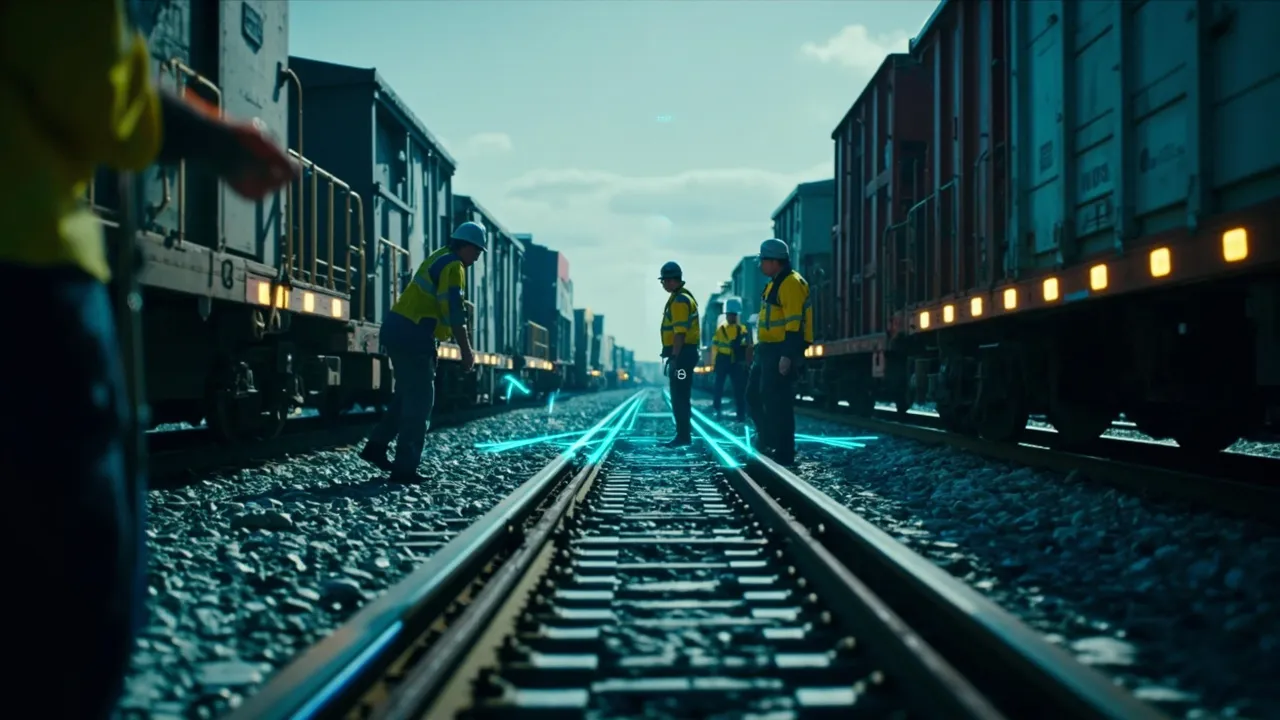
According to FreightWaves' report on the FRA waiver, the agency approved a five-year waiver allowing railroads to expand Automated Track Inspection, or ATI, technology. The systems use lasers, cameras, sensors, and sometimes ground-penetrating radar mounted on rail equipment to scan tracks at normal operating speeds. CSX plans to begin using the waiver on parts of its network on July 1, 2026, including more than 3,000 route miles and over 4,500 track miles.
That may sound like a railroad engineering story. It is not only that. It is a shipper reliability story.
Why Track Inspection Belongs in the Service Conversation
Traditional rail performance conversations usually focus on train speed, terminal dwell, cars online, demurrage, and service exceptions. Those are still essential. Supply Chain Dive's rail service dashboard explains the core measures well: speed shows how freight moves between terminals, dwell captures how long cars sit at terminal locations, and cars online reflects deployed capacity across the network.
The missing layer is infrastructure condition.
A railcar can slow because a track segment needs inspection, repair, or operating restrictions. A train may dwell because the upstream network is constrained by track geometry defects, heat restrictions, maintenance windows, or safety interventions. Shippers feel those failures as poor ETA confidence, but the root cause sits deeper in the physical network.
ATI matters because it can create a more frequent, data-rich view of the track itself. FreightWaves reported that the waiver covers systems capable of measuring rail alignment, gauge, and track geometry under the actual weight of moving trains. The Association of American Railroads said ATI can be more effective than visual inspection alone, in some cases reducing track geometry defects by 90%.
Even if that improvement varies by corridor, the directional point is important: condition monitoring is moving from periodic inspection toward continuous operational data.
The Shipper Impact Is ETA Confidence
Most logistics teams do not need raw track geometry files. They need better answers to practical questions.
Will this rail lane hold its schedule next week? Is a recurring delay caused by terminal congestion, crew availability, weather, interchange execution, or infrastructure condition? Should customer service trust the rail ETA, pad the promise date, or trigger a contingency move? Is this carrier's service problem temporary, corridor-specific, or structural?
Those questions determine inventory buffers, appointment planning, production sequencing, and customer communication. When rail is predictable, it can be an efficient backbone for long-haul freight. When it is unpredictable, shippers overcorrect with premium truckload, excess safety stock, and manual expediting.
Automated track inspection will not eliminate disruptions. It can improve the signal quality around them. If a railroad can identify a defect earlier and schedule a repair before it turns into a service failure, the shipper never experiences the disruption. If repairs do require a slowdown or outage, better condition data can support earlier notifications and more credible ETA adjustments.
That is the difference between visibility as a dashboard and visibility as an operating system. A dashboard tells you a shipment is late. An operating system helps you understand whether late is likely, why it is happening, and which recovery option is worth the cost.
Carrier Scorecards Need Infrastructure Signals
Most rail carrier scorecards are too narrow. They capture price, on-time performance, transit variance, claims, billing accuracy, and maybe dwell or demurrage exposure. Useful, but incomplete.
Rail service is a system outcome. It depends on assets, terminals, crews, interchange partners, customer loading discipline, weather, and the physical condition of the network. If shippers evaluate rail only by final delivery performance, they miss the leading indicators that explain why performance is changing.
Logistics teams should start adding infrastructure-adjacent measures to their rail scorecards, even if the early versions are imperfect:
- Repeated slowdowns or ETA deterioration by corridor
- Dwell changes tied to specific origin, destination, or interchange points
- Frequency and quality of carrier communications around maintenance windows
- Exceptions caused by operating restrictions, washouts, track work, or safety inspections
- Recovery time after a corridor disruption
- Variance between carrier-provided ETAs and actual arrival by lane
The point is not to punish a railroad for maintaining its network. Maintenance is good. The point is to distinguish disciplined preventive work from surprise disruption. A railroad that finds problems early, communicates clearly, and recovers predictably should score differently from one that leaves shippers guessing.
Human Oversight Still Matters
The FRA waiver is not a blank check for replacing inspectors with software. FreightWaves noted that the waiver still requires human verification of key findings and includes data-sharing requirements so regulators can study the results. Rail unions have raised concerns that automated systems may miss defects trained workers can spot, such as certain surface issues or vegetation problems.
That tension is healthy. Logistics technology works best when automation improves consistency and humans handle judgment. The same lesson applies inside shipper organizations. Automated alerts can flag rail ETA risk, but someone still needs to decide whether to rebook freight, notify a customer, split an order, change a dock appointment, or absorb the delay.
The best outcome is not fewer humans in the loop. It is fewer humans wasting time hunting for context.
What Logistics Teams Should Do Now
Shippers do not need to wait for ATI data feeds to become broadly available before improving rail reliability management.
First, segment rail lanes by service sensitivity. A delayed box of seasonal retail goods, a production component, and replenishment inventory do not carry the same risk. Score the lanes where rail reliability has the highest business impact.
Second, track rail performance at the corridor and interchange level, not just by carrier. Network problems are often localized. A carrier may perform well overall while one lane quietly destroys customer promises.
Third, separate delay causes whenever possible. Terminal dwell, missed appointments, equipment shortages, weather, track work, and documentation errors should not all collapse into a generic "late rail" bucket.
Fourth, make ETA confidence visible to transportation, inventory, and customer-service teams at the same time. Rail disruptions become expensive when each function discovers the problem separately.
Finally, use carrier reviews to ask better questions. What infrastructure work is expected on key corridors? How are maintenance windows communicated? Which service metrics should shippers monitor weekly? How will new inspection technology change exception alerts?
Rail is becoming more measurable before it fails. That is good news for shippers only if their systems are ready to use the signal.
CXTMS helps logistics teams connect carrier performance, shipment milestones, exception history, dwell patterns, and ETA confidence in one transportation operating view. If your rail decisions still rely on scattered spreadsheets and post-mortem explanations, schedule a CXTMS demo and see how better freight visibility can turn reliability signals into earlier, smarter action.