Fashion Supply Chain Speed-to-Market: How AI-Driven Demand Sensing and Micro-Batch Logistics Are Cutting Apparel Lead Times by 70%

The fashion industry has a speed problem — and it's finally solving it. Traditional apparel supply chains operate on 6-to-9-month lead times, with brands committing to bulk seasonal orders months before consumers ever see the product. By the time garments hit store shelves, trend cycles have shifted, demand forecasts have aged out, and the result is staggering waste: according to the Boston Consulting Group, approximately 80% of discarded clothing ended up in landfills or was incinerated in 2024, while less than 1% was recycled into new textile fibers.
In 2026, a convergence of AI-driven demand sensing, micro-batch production, and nearshore logistics networks is compressing those lead times from months to weeks — fundamentally reshaping how fashion moves through the supply chain.
The Speed Imperative: From 9 Months to 3 Weeks
The gap between traditional fashion logistics and what the market now demands has never been wider. Sixty-two percent of online shoppers expect orders to arrive in less than three business days when choosing free shipping, yet more than 80% of leading fashion and apparel retailers still rely on five-to-eight-day delivery windows. That disconnect starts upstream, in the production and sourcing cycle itself.
Ultra-fast fashion pioneers like Shein demonstrated that rapid-response production was possible, releasing thousands of new styles daily through a test-and-reorder model built on real-time sales data. Now, that operational philosophy is spreading across the broader industry. McKinsey's State of Fashion 2026 report identifies speed and flexibility as the defining competitive advantages for brands navigating tariff volatility, shifting consumer preferences, and cost pressures across every segment from luxury to mass market.
The leaders are achieving what seemed impossible five years ago: compressing the design-to-delivery cycle from 9 months to as little as 3 weeks for trend-responsive items, while maintaining quality and margin targets.
AI Demand Sensing: Replacing Guesswork With Signal Intelligence
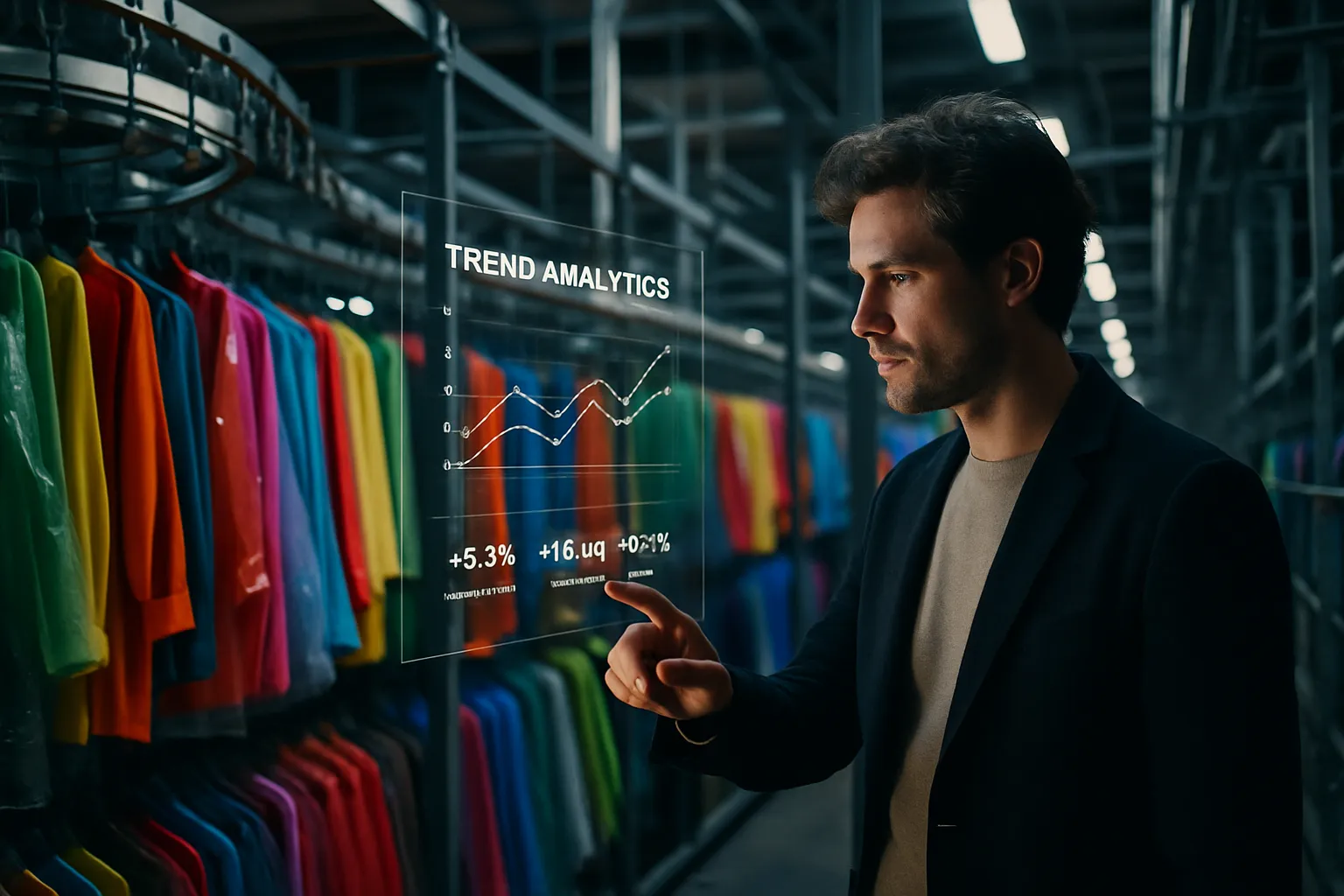
At the core of this speed revolution is AI-powered demand sensing — technology that ingests real-time signals from social media trends, search query volumes, point-of-sale data, weather patterns, and even influencer engagement metrics to predict what consumers will want before traditional forecasting models can detect the shift.
The results are transformative. According to Business Research Insights, AI-enabled supply chain optimization has led to a 32% reduction in fashion product delivery times across major U.S. retailers. But the real value isn't just faster delivery — it's smarter production. By sensing demand signals weeks earlier than conventional methods, brands can commit to smaller initial production runs and scale up only what's actually selling.
McKinsey's 2026 report notes that executives now view AI as the single most significant opportunity for the year ahead. However, up to 90% of AI initiatives still fail to scale beyond the pilot phase, predominantly because underlying data infrastructure remains fragmented. The brands winning the speed race are those that have invested in unified data architectures connecting design, sourcing, planning, and commerce into a single AI-readable pipeline.
For fashion logistics specifically, demand sensing enables a fundamental shift: from push-based supply chains that manufacture to forecast, to pull-based models that manufacture to demand.
Micro-Batch Logistics: Smaller, Faster, More Frequent
The production side of speed-to-market gets the headlines, but the logistics infrastructure enabling it is equally revolutionary. Micro-batch fulfillment — shipping smaller, more frequent consignments rather than bulk seasonal orders — requires an entirely different logistics playbook.
Traditional fashion freight moved in large consolidated shipments: full container loads (FCL) from Far East factories to regional distribution centers, typically on 35-to-45-day ocean transit schedules. Micro-batch logistics flips that model. Instead of one massive shipment per season, brands are now moving 10 to 20 smaller shipments per month, leveraging:
- Air-sea hybrid routing for trend-sensitive items that can't wait for full ocean transit but don't justify pure air freight costs
- Regional consolidation hubs near nearshore manufacturing clusters that aggregate micro-batches into efficient last-mile distribution
- Cross-dock operations that bypass traditional warehousing entirely, moving product from inbound to outbound within hours rather than days
The trade-off is clear: per-unit freight costs rise with smaller shipments, but total supply chain cost drops dramatically when you eliminate the markdowns, dead stock, and waste associated with overproducing the wrong products. The Ellen MacArthur Foundation estimates the equivalent of one garbage truck of fabric is landfilled or incinerated every second globally — a waste stream that micro-batch production directly addresses.
Nearshoring: Geography as Speed Strategy
Tariffs are accelerating a sourcing shift that speed-to-market demands were already driving. McKinsey's State of Fashion 2026 report highlights that China's share of U.S. apparel imports has declined by roughly one-third since 2019, with brands actively diversifying across Vietnam, Bangladesh, Cambodia, and — critically for speed — nearshore markets like Turkey, Portugal, and Mexico.
For U.S.-bound fashion freight, Mexico and Central American producers offer 3-to-5-day ground transit versus 30-to-45-day ocean shipping from Asia. For European brands, Turkey and Portugal provide similar proximity advantages. The math is straightforward: when your production is 5 days from market instead of 45, you can make sourcing decisions 40 days closer to actual consumer demand.
Cambodia has emerged as a particularly noteworthy new hub, benefiting from favorable trade conditions and a young workforce eager to absorb capacity shifting from China. Meanwhile, African manufacturing — particularly Morocco for EU-bound fashion — is gaining traction as brands seek even greater geographic diversification.
The nearshoring trend doesn't eliminate Asian production. Rather, it creates a tiered sourcing strategy: basics and high-volume staples continue from cost-optimized Asian factories on traditional timelines, while trend-sensitive and test-and-reorder items flow through nearshore facilities optimized for speed.
The High-Frequency Shipping Challenge
This shift to micro-batch, multi-origin, high-frequency shipping creates real complexity for logistics teams. Instead of managing a handful of large shipments per quarter, fashion supply chain managers now orchestrate dozens of smaller movements per week across multiple transport modes, origin countries, and compliance regimes.
Visibility becomes non-negotiable. When you're running 20 micro-batch shipments simultaneously from three different nearshore origins, each on a different transit schedule with different customs requirements, a single delayed shipment can cascade into empty shelves for a trending item during its peak demand window.
This is exactly where modern TMS platforms earn their value. The complexity of multi-modal, multi-origin fashion logistics demands real-time visibility, automated carrier selection based on transit time requirements (not just cost), and exception management that flags delays before they impact store-level availability.
How CXTMS Supports Modern Fashion Logistics
CXTMS's multi-modal optimization engine is built for exactly the kind of high-frequency, low-volume shipping patterns that modern fashion supply chains demand. Key capabilities include:
- Dynamic mode selection that automatically routes shipments across air, ocean, and ground based on item velocity and trend sensitivity scoring
- Multi-origin consolidation planning that aggregates micro-batches from nearshore and offshore suppliers into efficient distribution flows
- Real-time transit visibility across all carriers and modes, with proactive exception alerts when delays threaten in-stock targets
- Landed cost modeling that accounts for tariff differentials across sourcing origins, helping brands optimize the speed-vs-cost trade-off for each product category
The fashion industry's speed-to-market transformation isn't slowing down. As AI demand sensing matures and nearshore manufacturing capacity expands, the brands that thrive will be those with logistics infrastructure agile enough to match their production speed.
Ready to optimize your fashion supply chain for speed? Request a CXTMS demo and discover how our platform helps apparel brands cut lead times, reduce dead stock, and ship smarter across every mode and origin.