Electronic Bills of Lading: The Paperless Revolution Reshaping Freight Documentation

The bill of lading is the single most important document in global trade—and for centuries, it has been printed on paper, couriered across continents, and filed in warehouses. That era is ending. Electronic bills of lading are finally gaining real traction, and the numbers tell a compelling story of an industry reaching its tipping point.
The Paper Problem: Billions of Documents, Trillions at Stake
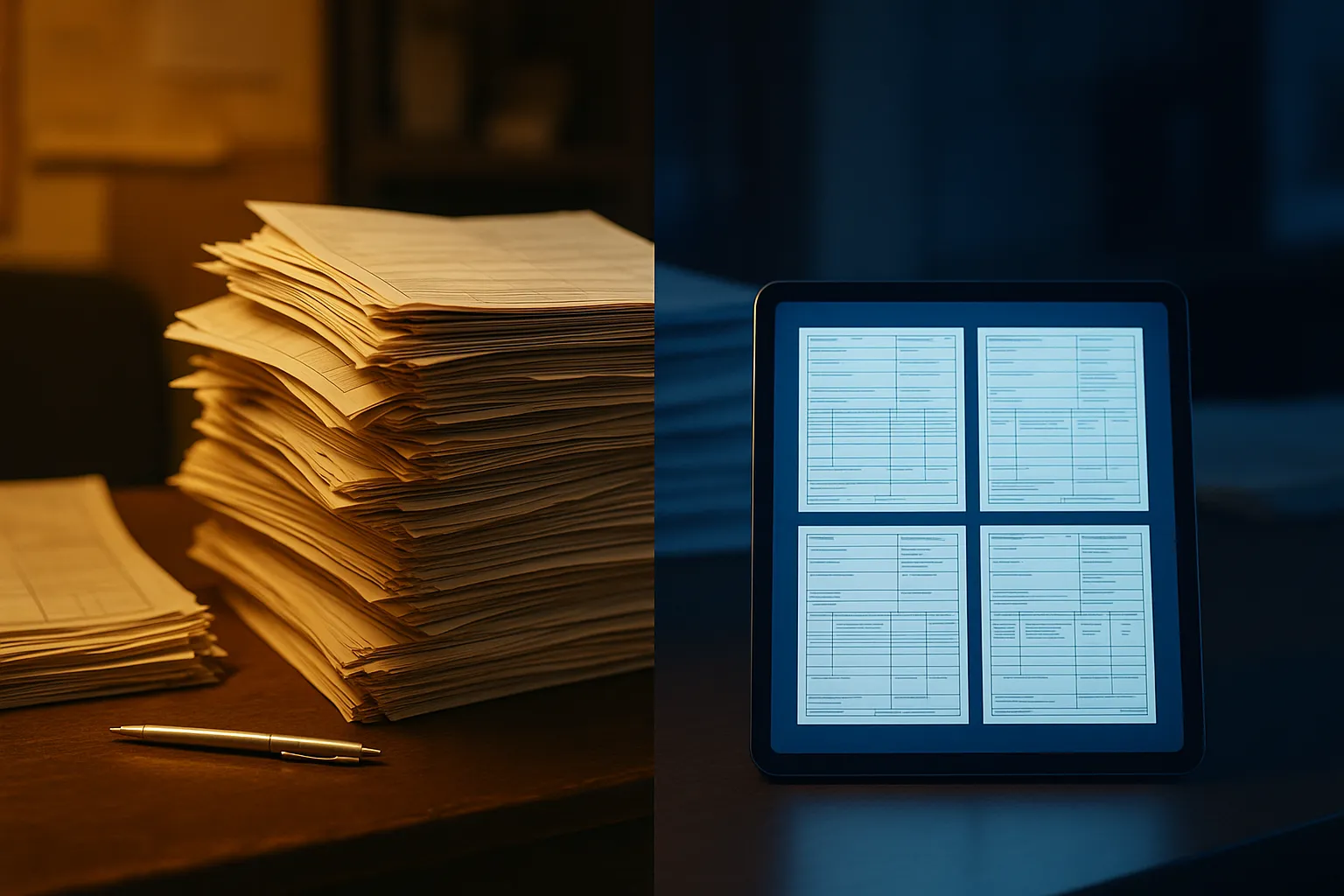
Every year, the global shipping industry generates hundreds of millions of paper trade documents. A single container shipment can require up to 50 original documents, passing through as many as 30 different parties. The bill of lading alone accounts for 10–30% of total trade documentation costs, according to McKinsey research.
The cost isn't just financial. Paper documents take 5–10 days to process through traditional banking and customs channels. They get lost, damaged, or delayed. In some trade lanes, the cargo arrives at port before the paperwork does—forcing shippers to pay for demurrage while documents catch up by courier.
McKinsey estimates that full eBL adoption could deliver $6.5 billion in direct annual cost savings across carriers, shippers, and financial institutions, while enabling an additional $40 billion in global trade by reducing friction for smaller exporters currently locked out by documentation complexity.
From 1% to 11%: The Adoption Curve Accelerates
The trajectory is unmistakable. In 2021, only about 1% of bills of lading were issued electronically. By mid-2025, that figure had climbed to approximately 11%, according to the Digital Container Shipping Association (DCSA). Nearly half of industry players now use eBLs in some form, up from one-third in 2022.
Several forces are driving this acceleration:
- Regulatory momentum. The UK's Electronic Trade Documents Act (2023) gave eBLs the same legal standing as paper originals. Singapore, Germany, and other major trading nations have followed with similar legislation.
- Industry commitments. BIMCO's "25 by 25" campaign—launched in 2023 with major bulk shippers like Rio Tinto and BHP—surpassed its target within a year, achieving 25.1% eBL adoption in iron ore trade.
- Interoperability breakthroughs. In May 2025, DCSA completed the first standards-based interoperable eBL transaction, solving the long-standing problem of siloed platforms that required all parties to use the same provider.
The DCSA's target is ambitious but increasingly realistic: 100% eBL adoption in container shipping by 2030.
The Soft Barriers: Why 89% Still Use Paper
If eBLs save billions and the technology works, why is adoption still at 11%? DCSA's own analysis points to "soft barriers"—organizational and behavioral challenges rather than technical ones.
Familiarity and inertia. Teams that have processed paper documents for decades resist workflow changes, especially when current processes "work fine." The switching cost feels high even when the long-term savings are clear.
Multi-party coordination. A bill of lading touches shippers, carriers, freight forwarders, banks, customs authorities, and consignees. All parties in a transaction chain must accept digital documents for the eBL to function. One paper-dependent link breaks the digital chain.
Trust and legal uncertainty. Despite legislative progress, many jurisdictions still lack clear legal frameworks for electronic trade documents. Banks, in particular, remain cautious about accepting eBLs for letters of credit.
These barriers are real but diminishing. Every new country that passes electronic trade document legislation, every carrier that enables eBL on its platform, and every bank that accepts digital originals erodes the case for paper.
How TMS Integration Accelerates the Transition
Transportation Management Systems sit at the operational core of freight documentation. When a TMS natively supports electronic document standards, it removes one of the biggest friction points in eBL adoption: the need for shippers and forwarders to manage parallel paper and digital workflows.
Modern TMS platforms like CXTMS approach this through several key capabilities:
API-first document management. Rather than bolting digital documents onto paper-based workflows, an API-first architecture treats electronic documents as the default. Paper becomes the exception that requires extra handling, not the other way around.
Multi-standard support. The eBL landscape includes multiple platforms and standards (DCSA, BIMCO, ICC DSI). A well-architected TMS abstracts these differences, allowing shippers to issue and receive eBLs regardless of which platform their trading partners use.
Automated compliance workflows. Digital documents enable automated validation against customs requirements, trade finance rules, and carrier specifications. What takes hours of manual review with paper can happen in seconds with structured digital data.
Audit trails and visibility. Every action on an electronic document—creation, endorsement, transfer, surrender—is logged with timestamps and digital signatures. This provides the kind of end-to-end visibility that paper documents simply cannot offer.
The Road to 2030: What Shippers Should Do Now
The transition to electronic bills of lading is no longer a question of "if" but "when." Shippers who move early gain cost advantages, faster document processing, and stronger relationships with digitally-forward carriers and banks. Those who wait will find themselves increasingly out of step with trading partners and regulators.
Start with willing partners. Identify carriers and trade lanes where eBL infrastructure already exists. Major container lines like Maersk, MSC, and CMA CGM all offer eBL options on key routes.
Invest in TMS integration. Ensure your transportation management platform can handle electronic documents natively—not as a workaround, but as a core capability. This is the foundation everything else builds on.
Train your teams. The soft barriers DCSA identified are real. Documentation teams need training, clear processes, and management support to transition from paper-first to digital-first mindsets.
Engage your banks. If you use letters of credit, start conversations with your trade finance partners about eBL acceptance. Many major banks now support electronic presentations, but policies vary.
The $6.5 billion savings opportunity is real. The technology is proven. The legal frameworks are falling into place. The only remaining question is how quickly your organization will capture its share of the paperless revolution.
Ready to digitize your freight documentation workflows? Contact CXTMS for a demo of our API-first document management platform.