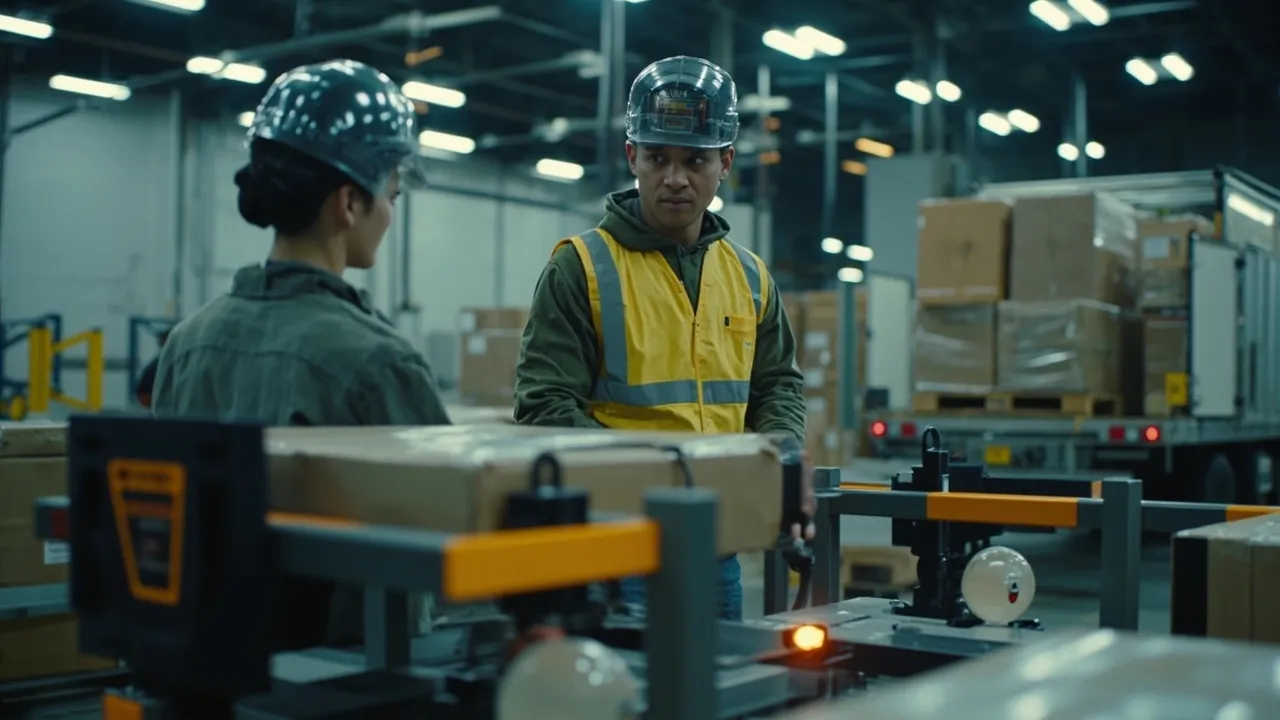
Data Center Packaging Is Becoming a Billion-Dollar Logistics Risk Control

Data center packaging used to sound like a back-office materials decision. In 2026, that framing is too small. When servers, racks, power gear, cooling equipment, and network hardware are moving through long construction supply chains, packaging becomes a risk-control system for a billion-dollar buildout.
Modern Materials Handling put the issue plainly in its recent Packaging Corner article, "The box that protects a billion-dollar buildout". As MMH summarized, data center construction is ramping up, and packaging has to protect sensitive, high-value equipment from plant to job site. That sounds simple until a freight team maps the actual journey: factory release, staging, truckload or intermodal transfer, ocean or air movement for imported components, port handling, inland drayage, temporary storage, site access, security checks, delivery appointments, and sometimes weeks of waiting before installation.
Every one of those handoffs can turn a packaging shortcut into a schedule problem, a freight claim, or an expensive field replacement. For logistics teams serving data center projects, the box is not just a box anymore. It is part of the execution plan.
Data center freight is sensitive before it is expensive
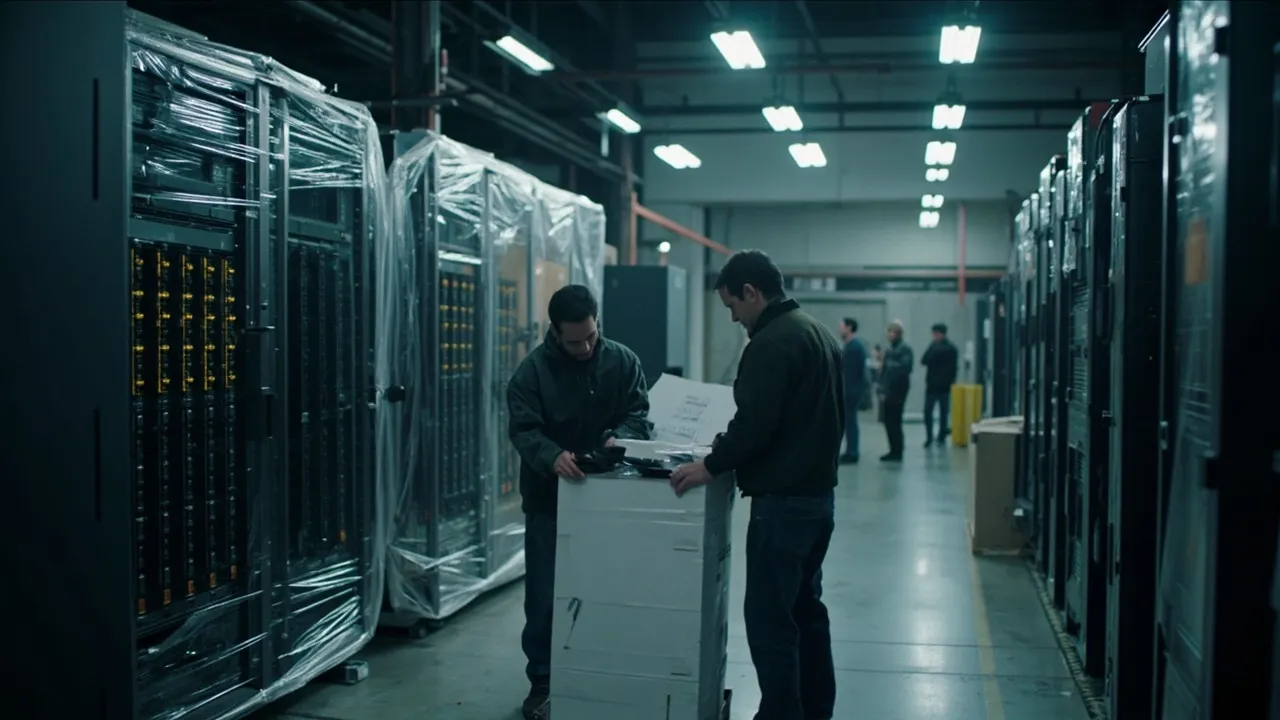
High-value electronics create a dangerous combination: large dollar exposure, fragile tolerances, and schedule-critical deployment. Server racks, switchgear, battery systems, cooling modules, cable assemblies, and power distribution units may look rugged from the outside, but many are vulnerable to shock, vibration, electrostatic discharge, moisture, dust, tilt events, and repeated handling.
The risk is not only catastrophic visible damage. A crushed corner is easy to photograph. Hidden damage is worse. Moisture intrusion, vibration stress, loose connectors, compromised seals, or a tipped rack can surface later during commissioning, when crews are already scheduled and the site is waiting for power, cooling, and compute capacity to come online.
That is why packaging specifications need to be tied to the shipment workflow. A freight forwarder should know whether the cargo requires shock indicators, humidity controls, desiccants, vapor barriers, tilt monitors, reinforced crates, pallet collars, anti-static materials, reusable racks, security seals, or white-glove unloading instructions. Those details belong in the operating record, not in a PDF buried three email threads away from dispatch.
Construction pressure makes packaging failures more costly
The data center construction boom is straining more than materials availability. Reuters reported that around 41% of the current U.S. construction workforce is projected to retire by 2031, according to the National Center for Construction Education and Research. Reuters also cited Goldman Sachs Research estimating that the U.S. power sector will need 207,000 additional transmission and grid connection workers plus 300,000 manufacturing, construction, and operations workers to add 300 GW of power capacity by 2030.
That labor context matters for packaging. If damaged equipment misses an installation window, the project may not simply reorder a component and try again next week. It may lose electricians, installation technicians, crane time, test engineers, security escorts, or commissioning crews to another urgent project. Reuters also noted that construction jobs represent the largest share of U.S. power-sector employment and that average hourly earnings for production and nonsupervisory construction roles rose 4.8% over the prior year to $38.73 per hour in April.
In a tight labor market, a damaged rack or power component can ripple through the schedule. Packaging failure becomes labor waste, site congestion, rescheduling friction, and customer escalation.
The freight claim is only the visible part of the loss
Freight teams often evaluate packaging through the lens of claim prevention. That is necessary, but insufficient. The direct loss might be the cost to repair or replace equipment. The larger loss can include project delay, crew idle time, missed service commitments, expedited replacement freight, emergency storage, dispute administration, insurance friction, and damaged customer confidence.
Data center supply chains are especially exposed because equipment often arrives in sequenced waves. A site may need power infrastructure before racks, racks before servers, servers before commissioning, and commissioning before go-live. If one category arrives damaged or undocumented, downstream moves can bunch up. Trucks wait. Dock appointments collapse. Temporary storage fills. Site managers start making exceptions that weaken control.
The smarter approach is to treat packaging as part of milestone management. Before tender, logistics teams should confirm packaging standards by equipment class. At pickup, they should capture condition photos, seal numbers, shock indicator status, humidity controls, and crate integrity. At each handoff, they should record exceptions immediately. At delivery, they should document site condition before the carrier leaves.
That is not bureaucracy. It is evidence. Evidence prevents disputes from becoming archaeology.
Forwarders need packaging visibility inside daily execution
The best packaging engineering still fails if it is invisible to the people moving the freight. Dispatchers, carriers, warehouse teams, drayage providers, installers, and customer service teams need clear handling rules inside the system they already use.
A practical data center packaging workflow should include:
- Packaging specs by item type, including shock, tilt, moisture, stacking, and lift restrictions.
- Required photo checkpoints at pickup, cross-dock, storage release, and delivery.
- Exception codes for torn wrap, broken seals, crate damage, water exposure, missing labels, or triggered indicators.
- Appointment rules that prevent high-value cargo from dwelling outside controlled receiving windows.
- Document links for packing lists, inspection forms, insurance requirements, and site access instructions.
- Escalation paths when damage is suspected before final delivery.
This is where forwarders can create real value. They are not just buying transportation. They are protecting the installation sequence. When packaging events are visible alongside freight milestones, the project team can react before a receiving surprise becomes a go-live delay.
CXTMS turns packaging control into shipment control
Data center logistics punishes disconnected execution. Packaging specifications in one system, photos on phones, carrier updates in email, claims documents in shared drives, and appointment changes in spreadsheets create exactly the blind spots high-value freight cannot afford.
CXTMS gives logistics teams a single operating layer for shipment milestones, document control, carrier coordination, photo-based exception records, delivery appointment discipline, and customer-facing visibility. For data center freight, that means packaging requirements can travel with the shipment record from quote to final proof of delivery.
Want to reduce high-value freight risk before it becomes a claim, delay, or site escalation? Schedule a CXTMS demo and see how packaging control, exception visibility, and shipment execution can work together in one platform.