Cadbury Cut Two Months From Lead Time: A Nearshoring Scorecard for Food Supply Chains

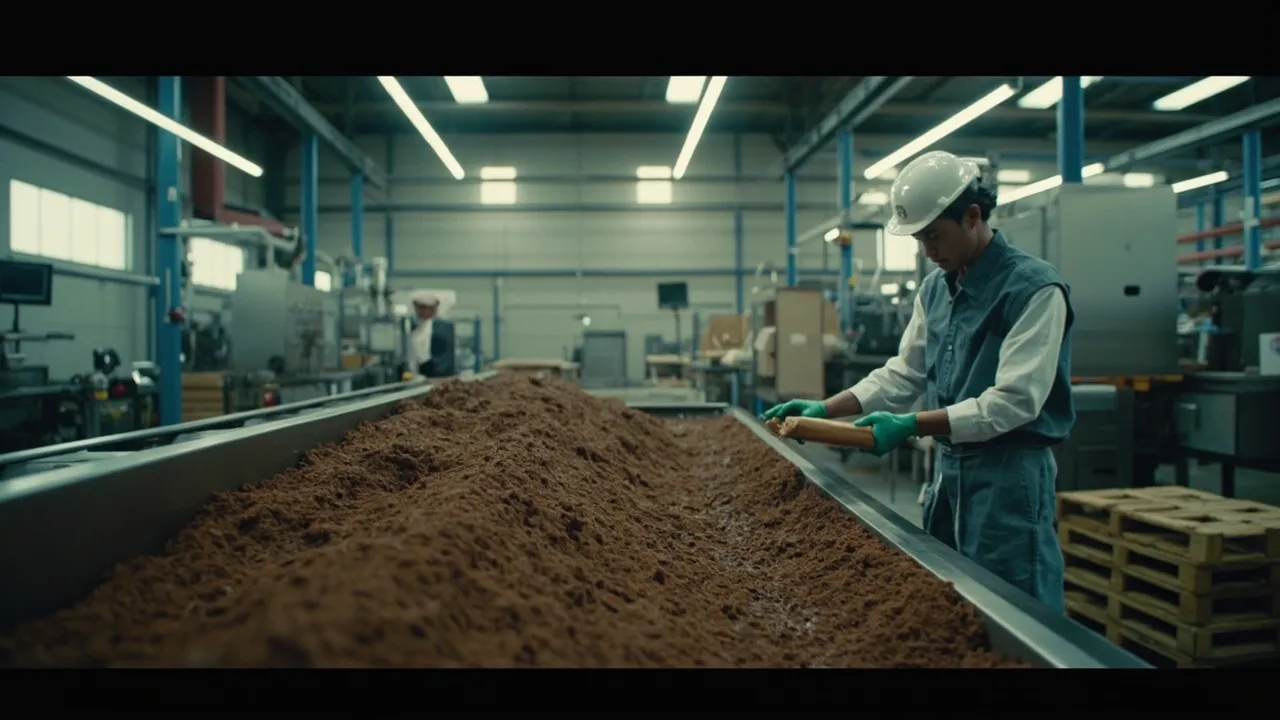
Cadbury's latest supply-chain change gives food manufacturers something unusually useful: a concrete nearshoring result. By producing chocolate crumb in Malaysia rather than importing it from Australia and South Africa, parent company Mondelēz International says it has removed at least two months from the ingredient's lead time.
The move is backed by a $22 million investment in Shah Alam. According to SupplyChainBrain, the facility will support Cadbury's sole manufacturing hub for Southeast Asia, which makes more than 130 chocolate varieties and about 100 million bars annually.
That is a compelling headline, but “shorter” does not automatically mean “better.” Food companies evaluating localization need a scorecard that captures cash, service, quality, and concentration risk—not just miles removed from the map.
The operational value of two months
Lead time governs how early a planner must commit inventory before demand is known. Removing at least 60 days from an inbound flow should let Cadbury make later, better-informed replenishment decisions and carry less pipeline stock. It also reduces the period in which a port closure, sailing cancellation, customs delay, or demand swing can derail the plan.
The working-capital opportunity can be estimated without knowing Cadbury's ingredient cost. If annual chocolate-crumb consumption is valued at $12 million, 60 days represents roughly $2 million of theoretical pipeline value: $12 million multiplied by 60/365. At $30 million annually, it is about $4.9 million. Those are scenario calculations, not reported Cadbury savings, but they show why lead-time compression belongs on a CFO's dashboard.
Food supply chains gain another benefit: freshness and usable shelf life. Chocolate crumb is not a finished retail bar, yet every day consumed upstream leaves less flexibility downstream. A shorter inbound cycle gives production teams more room to respond to demand, quality holds, packaging changes, and promotional plans without aging material in transit.
Score the before-and-after network
A credible nearshoring business case should compare the old and new designs across four dimensions.
| Measure | Imported crumb | Malaysia production | Metric to track |
|---|---|---|---|
| Landed cost | Ocean freight, insurance, customs, port handling, inland transport | Local conversion and shorter domestic transport, offset by facility cost | Cost per usable kilogram |
| Working capital | At least two more months in pipeline | Later commitments and a shorter cash cycle | Days and value of inventory in transit |
| Service | Exposed to international schedules and border variability | Faster response to plant demand | Ingredient availability and schedule attainment |
| Resilience | Two distant origin countries, but transport-heavy | Less international exposure, but more dependence on one regional site | Time to recover and volume covered by alternatives |
The landed-cost row deserves discipline. A lower freight bill can be overwhelmed by higher local input, labor, energy, or compliance costs. Compare total cost per usable kilogram after yield losses, rejected batches, duties, demurrage, safety stock, and premium freight. Capital spending should be amortized over realistic throughput rather than an optimistic nameplate forecast.
Working capital also needs a baseline. Record average and high-percentile transit time, order-to-use time, inventory days, and the value of goods in transit before localization. Then measure the same figures after stabilization. Otherwise, a company may celebrate a nominal 60-day transport reduction while keeping the old safety-stock policy and releasing no cash.
Localization changes risk; it does not erase it
Cadbury's regional design appears to reduce exposure to long international lanes, but the Shah Alam operation also becomes more important. A quality hold, utility outage, equipment failure, labor disruption, or ingredient shortage at one location could affect a large Southeast Asian portfolio.
This tradeoff is common. McKinsey found that two-thirds of surveyed companies were sourcing more inputs closer to production sites, double the share reporting nearshoring action a year earlier. Yet proximity is not redundancy. A shorter single-source chain can recover faster from transportation disruption while remaining vulnerable to a plant-level failure.
Food manufacturers should therefore put controls around the localized design:
- qualify backup capacity or an emergency import specification before it is needed;
- retain approved suppliers for cocoa, dairy, sugar, and other critical inputs across more than one geography;
- measure batch-release time, first-pass quality, and rejected volume during ramp-up;
- define minimum stocks by recovery time rather than carrying forward the old ocean-freight buffer; and
- test traceability from ingredient lot through finished product and customer shipment.
Quality deserves special weight in food. Faster physical flow creates no value if laboratory release, halal certification, allergen controls, or corrective actions become the new bottleneck. Service metrics should begin when demand is recognized and end when compliant material is available for production—not merely when a truck reaches the gate.
Build the decision around measurable gates
Nearshoring projects should pass staged gates at 30, 90, and 180 days after launch. The first gate verifies safety, specification compliance, yield, and traceability. The second tests stable throughput, supplier performance, transport cost, and production schedule attainment. The third determines whether safety stock can be reset and whether working-capital benefits have actually reached the balance sheet.
The wider evidence supports a portfolio approach. In McKinsey's 2025 supply-chain risk survey, 45% of respondents facing tariff effects were increasing inventories, while 39% pursued dual sourcing and 33% pursued supplier nearshoring. The practical lesson is that resilience rarely comes from one lever. Localization should work alongside alternate sources, recovery plans, inventory segmentation, and visible transportation execution.
Cadbury's two-month reduction is meaningful because it converts a strategic idea into an operating result. The right next question is not whether every ingredient should be local. It is which flows carry enough lead-time, cash, freshness, and disruption exposure to justify localization—and whether the new network can meet quality and continuity targets under stress.
CXTMS helps logistics teams compare lanes, monitor lead-time variability, manage carrier execution, and turn network changes into measurable service and cost outcomes. Request a CXTMS demo to build a transportation control layer for your nearshoring strategy.