Amazon Just Opened Its Logistics Network to Every Shipper. Here's What That Means for Your Parcel Strategy.

For years, Amazon built its logistics empire in-house while UPS and FedEx moved most of the world's e-commerce parcels. That era is over.
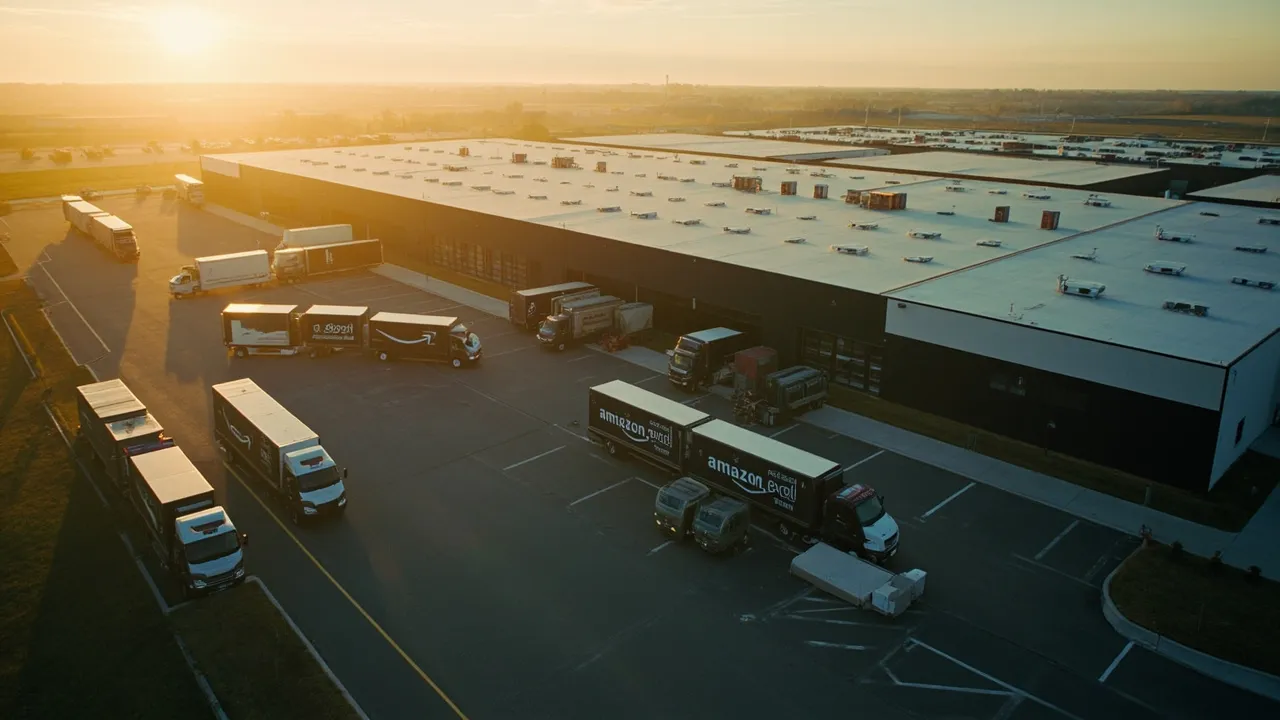
On May 4, 2026, Amazon launched Amazon Supply Chain Services (ASCS), a suite of logistics offerings that allows any business — from raw material suppliers to consumer brands — to tap into the same fulfillment and transportation network Amazon uses for its own orders. The move immediately drew fire from Wall Street. Analysts at Evercore ISI called it "a direct competitive blow" to parcel firms including UPS and FedEx. FedEx shares dropped 9.1% on the news.
The question for shippers isn't whether Amazon is now a competitor to their existing carriers. It's whether Amazon should become part of their carrier mix.
What Amazon Actually Opened
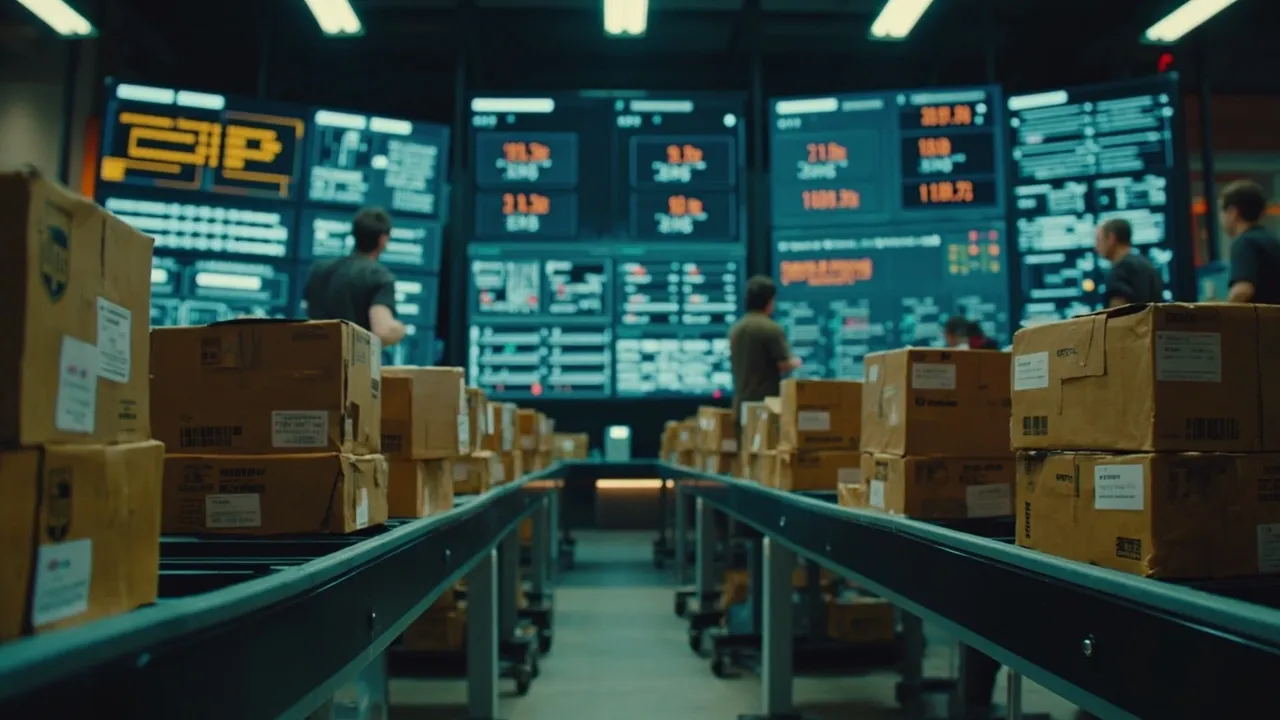
ASCS isn't a one-product announcement. Amazon built out a stack of services designed to compete across the supply chain: storage and inventory management through Amazon's warehouse network, freight transportation across LTL, truckload, and parcel, and last-mile delivery using Amazon's own driver network and its growing roster of delivery partners.
The company framed the launch as a natural extension of capabilities it had already built for its own operations. "The launch of ASCS builds on this momentum, now supporting third-party logistics for businesses in industries such as healthcare, automotive, manufacturing, and retail," Amazon said in its press release. Shippers can now use Amazon's network to deliver freight to third-party sites — a direct LTL expansion that puts Amazon in competition with established freight intermediaries.
The FedEx partnership that followed days later underscores the nuance. Rather than replacing third-party carriers entirely, Amazon is layering its own network capacity alongside existing partners. FedEx will handle residential delivery of large packages — a segment Amazon has historically struggled to serve efficiently with its own driver force. It's a pragmatic acknowledgment that even a company with Amazon's scale needs help managing overflow and specialized delivery scenarios.
The Carrier Landscape Is Shifting Faster Than Routing Guides Suggest
The conventional wisdom among parcel shippers has been straightforward: negotiate hard with FedEx and UPS, benchmark regional carriers against the big two, and structure routing guides around a handful of core carrier relationships. That model is breaking down — not because the carriers are failing, but because Amazon is building an alternative infrastructure that didn't exist five years ago.
Consider what UPS itself acknowledged in April 2026. The company said it reached an agreement with Amazon to reduce Amazon volume in its network by more than 50% by June 2026. That means UPS is actively winding down its largest customer's fulfillment center outbound volume. The company plans to reduce operational hours by approximately 25 million hours and cut around 20,000 semi-variable positions related to that volume.
Amazon was less than 1.3% of FedEx's revenue in 2018 — the year FedEx ended its Express contract with Amazon. Today, Amazon is aggressively reducing its dependence on both carriers while simultaneously opening its own network to the market. That creates a paradoxical situation: the carriers that Amazon is leaving behind are becoming more dependent on volume from everyone else.
Rick Watson, founder of RMW Commerce Consulting, offered a pointed observation on the FedEx-Amazon rekindling: "Amazon is known to be investing much more into rural final mile initiatives, particularly as the USPS seems to degrade slowly over time." He noted that FedEx's calculation mirrors UPS's original logic — the volume may be marginal at best — but the real value is building network density that FedEx can then sell to other shippers.
Why Shippers Should Care — Even If They Don't Use Amazon Today
The instinctive response to this news is to evaluate Amazon as a potential carrier. That's the wrong starting point.
The right starting point is to recognize that your existing carriers — UPS, FedEx, and regional partners — are now pricing, routing, and investing in network capacity while competing against Amazon's growing infrastructure. Every contract negotiation, every routing guide decision, and every carrier performance review should now account for a world where Amazon is a structural market force rather than just a large shipper.
There are three practical implications:
Rate benchmarking gets more complex. Amazon's ASCS rates are not public. But the existence of a well-capitalized alternative changes the negotiating posture of incumbent carriers. If UPS knows Amazon is now in the market, that affects how hard they negotiate on surcharges and accessorial fees. Shippers should use that dynamic explicitly: Amazon's entry into the logistics services market is now a legitimate leverage point in carrier negotiations.
Large-package delivery is a new variable. The FedEx partnership specifically targets large residential packages — a segment where Amazon's own driver network has had documented gaps. Shippers with bulky items (furniture, fitness equipment, appliances) should watch how this partnership evolves. If FedEx can deliver large items more reliably than Amazon's default carrier mix, routing guides for those SKUs may need restructuring.
Network diversification is no longer optional. The duopoly assumption — FedEx and UPS handle your parcel volume — is structurally outdated. Regional carriers, Amazon's own network, USPS for lightweight items, and FedEx for large packages are all legitimate components of a modern parcel strategy. A TMS that only supports FedEx and UPS natively will increasingly leave money on the table.
What a Smarter Parcel Strategy Looks Like in 2026
The carriers shippers work with today are not the carriers they'll work with in 2028. That's not a reason for anxiety — it's a reason to build routing logic that can absorb change without requiring a manual overhaul every six months.
That means centralized rate management that incorporates carrier cost structure changes, not just list rate comparisons. It means service-level rules that are tied to customer promises and inventory positioning, not just historical carrier habits. And it means a data layer that can evaluate Amazon's emerging logistics services against your existing carrier mix on an ongoing basis.
Logistics Management has noted that the shift in transportation is from reactive systems of record toward real-time execution — where AI and workflow automation sense disruptions and automate decisions before they become problems. Carrier strategy fits that same pattern. Waiting until Amazon announces new services to update your routing guide means you're always one quarter behind.
The Amazon logistics network is no longer just Amazon's logistics network. Third-party shippers can access it. Your competitors already are. Whether that means you add Amazon to your carrier mix, use it as a benchmarking tool, or simply monitor how it reshapes what UPS and FedEx are willing to negotiate — the decision belongs in your strategy, not your blind spot.
Ready to see how CXTMS handles multi-carrier parcel optimization across FedEx, UPS, regional carriers, and emerging networks? Request a demo and bring your routing guide into 2026.
Sources
- Reuters: Amazon opens up logistics network to other businesses in challenge to UPS, FedEx (May 5, 2026)
- Logistics Management: FedEx and Amazon take steps to resume partnership, with a focus on residential large package delivery (May 13, 2025)
- Amazon Press Center: Amazon Launches Amazon Supply Chain Services (May 4, 2026)
- Logistics Viewpoints: Amazon Launches Supply Chain Services (May 5, 2026)