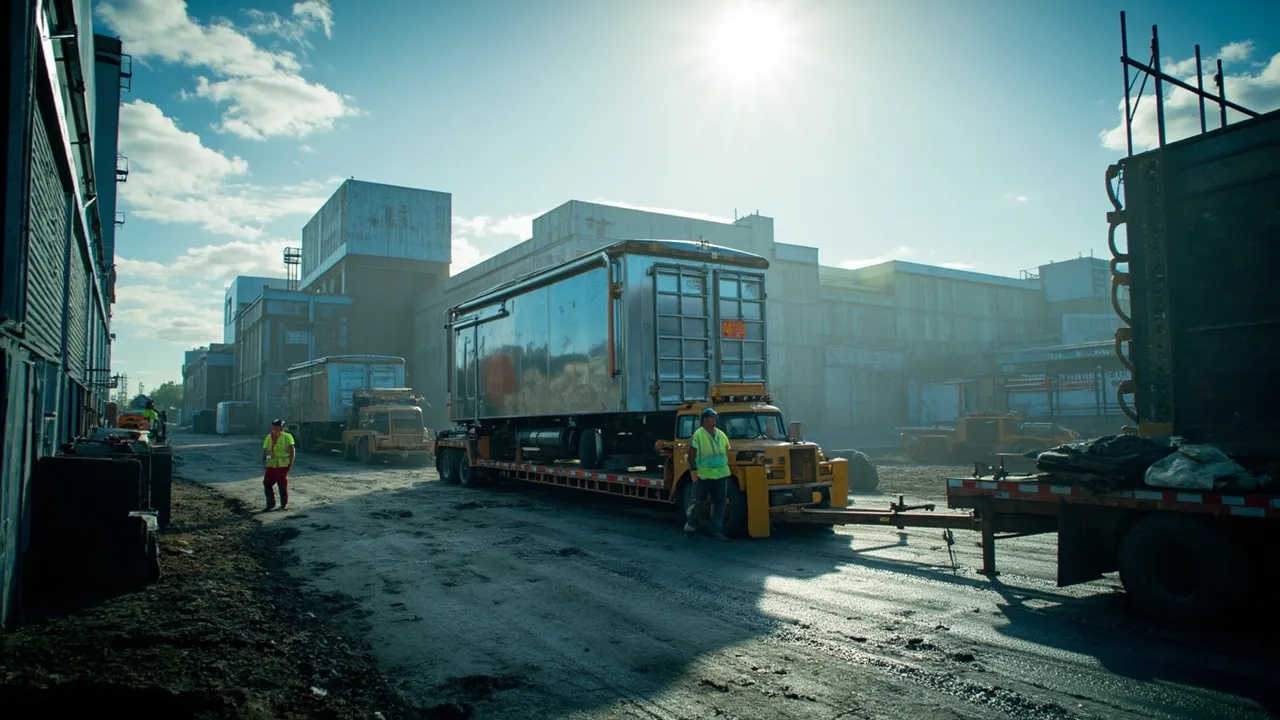
Saudi Project Logistics Growth Needs Milestone Control Before Heavy Freight Moves


Saudi Arabia's project logistics market is not growing because there are more ordinary shipments to move. It is growing because the cargo is heavier, more time-sensitive, and tied to capital projects that cannot absorb casual handoffs.
Mordor Intelligence estimates the Saudi Arabia project logistics market at $2.27 billion in 2026, rising to $3.04 billion by 2031 at a 6.13% CAGR. The same analysis values the market at $2.13 billion in 2025, which means the country's project cargo base is already sizable before the next wave of industrial, energy, infrastructure, and tourism-related construction reaches full execution.
The composition matters more than the headline number. Mordor reports that transportation accounted for 64.32% of Saudi project logistics market share in 2025. Oversized or out-of-gauge cargo represented 30.91% of market size, while heavy-lift cargo is projected to grow at a 6.90% CAGR through 2031. Energy generation and transmission is forecast to grow at 7.73% CAGR through 2031.
That is the profile of a logistics market where execution risk lives at the interfaces: port discharge, abnormal-load permits, escorts, laydown yards, cranes, customs clearance, and site readiness. A standard shipment status is too thin for that job.
Saudi Infrastructure Is A Freight Operating System
The broader transport agenda explains why project logistics is becoming a control problem. Reuters reported that Saudi Arabia planned to invest more than 500 billion riyals, or about $133.34 billion, in airports, seaports, rail, and other infrastructure by the end of the decade as part of a push to become a global transportation and logistics hub.
That spending does not move through the freight network as one simple volume wave. It arrives as transformers, turbines, pressure vessels, structural steel, compressors, tunnel equipment, cranes, construction modules, utility gear, and high-value industrial components. Some pieces need route surveys before they can leave origin. Others need port equipment availability, nighttime movement windows, escorts, bonded storage, or site teams ready to unload within a narrow construction sequence.
In project cargo, the shipment is often part of the critical path. If a heavy component arrives early, the site may not have a crane, foundation, inspection crew, or laydown space ready. If it arrives late, contractors wait, commissioning moves, penalties grow, and downstream work stops. The transportation plan cannot be managed apart from the project schedule.
Heavy Freight Fails At The Interfaces
Saudi Arabia's project pipeline is pushing logistics providers toward deeper engineering and operating discipline. Mordor notes that growth is being supported by Public Investment Fund-backed developments, national infrastructure programs, Aramco's Jafurah gas expansion work, renewable energy projects, industrial zones, logistics corridors, heavy-haul transport, breakbulk handling, and specialized warehousing.
Each of those categories creates interface risk.
Permits are the first constraint. Oversized cargo may need route surveys, axle-load analysis, escort plans, bridge checks, vehicle details, and timing approvals. A permit delay changes vessel discharge timing, storage cost, crane reservations, site labor, and project sequencing.
Port windows are the second constraint. Breakbulk and heavy-lift cargo depends on berth availability, lifting capacity, discharge sequence, weather conditions, terminal handling plans, and customs readiness. If the cargo arrives without the right documentation or equipment plan, the delay can begin before inland transport has even been dispatched.
Laydown yards are the third constraint. Project cargo often needs temporary storage between port arrival and site delivery. A yard needs security, ground-bearing capacity, access routes, handling equipment, inventory control, and a release process tied to site milestones.
Cranes are the fourth constraint. Heavy freight is not delivered when the truck arrives. It is delivered when the receiving site can unload it safely. A missed crane window can be more expensive than the road movement itself.
Customs and compliance add another layer. A delayed release, missing certificate, wrong classification, or inspection hold can break a carefully timed delivery plan. For Saudi project freight, local content frameworks, industrial-zone rules, and project-owner documentation requirements can matter as much as carrier selection.
Build The Milestone-Control File
The answer is not more status calls. Project logistics needs a milestone-control file that connects freight events to construction dependencies before the cargo moves.
Start with the package ID. Every major component should have a durable identifier that follows it from supplier release through vessel, port, yard, inland movement, and site receipt.
Capture dimensions and weight in usable detail. Length, width, height, gross weight, lifting points, axle requirements, and out-of-gauge status determine whether a route, trailer, crane, and permit plan is real.
Record the origin and vessel. Project teams need to know which supplier, port of loading, carrier, vessel, voyage, and estimated arrival control the next handoff.
Name the port and terminal requirements. Berth, lifting equipment, discharge sequence, customs status, free-time exposure, storage plan, and onward release rules should sit in the same operating record.
Track the permit as a milestone, not an attachment. The record should show permit owner, route approval, escort requirement, movement window, expiry date, and blocker status.
Add the escort and crane window. These are scarce resources. The file should show who booked them, when they are available, and what happens if the cargo misses the slot.
Include site access. Delivery should be tied to gate availability, civil works readiness, unloading pad condition, safety clearance, receiving crew, and installation sequence.
Finally, assign the delay owner. Every high-risk milestone needs a named owner who can make decisions. Permit delay, customs hold, crane conflict, site not ready, vessel delay, and supplier slip are different problems. Treating all of them as "delayed" is how teams lose time.
Treat Project Cargo Like Critical-Path Data
Saudi Arabia's project logistics market is expanding into a more demanding operating environment. The country is investing in transport infrastructure, industrial zones, energy projects, and large developments that rely on specialized freight execution. The cargo mix is too complex for generic shipment management.
The practical question for freight forwarders and logistics teams is whether heavy freight is visible as critical-path data before it moves. A transportation record that only shows pickup, transit, and delivery cannot control a project cargo move that depends on permits, ports, yards, cranes, customs, and site readiness.
CXTMS helps logistics teams coordinate complex freight around project schedules: shipment records, milestone tracking, carrier workflows, documents, exception ownership, and customer-facing visibility can all move in one execution layer.
If your Saudi project cargo still lives across spreadsheets, forwarding emails, and disconnected site updates, request a CXTMS demo. CXTMS helps teams turn project milestones into controlled freight execution before heavy cargo becomes the reason the schedule slips.