Finished Vehicle Logistics Is Becoming a Staging and Processing Capacity Problem

Finished vehicle logistics is no longer just a question of railcars, vessels, and haulaway trucks.
Mordor Intelligence estimates the U.S. finished vehicle logistics market will grow from $40.29 billion in 2026 to $51.11 billion by 2031, a 4.87% CAGR. Transportation still dominates the market, holding 75.00% of revenue in 2025, but the sharper signal is inside the fastest-growing function: warehousing and distribution is projected to grow at a 6.62% CAGR through 2031.
That matters because the constraint is shifting. Moving finished vehicles is still asset-intensive, but throughput increasingly depends on what happens before a vehicle is released to the next leg: port processing, rail-ramp staging, accessory installation, EV battery handling, inspection, yard dwell control, damage holds, title/document readiness, carrier assignment, and dealer allocation.
The vehicle may be finished from a factory perspective. It is not finished from a logistics perspective until every processing and release condition is clean.
The Yard Is Becoming The Bottleneck
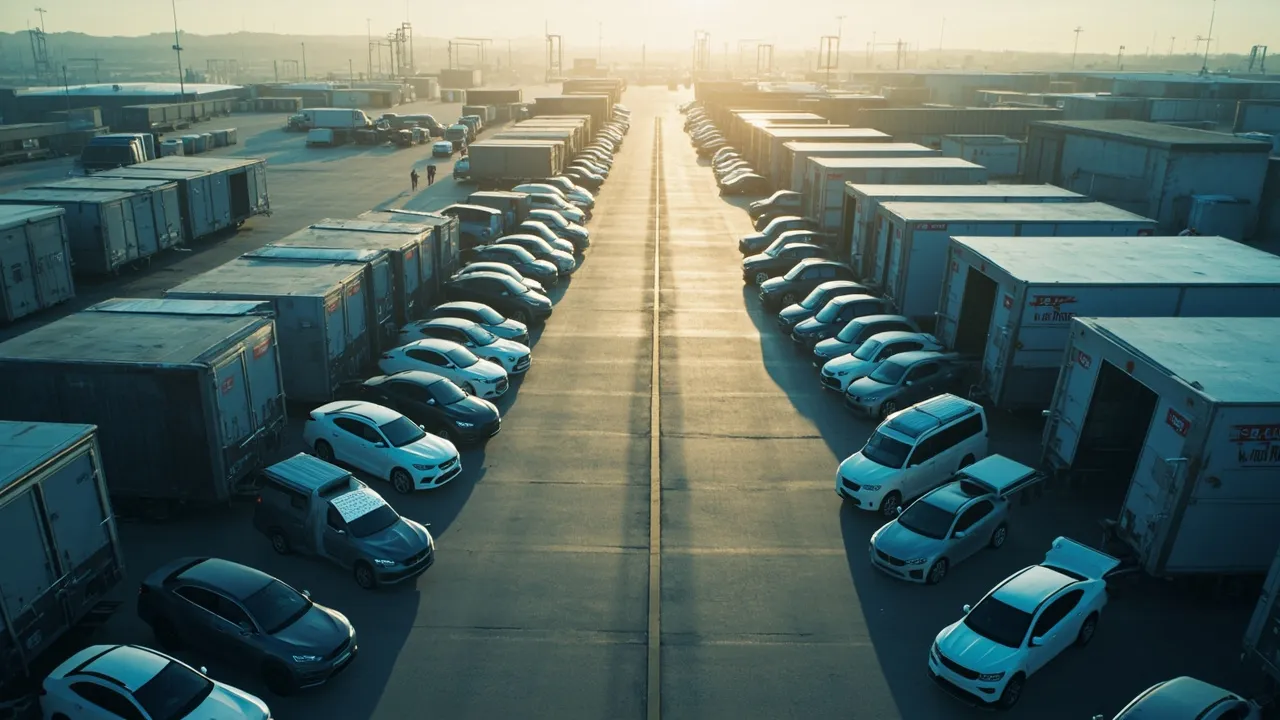
Finished vehicles occupy space differently from most freight. They do not stack. They are damage-sensitive. They require secure custody. They may need battery state-of-charge checks, software updates, accessory installation, quality holds, emissions paperwork, port release, rail loading, truck dispatch, or dealer-specific preparation before they can move.
That makes yard capacity more than acreage. A lot with open pavement can still fail if the workflow cannot process units fast enough. The practical capacity of a vehicle yard is determined by slot availability, inspection labor, processing bays, charger access, railcar timing, truck appointment discipline, damage-review speed, and release-document accuracy.
Mordor's market analysis points to the same operating pressure. It identifies EV handling as a more demanding layer because battery condition checks, compliant processing routines, and added dwell requirements increase the importance of vehicle processing centers. It also notes that domestic flows accounted for 76.11% of U.S. finished vehicle logistics market size in 2025, while the Southeast represented 24.34% of the market and is forecast as the fastest-growing region at 6.17% CAGR through 2031.
Those numbers describe a network where more units are moving through regional production and distribution patterns, not only import gateways. Shorter dispatch cycles between plants, rail compounds, processing centers, and dealers can be harder to orchestrate than a simple long-haul move because they create more handoffs per week.
EV Mix Makes Processing More Important
Vehicle mix is adding operational variety. Deloitte's 2026 Global Automotive Consumer Study finds that battery-electric demand remains steady but cautious while hybrids are strengthening as consumers balance affordability, charging access, and practicality.
For logistics teams, that means outbound networks may need to handle internal combustion vehicles, hybrids, plug-in hybrids, and battery-electric vehicles in the same facilities and delivery flows. The processing record gets more complicated. A yard may need to know whether a VIN requires charging, whether a battery-related hold exists, whether a unit can sit in a specific area, whether a dealer needs a pre-delivery update, and whether the vehicle can be dispatched without extra handling.
That is a different planning problem from simply assigning a truckload of finished units to a carrier.
It also changes exception management. A delayed railcar is visible. A cluster of vehicles waiting on battery checks, accessory kits, missing documents, or inspection signoff is easier to miss because the vehicles are already "there." They are on the lot, but they are not available inventory. If the system treats physical arrival as logistical readiness, the dealer promise becomes unreliable.
Build The Vehicle Staging Record
The fix starts with a unit-level staging record. Finished vehicle logistics needs a live operating file that follows the VIN batch from plant release to dealer delivery.
The first field is VIN batch and origin plant. Teams need to know which production wave the vehicles came from, which allocation they support, and whether a plant-level quality or parts issue affects release. Without that context, the yard becomes a parking lot of disconnected units.
Port, rail ramp, or processing-center location is next. The record should show where the vehicle is physically sitting, whether the location is capacity-constrained, and whether the next handoff depends on vessel discharge, rail loading, truck pickup, or internal processing.
Yard slot matters. If the system cannot identify where a vehicle is staged, labor loses time searching, damage checks slow down, and carrier loading windows slip. Slot discipline is especially important when units are held for accessories, campaigns, charging, or inspection.
Processing task should be explicit. Accessorization, software update, battery check, wash, inspection, damage review, document verification, customs release, and dealer prep are different work queues. A generic "hold" code does not tell operations what action will release the vehicle.
Hold reason needs an owner. Damage, missing title documents, battery state, port release, rail capacity, carrier appointment, dealer instruction, and quality campaign should not sit in one exception bucket. Each reason has a different team, clock, and escalation path.
Carrier assignment belongs in the same record. The vehicle may be ready, but if the haulaway carrier, rail provider, or drayage partner is not assigned and appointmented, the promise still fails. The record should connect readiness to capacity, not treat those as separate spreadsheets.
Finally, dealer promise should be visible beside the operational facts. A unit for a sold order, fleet customer, launch allocation, or promotional campaign deserves different escalation than a flexible replenishment unit. Logistics cannot prioritize correctly if commercial urgency is hidden in another system.
Continuous Adaptation Needs Better Unit Visibility
Logistics Management's coverage of the 37th State of Logistics report says the industry has moved from periodic optimization to continuous adaptation. It also cites U.S. business logistics costs of $2.4 trillion, equal to 7.8% of GDP, and identifies disruption, labor constraints, trade shifts, energy volatility, and digital productivity as structural forces shaping logistics decisions.
Finished vehicle logistics fits that pattern perfectly. The network cannot be optimized once a year and left alone. Production locations shift. EV mix changes. Dealer demand moves. Rail capacity tightens. Port dwell appears. Accessory programs expand. Quality holds hit specific models. A storm, labor shortage, or tariff change can alter the release plan in days.
The operating question is not whether the network has enough nominal transport capacity. It is whether teams can see which vehicles are staged, which are processed, which are held, which are carrier-ready, and which customer promises are at risk.
Make Finished Vehicles Execution-Ready
Finished vehicle logistics is becoming a staging and processing capacity problem because the most expensive delays often happen after production but before final delivery. Vehicles trapped in yards consume working capital, storage space, labor attention, dealer confidence, and customer goodwill.
CXTMS helps freight forwarders and logistics teams connect shipment milestones, carrier assignments, yard events, exception reasons, documents, and customer commitments in one execution workflow. For automotive logistics, that means making vehicle handoffs visible across plants, ports, rail ramps, yards, carriers, and dealers instead of managing readiness through emails and disconnected yard reports.
If your finished vehicle network is growing faster than your staging discipline, request a CXTMS demo. CXTMS helps turn vehicle movement, processing status, and dealer promises into one operational record.