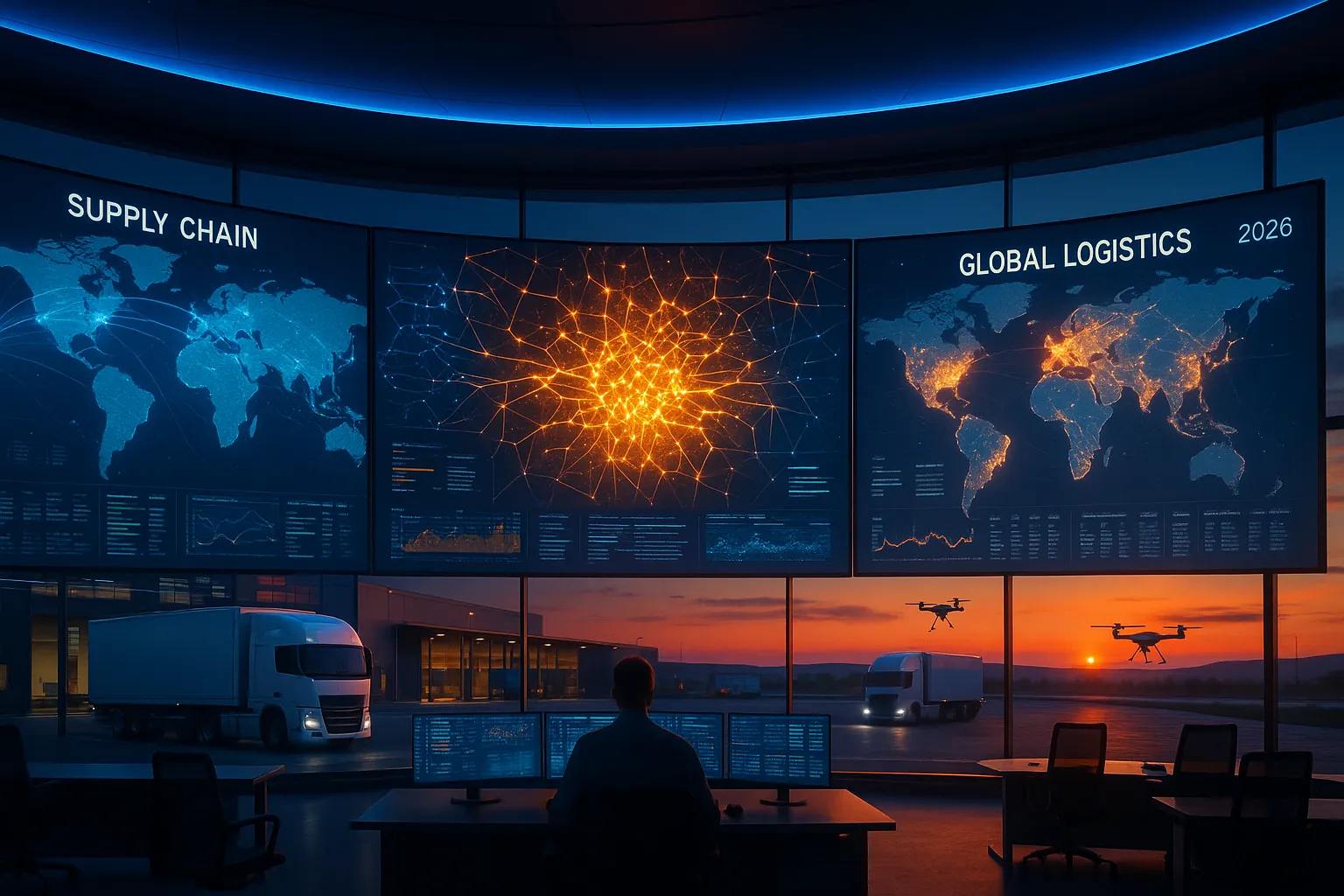
Logistics System Trust Is Moving From EDI Uptime to Decision Governance

Logistics system trust used to have a simple center of gravity: keep the EDI connection up, keep status codes flowing, and keep shipment documents moving between trading partners. That still matters. A transportation operation that cannot reliably exchange tenders, acknowledgments, ASNs, invoices, and shipment events is not ready for higher-order automation.
But in 2026, uptime is baseline. The harder question is whether the business can trust the decisions its systems make after the message arrives.
Modern Materials Handling reported on Gartner's 2026 supply chain technology trends, which group eight technologies under three themes: autonomy and agency, specialization and intelligence, and trust and governance. The list includes agentic AI, physical AI, collaborative multiagent systems, intelligent simulation, domain-specific language models, product provenance, and decision governance.
That grouping matters for freight teams because logistics execution is moving from message exchange to machine-assisted action. Systems are not merely reporting that a carrier accepted a tender. They are recommending the carrier, checking the lane against service history, flagging exceptions, reworking routes, or pushing warehouse actions when inbound ETAs move.
In that world, "the EDI worked" does not mean "the decision was controlled."
EDI Reliability Is Necessary, Not Sufficient
EDI remains durable because freight still depends on repeatable, standardized communication. Tender a load. Receive an acceptance. Send shipment status. Generate an invoice. Match the freight bill. Close the record. The discipline is useful precisely because it turns messy partner activity into predictable transactions.
The problem is that modern logistics systems increasingly make decisions between those transactions.
A late inbound update can trigger a dock reschedule. A temperature alert can escalate a food or life sciences shipment. A carrier scorecard can suppress one option and promote another. A compliance rule can hold freight until documentation is complete.
Those are operational decisions, not just data movements. They need governance.
Inbound Logistics describes agentic AI as systems that can take action within guardrails, with specialized agents managing tasks such as demand forecasting, order processing, and route planning. The same article points to practical logistics examples: monitoring inbound ETAs against appointments, proposing new ties, reallocating inventory when pressure shipments are at risk, and learning from outcomes as feedback returns to the system.
That is useful automation. It is also exactly where trust can fail if the decision trail is invisible.
The Trust Problem Has Changed
In a traditional integration review, teams might ask whether the connection is stable, whether documents are mapped correctly, whether exceptions are queued, and whether acknowledgments are received. Those checks still belong in the control environment.
Decision governance adds a second layer. Teams need to know who or what made the decision, which data it used, which rule or model applied, whether a human overrode it, and what business impact followed.
That may sound like compliance work, but in freight it is also operating discipline. When a system changes a carrier, route, mode, or delivery appointment, the transportation team needs to reconstruct why. Was the original carrier unavailable? Did the system detect a service-risk pattern? Did a cost rule override a service rule? Did someone approve the exception because the customer mattered more than the rate?
Without that record, automation creates a new logistics problem: the shipment moved, but no one can explain the decision well enough to improve it.
Gartner's inclusion of product provenance and decision governance under trust and governance is a useful signal. Provenance answers what happened to the product. Decision governance answers why the system acted the way it did. Freight teams need both, especially as AI and integration layers sit between orders, warehouses, brokers, carriers, customers, and finance.
Build the Governance Record
A governed logistics decision does not need to become a bureaucratic document. It needs a compact operating record attached to the shipment, order, load, or exception.
At minimum, that record should capture:
- Transaction source and timestamp
- EDI, API, portal, or manual-entry status
- Decision owner, whether human, rule, workflow, or automation agent
- Rule, model, or policy that triggered the action
- Carrier, mode, route, appointment, compliance, or cost field affected
- Override reason and approver, when a human changes the recommendation
- Audit trail connecting the decision to shipment outcome
- Compliance, customer-service, cost, or inventory impact
These fields turn trust into something operators can inspect. If a carrier was rejected because its on-time performance fell below a threshold, the record should show that. If a planner overrode the recommendation for a critical customer launch, the record should show that too. If an automation rule changed a route after a weather, port, border, or capacity signal, the business should see the source and consequence.
The goal is not to slow logistics down. The goal is to make fast decisions reviewable.
Software Breadth Makes Governance More Important
The logistics technology market is not short of tools. Inbound Logistics' 2026 Top 100 Logistics & Supply Chain Technology Providers spans widely adopted systems such as TMS and WMS, along with newer offerings in AI and robotics. The publication's provider profiles include freight audit and payment, rate management, carrier connectivity, visibility, optimization, control towers, analytics, supplier compliance, and automated audit trails.
That breadth is good for capability, but it raises the governance burden. A shipper may have order data in one system, warehouse readiness in another, carrier connectivity in another, and compliance evidence spread across broker, supplier, and customer workflows. If each layer can influence a transportation decision, trust cannot live in one integration monitor.
The governance record has to follow the freight.
For a simple truckload move, that may mean showing order release, carrier selection under the routing guide, tender acceptance through EDI or API, appointment confirmation, and planner approval for any deviation. For a regulated, international, refrigerated, or high-value shipment, the same record may also need document completeness, provenance, temperature exceptions, customs milestones, and chain-of-custody events.
The common thread is accountability. Automation is more valuable when operators can see its reasoning, challenge it when needed, and measure the outcome after the shipment closes.
Where CXTMS Fits
CXTMS helps transportation teams make automation auditable instead of mysterious. The platform connects shipment events, carrier activity, workflow rules, exceptions, documents, and user actions so the operating record stays visible.
That matters as logistics moves beyond basic EDI reliability. A freight team still needs clean tenders, acknowledgments, invoices, and status events. But it also needs to know why a system recommended a carrier, who approved an override, and whether the decision improved cost, service, or risk.
Decision governance is not a brake on automation. It is what makes automation usable at scale.
If your logistics systems are reliable but your decision trail is scattered across email, portals, spreadsheets, and disconnected workflows, request a CXTMS demo. We will show how auditable transportation execution can turn EDI, APIs, automation rules, and human overrides into one visible control record.