High-Altitude Freight Damage Needs Lane-Level Securement Rules

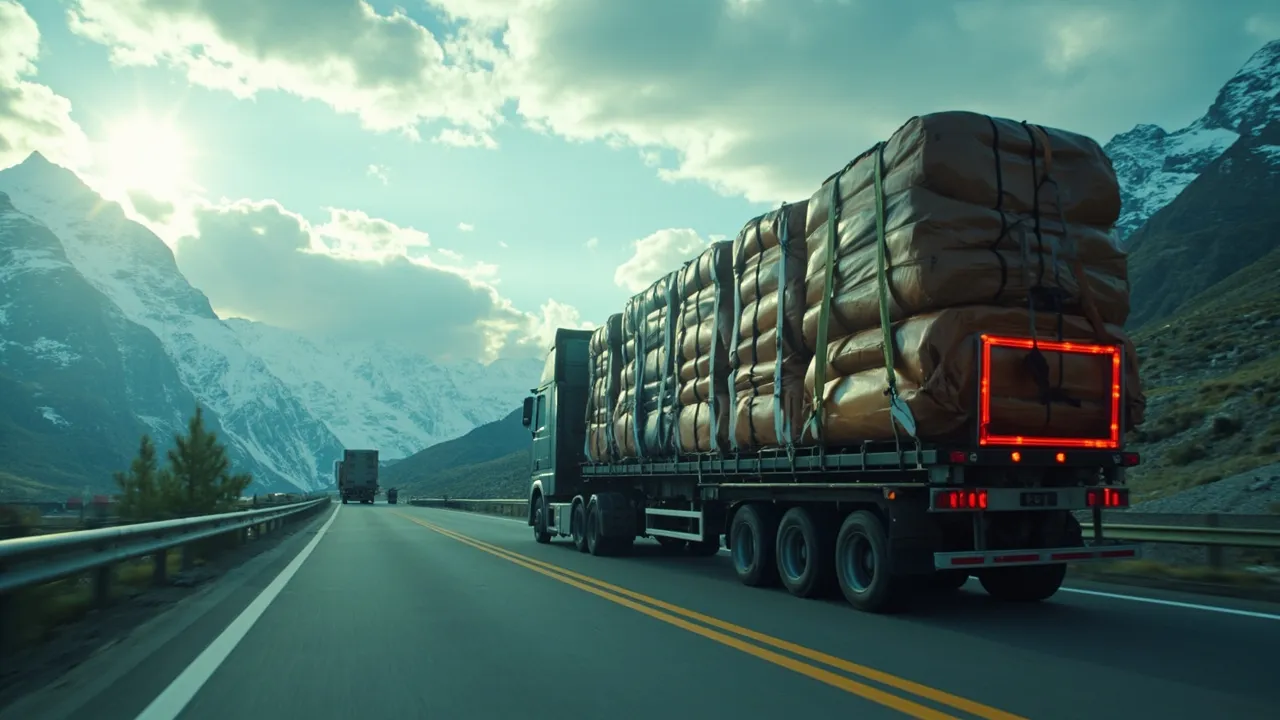
Freight damage is usually investigated after the fact: who loaded the trailer, which carrier touched it, what the receiver wrote on the delivery receipt, and whether the photos are good enough to support a claim. High-altitude routes expose why that sequence is too late.
Inbound Logistics reported that freight moving from sea level to high-elevation corridors can encounter routes reaching up to 11,000 feet above sea level, where atmospheric pressure and temperature changes can quickly create cargo-damage risk. The article points to research commissioned by RXO with Clemson University's Packaging Science program, which found that altitude changes cause greater pressure swings than temperature changes and that those pressure swings directly correlate to increased horizontal force.
That matters because the freight may have been loaded correctly for one environment and poorly prepared for another. A dunnage airbag inflated at sea level can expand as the trailer climbs. A material that holds a heavy load tightly on flat routes can over-compress fragile products in the Rockies. Another material may stretch at altitude and then lose restraining force as the shipment descends.
The lesson is blunt: securement cannot be a generic loading note. It has to be a lane rule.
The Highest Mile Changes The Risk Profile
Most transportation planning systems treat origin, destination, mode, rate, transit time, and carrier performance as the core decision variables. Those are still essential, but high-altitude damage adds another field: elevation exposure.
A flat route across the Midwest does not behave like a route through Denver, the Rockies, or the Appalachians. Inbound Logistics' high-altitude guidance recommends assigning elevation categories to shipping lanes because a route with major altitude gain or loss needs different securement logic than a route with minimal elevation change.
That changes how shippers should think about freight instructions. A "use dunnage bags" note is not enough. The instruction should specify which material, inflation level, load position, inspection point, and exception process apply to that route.
The reason is material behavior. Inbound Logistics noted that Clemson's research tested three common dunnage bag materials: 4-ply Kraft paper, woven polypropylene, and polyvinyl chloride. Kraft paper and woven polypropylene can convert altitude-induced pressure increases into restraining force, which can be useful for heavy loads but risky for crush-sensitive consumer goods. PVC can stretch at altitude, relieving pressure, but may lose restraining force when the shipment returns closer to sea level.
That is not a carrier preference issue. It is a product-and-lane matching issue.
Damage Control Starts With The Crush Profile
The most important securement question is not "Which dunnage is standard?" It is "What can this product tolerate?"
Inbound Logistics calls this the load's "crush profile": how much compression, weight, or impact the freight can withstand in transit. That profile should be recorded in the same operational language teams use for shipment planning. Fragile packaged foods, lightweight consumer goods, electronics, medical supplies, industrial components, and dense building materials do not need the same securement approach.
The securement record should include lane elevation category, product crush profile, dunnage type, inflation or securement instruction, temperature exposure, and claim history. The shipment should identify whether it is flat, moderate elevation, mountain, or severe elevation exposure. It should also carry a practical rating for compression sensitivity, stack tolerance, case rigidity, pallet pattern, and exposure to vibration or impact.
Inbound Logistics specifically recommends standardizing route-specific PSI levels to account for atmospheric expansion or deflation. That kind of rule needs to be visible before the trailer is loaded. A lane that repeatedly produces crushed cartons, shifted pallets, loose dunnage, or receiver exceptions should automatically trigger a revised loading instruction, not another email thread.
LTL Makes The Problem Harder
High-altitude securement risk is especially important for LTL and mixed networks, where freight is handled more often and shares trailer space with other commodities.
Inbound Logistics' LTL KPI guidance reported that transportation spend is often the largest share of supply chain cost, with the average company allocating 7% to 10% of annual sales revenue to transportation expenses. The article also warns that a carrier can appear attractive on cost per pound while producing excessive claims.
That is the trap. If teams only compare rates, they miss the cost of a lane that quietly converts packaging weakness into recurring damage. A low-cost LTL option may still be the wrong answer for a fragile product crossing high-elevation terrain if its network, handling model, or securement practice creates claim exposure.
Carrier scorecards should therefore separate "on time" from "arrived intact." For high-altitude lanes, the scorecard should track exception-free delivery, claims-free service, damage reason codes, securement compliance, and whether loading instructions were followed.
Without that linkage, the shipper sees a claims problem. With it, the shipper sees a preventable execution pattern.
Logistics Costs Leave Less Room For Guesswork
The broader freight market is not giving shippers much margin for sloppy execution. Logistics Management's coverage of the 37th State of Logistics report found that U.S. business logistics costs totaled $2.4 trillion, equal to 7.8% of GDP. It also reported that roughly 89,000 carriers have exited the truckload market since 2022.
Those numbers frame damage prevention as a cost-control discipline, not just a claims function. When freight costs are volatile and carrier capacity varies by lane, replacing damaged inventory is expensive in more ways than the product itself. The shipper pays in rework, expedited freight, missed appointments, disputes with carriers, and inventory imbalance.
CXTMS Turns Securement Into An Execution Workflow
Freight damage prevention works best when securement instructions travel with the shipment, not in a binder, inbox, or tribal memory.
CXTMS can help logistics teams structure lane elevation category, product crush profile, dunnage type, PSI instruction, temperature exposure, carrier loading rule, photo evidence, exception history, and claims outcome in the shipment record. That gives dispatchers, warehouse teams, carriers, and customer-service teams the same operating context before the freight moves.
The practical workflow is simple. Flag high-elevation lanes during planning. Match the commodity to its crush profile. Apply the securement rule automatically. Require loading evidence for sensitive freight. Track arrival condition. Feed claim outcomes back into the lane rule.
High-altitude freight damage will never be eliminated by better paperwork after delivery. It has to be designed out of the move before the trailer door closes.
If high-altitude lanes, recurring claims, or inconsistent loading instructions are creating freight surprises in your network, request a CXTMS demo. CXTMS helps logistics teams connect securement rules, carrier performance, shipment evidence, and claims history in one operational workflow.