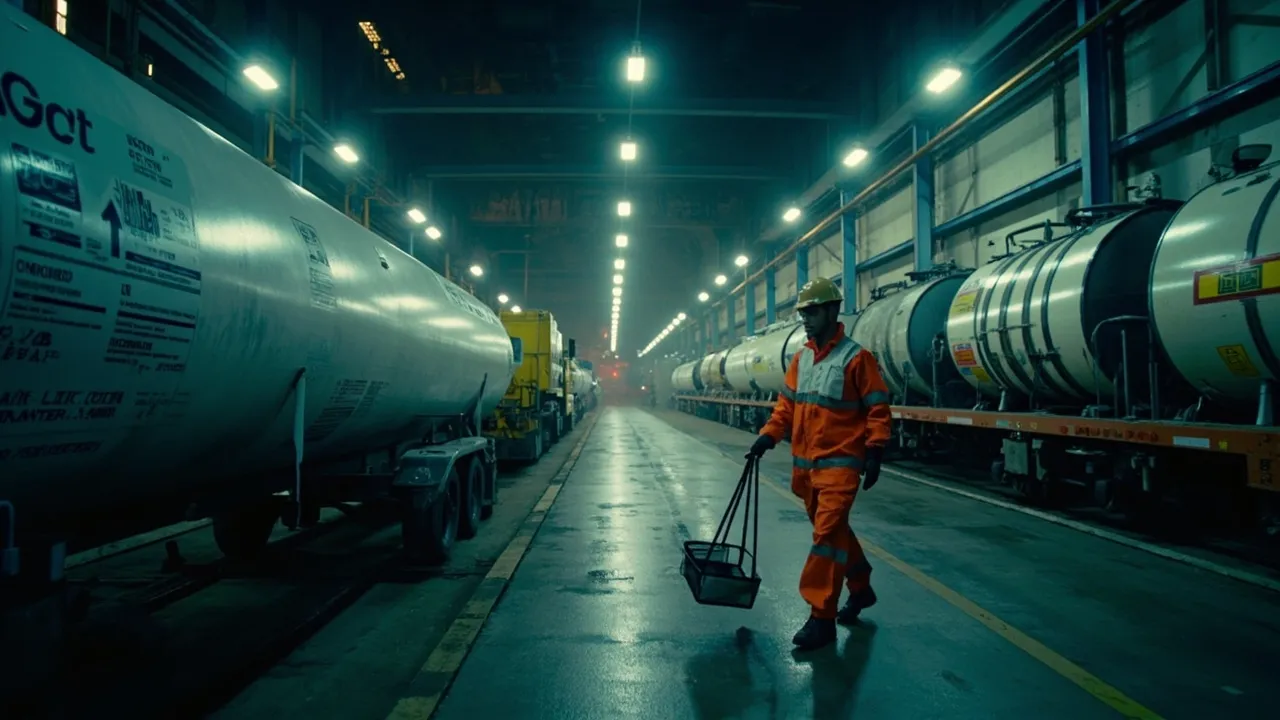
Class 9 Battery Freight Needs Commodity-Level Proof Before It Needs More Capacity

Battery freight is moving from a specialty exception into a regular transportation planning problem. That does not make it ordinary.
Supply Chain Dive reported that Maersk launched a dedicated lithium-ion battery ground freight service in North America, expanding its dangerous-goods logistics network around a category tied to electric vehicles, energy storage, consumer electronics, and industrial electrification. The service is aimed at shippers that need compliant movement of battery cells, modules, and packs where documentation, packaging, and qualified handling matter as much as equipment availability.
The timing is not surprising. Reuters reported that broker Guotai Junan projected lithium carbonate equivalent demand from energy storage would account for 31% of overall consumption in 2026, up from 23% in 2025. Battery demand is no longer only an automotive supply chain story. Stationary storage, replacement parts, recycling flows, and distributed energy projects all create freight moves that need dangerous-goods discipline.
More capacity will help. But the first constraint is proof.
Class 9 Is an Operating Rule
Lithium-ion batteries generally travel under Class 9 miscellaneous dangerous goods rules. For transportation teams, that classification is not just a label on a carton. It changes what has to be known before a shipment is tendered, accepted, loaded, transferred, or handed across a border.
The freight record has to answer basic questions before dispatch starts looking for a truck. What chemistry is moving? What UN number applies? Are the batteries cells, modules, packs, contained in equipment, damaged, defective, prototype, or waste? What is the state of charge? What packaging instruction applies? Is the shipment domestic, cross-border, or intermodal? Which carrier is qualified to move it?
Those questions sound administrative until something goes wrong. Battery incidents are difficult because thermal events can escalate quickly, response instructions are specific, and cargo condition matters. A load of new packaged batteries is not the same risk as a return shipment containing damaged packs. A shipment prepared for one mode may not be acceptable for another. A carrier that can move general industrial freight may not be eligible for this commodity.
That is why commodity-level proof has to sit inside the transportation workflow, not in a separate compliance folder.
The Market Is Big Enough to Punish Sloppy Records
Battery logistics is scaling into a freight market that is already expensive and volatile. Logistics Management's State of Logistics coverage reported that U.S. business logistics costs totaled $2.4 trillion, equal to 7.8% of GDP. In that environment, every special-handling category gets pressure from both sides: shippers want more routing options, while carriers want cleaner data before accepting risk.
That tension is especially sharp for battery freight. A shipper may see a load that needs capacity. A carrier sees a hazardous-materials decision involving documentation, training, insurance, emergency response, facility rules, driver instructions, and potential refusal at pickup if the paperwork does not match the cargo.
The failure mode is familiar. Sales promises a delivery. The warehouse stages freight. Dispatch tenders the shipment. The carrier asks for details that live in product engineering, compliance, customer service, or an email thread. The pickup window slips while people reconstruct the shipment file.
That is not a capacity problem. That is a proof problem.
Build the Battery-Freight Proof File
Battery shippers need a standard record that travels with the load from order entry through delivery confirmation. It should be specific enough for dangerous-goods review and practical enough for operations.
Start with commodity identity. The record should include battery chemistry, product family, UN number, proper shipping name, hazard class, quantity, and whether the batteries are standalone, packed with equipment, or contained in equipment.
Add condition. New, used, returned, damaged, defective, recalled, prototype, waste, and recycling-bound batteries belong in different operating paths. Condition should not be inferred from customer type or order notes. It drives packaging, routing, carrier eligibility, and escalation.
Capture state of charge where the rule set requires it. State-of-charge restrictions can affect air and some multimodal movements, but even road networks benefit from having the field visible. A battery shipment that may later convert modes should not rely on someone remembering to ask.
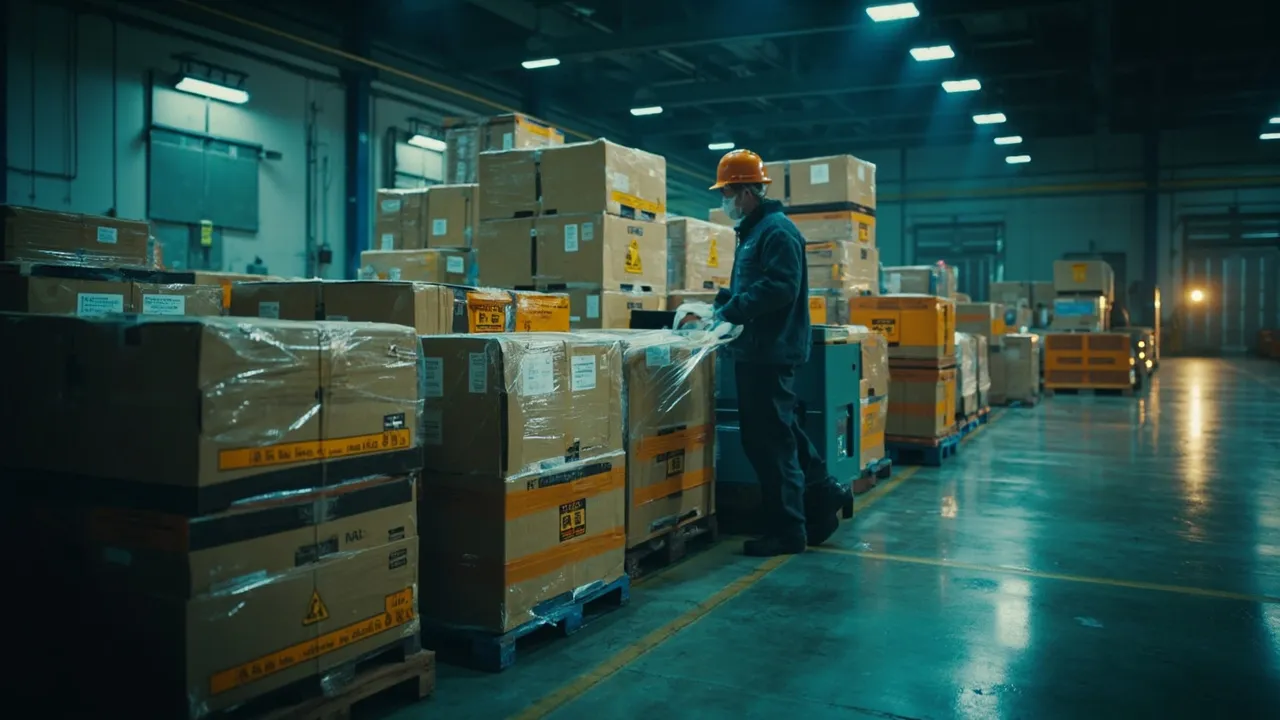
Packaging needs its own proof. The record should show packaging method, packaging instruction, carton or crate type, marks and labels, overpack status, palletization, and photo evidence. If a carrier rejects freight at the dock, the team should be able to compare the actual package to the approved method immediately.
Carrier qualification is just as important. The shipment should identify eligible carriers, required hazmat credentials, special instructions, facility restrictions, insurance requirements, emergency-response contact, and the person authorized to approve exceptions. A backup carrier that cannot legally or operationally handle the commodity is not a backup.
Finally, track handoffs. Battery freight often crosses internal and external boundaries: warehouse to carrier, carrier to terminal, domestic leg to cross-border leg, forwarder to broker, or customer return to recycling partner. Each handoff should preserve the same commodity record, not restart the documentation chase.
Cross-Border Battery Freight Raises the Stakes
North American battery supply chains do not fit neatly inside one country. Cells, packs, vehicles, charging equipment, and recycling materials can move across the United States, Mexico, and Canada with different customs, safety, and facility requirements layered onto one shipment.
That makes cross-border handoffs a weak point. A load can have correct commercial data and still fail if dangerous-goods information is incomplete. Customs brokers need commodity detail. Carriers need transport instructions. Receiving sites need handling expectations. Compliance teams need an audit trail if a shipment is questioned later.
The problem compounds when freight is urgent. Energy projects, vehicle production, warranty replacements, and service-part networks do not wait while teams rebuild documentation. If the proof file is missing at tender time, the shipment delays or moves with more risk than the organization understands.
Neither outcome scales.
Where CXTMS Fits
CXTMS helps logistics teams keep battery freight execution tied to the commodity detail that makes it transportable. Instead of treating hazardous-materials data, carrier instructions, documents, and shipment milestones as separate fragments, CXTMS gives teams one shipment-level operating record.
That record can carry the fields that matter: chemistry, UN number, pack condition, packaging method, origin, destination, carrier qualification, emergency contact, exception owner, document status, and handoff history. Dispatch can see whether a carrier is eligible before tender. Compliance can see what was approved. Customer service can explain status without asking three departments to reconstruct the file.
Battery freight will keep growing as electrification spreads beyond passenger vehicles into warehouses, grids, equipment fleets, and industrial operations. The winners will not simply be the companies that find more trucks. They will be the companies that can prove what is moving, how it is packaged, who is qualified to handle it, and what happens when the plan changes.
If your battery freight still depends on detached spreadsheets, email approvals, and commodity details that surface only after a carrier asks, schedule a CXTMS demo. CXTMS helps logistics teams build dangerous-goods proof into the shipment record before capacity, compliance, or customer service has to chase it under pressure.