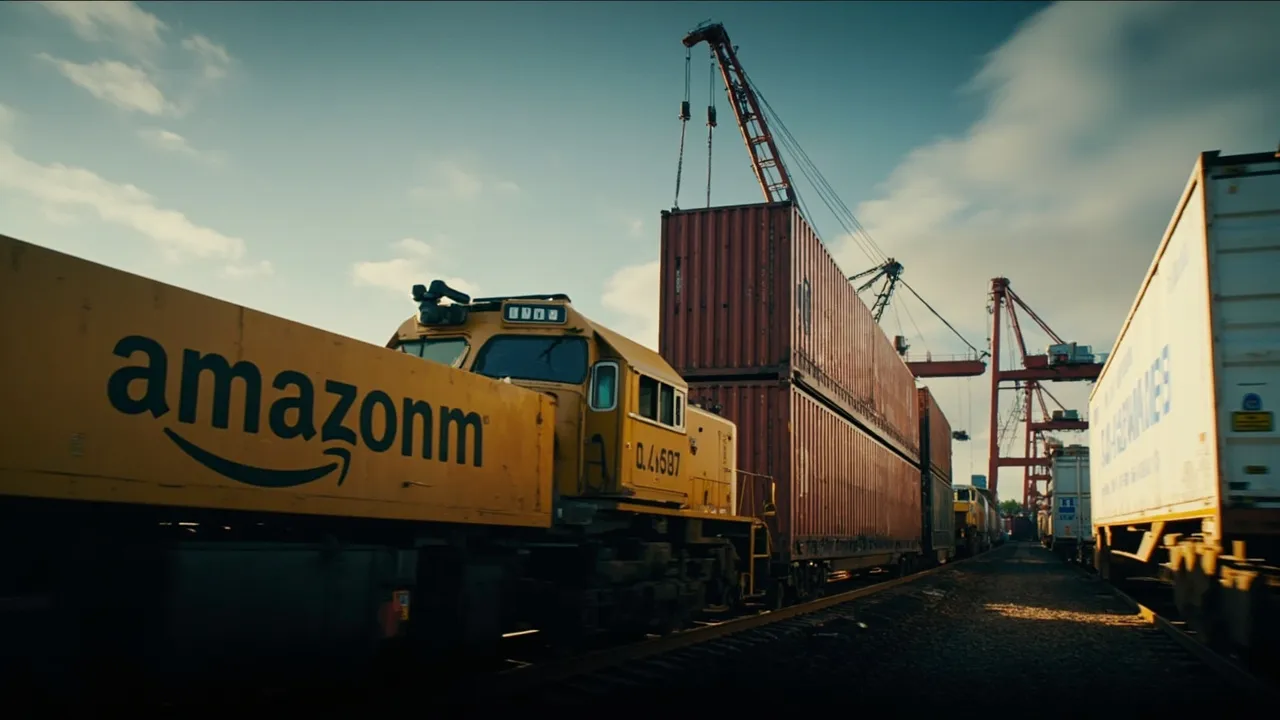
Maersk's SoCal Rail Shift Shows Inland Rail Choice Is Becoming a Service-Design Decision

Inland rail routing used to look like a back-office procurement choice. Pick the railroad, lock the lane, manage the rate, and let operations deal with the exceptions.
That view is getting old fast.
FreightWaves reported that Maersk shifted most of its eastbound container traffic out of the Southern California port complex from BNSF Railway to Union Pacific. The operational details are striking: approximately 1,000 TEUs of Maersk's weekly Southern California outbound volume shifted to Union Pacific, which now handles 77% of Maersk's volume in the region. RailState data cited by FreightWaves also showed Maersk moved 100,559 TEUs east along the corridor during the tracking period, with BNSF previously handling 90% before the shift accelerated in late May and early June.
This is not just a carrier-allocation story. It is a reminder that inland rail choice now shapes the customer experience. Port dwell, rail ramp reliability, intermodal appointment quality, demurrage exposure, drayage capacity, and receiver priority all meet inside one delivery promise.
Intermodal Is Back In The Foreground
The timing matters because intermodal demand is strengthening. Logistics Management's 37th State of Logistics rail and intermodal coverage reported that U.S. intermodal volume reached 5,820,002 containers and trailers through May 2026, up 1.8% year over year. May alone posted an 8.1% gain, and container volumes reached a record year-to-date high for the month.
Those gains followed a solid 2025, when intermodal volume increased 1.5% to 14.06 million units, the second-highest annual total on record behind 2018's 14.36 million units. Rail carloads are improving too: U.S. rail carloads rose 1.5% in 2025 to 11,508,767, then increased another 3.4% year over year through May 2026.
Market forecasts point in the same direction. Mordor Intelligence estimates the intermodal freight transportation market will grow from $31.16 billion in 2026 to $58.13 billion by 2031, a 13.28% compound annual growth rate. Its report also says rail-road movements accounted for 47.33% of 2025 demand, while transportation planning represented 34.78% of market share.
In other words, rail routing is no longer a sleepy procurement line item. It is one of the places where ocean import strategy, domestic capacity, cost control, emissions goals, and customer service collide.
The Rail Ramp Is Part Of The Product
For importers, the inland ramp is often where a clean ocean move becomes a messy domestic one.
A container can arrive at Los Angeles or Long Beach on time and still miss the customer promise if the rail cutoff is missed, the ramp is congested, the dray carrier cannot secure an appointment, chassis availability is tight, or the final receiver only accepts limited windows. The customer does not care which handoff caused the delay. They care whether the freight arrived when promised.
That is why Maersk's shift is interesting beyond the names involved. The article notes that affected traffic is primarily routed through Union Pacific's Long Beach-to-Chicago service into Global 4 near Joliet, Illinois, and the Long Beach-to-Dallas corridor. Those destinations are not abstract map points. They are gateway decisions that shape dray market selection, warehouse appointment calendars, demurrage risk, and downstream recovery options.
The $300 peak-season surcharge that FreightWaves noted for certain Union Pacific Southern California traffic adds another layer. A route can improve capacity or service and still change the landed cost profile. Operations, procurement, and customer service need to understand both at the same time.
Build The Service-Design Checklist
The right response is not to treat every rail change as a crisis. It is to build a checklist that makes inland rail routing visible before the exception happens.
Start with the port pair. Los Angeles and Long Beach are not interchangeable in every operating plan, and neither are the inland destinations connected to each terminal. A port-to-ramp combination should be tied to service promise, customer location, dray market, and receiver rules.
Next, define the rail ramp. The ramp determines final-mile optionality. A Chicago-area ramp with deep dray capacity behaves differently from a smaller inland market where a missed appointment can push delivery by days. The rail plan should include the destination ramp, expected availability event, free time, chassis assumptions, and carrier contacts.
Then evaluate the dray market. Rail service only creates value if the last-mile carrier can recover the container on time. Teams need to know which dray providers are approved, which facilities are constrained, how quickly appointments can be secured, and what happens when the ramp release lands outside the expected window.
Demurrage and storage clocks belong in the same review. A lower line-haul cost can disappear if containers sit at the ramp because the warehouse is not ready or the receiver appointment was booked too late. The exception record should show whether the cost came from rail delay, appointment failure, dray shortage, documentation delay, or customer hold.
Appointment lead time is just as important as transit time. If the receiver needs 48 hours of notice and the rail ETA moves by 24 hours, the shipment may need proactive rescheduling before it physically arrives. A transportation plan that ignores the appointment calendar is not really a service plan.
Finally, rank receiver priority. Not every container deserves the same recovery action. High-margin orders, production-critical components, promotion freight, and customer-penalty shipments may justify faster dray recovery or alternate routing. Low-priority inventory may not. The service design should say that clearly.
Where CXTMS Fits
Inland rail design needs a control layer that sees more than a rail ETA.
CXTMS can connect ocean milestones, rail events, drayage dispatch, appointment windows, exception escalation, and customer-level service reporting in one transportation workflow. That matters because the failure point is often between systems. A steamship line update says the box is moving. A rail update says it is en route. A dray carrier is waiting on availability. A warehouse calendar is already full. A customer service team discovers the risk only after the delivery promise is in trouble.
With CXTMS, teams can track the planned port pair, rail ramp, dray provider, appointment lead time, demurrage clock, and receiver priority against the actual shipment record. They can also compare performance across lanes: which rail-ramp combinations produce fewer storage events, which dray markets need earlier tendering, which customers require tighter appointment coordination, and which exceptions repeat during peak season.
That is the practical lesson from Maersk's Southern California shift. Inland rail choice is not simply about who pulls the container east. It is about the service design that starts at the port and ends when the receiver accepts the freight.
If your import network still treats inland rail as a procurement field instead of a service-design decision, schedule a CXTMS demo and see how rail milestones, drayage coordination, exception escalation, and customer reporting can live in one operating view.