FMCSA’s $217M Grant Package Signals a New Era of Connected Roadside Enforcement


FMCSA’s latest grant package is easy to file under public-sector funding news. That would be a mistake. The agency is putting $217 million into trucking safety, CDL modernization, technology deployment, and veteran driver training, and the operational message is bigger than the dollar figure: roadside enforcement is becoming more connected, more current, and harder for weak carriers to outrun.
According to FreightWaves’ coverage of the grant announcement, applications are open now and close June 17, 2026, at 11:59 p.m. Eastern. The package spans four programs: the High Priority Commercial Motor Vehicle Grant Program, the High Priority Innovative Technology Deployment Grant Program, the Commercial Driver’s License Program Implementation Grant, and the Commercial Motor Vehicle Operator Safety Training Grant Program.
That mix matters. FMCSA is not funding one isolated compliance initiative. It is funding the data plumbing behind commercial motor vehicle enforcement: better state systems, better CDL records, better roadside inspection technology, and a workforce pipeline tied to federally recognized training standards. For shippers, brokers, and freight forwarders, the practical takeaway is blunt: carrier compliance data is going to move closer to real time, and routing guides need to be ready for that.
Four grant programs, one enforcement direction
The High Priority Commercial Motor Vehicle program is the broad enforcement arm. It supports state and local projects that target unsafe driving, hazardous materials movement, roadside inspection capability, safety-data improvement, and public-awareness work. That is the conventional part of the package, but it still matters because enforcement capacity is uneven across jurisdictions. More funded inspection capability means more lanes where carriers are likely to face meaningful checks rather than paper-only scrutiny.
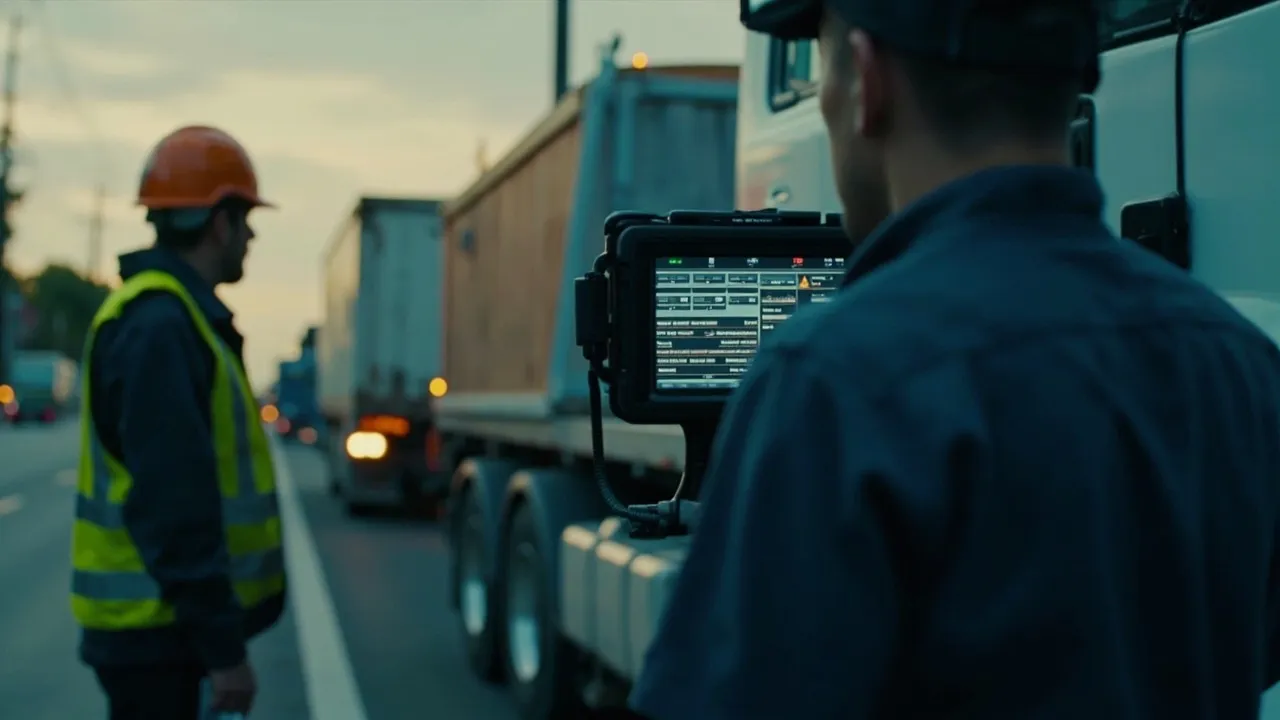
The High Priority Innovative Technology Deployment program is the more strategic signal. It funds technology that connects federal motor carrier safety systems with state commercial motor vehicle systems. FreightWaves points to examples such as electronic screening, license-plate recognition at weigh stations, and the data infrastructure needed for faster roadside decisions. In plain English: the roadside stop is becoming less dependent on what an inspector can manually verify in the moment and more dependent on what connected systems already know.
The largest named component is the Commercial Driver’s License Program Implementation Grant, known as CDLPI. FMCSA is putting approximately $89.4 million into that program alone. CDLPI funds state CDL system modernization, conviction processing, violation masking prevention, and the integrity of the national CDL database. The goal is the long-standing “one driver, one license, one record” standard: a driver’s commercial history should follow them across state lines without gaps that allow disqualifications, convictions, or serious violations to disappear in administrative lag.
The fourth program, Commercial Motor Vehicle Operator Safety Training, focuses on driver development for current and former members of the U.S. Armed Forces, including National Guard members, reservists, and eligible spouses. Individuals and motor carriers do not apply directly; training institutions and nonprofits do. But for carriers trying to improve recruiting quality, the signal is useful. Federally supported training providers can become a more credible hiring channel when driver qualification files are under tighter review.
Roadside enforcement is becoming a data network
For decades, roadside enforcement has been anchored by physical infrastructure: weigh stations, inspection bays, pull-off locations, and state patrol staffing. Those assets still matter, but the new competitive edge is data connectivity. If a state system knows a CDL has been disqualified, a carrier’s authority has been suspended, or a vehicle has unresolved safety problems, that information has to reach the enforcement point fast enough to change the roadside decision.
That is where the grant package becomes relevant to transportation management. A routing guide is not just a cost-and-service document. It is an exposure map. Every preferred carrier, backup carrier, brokered move, cross-dock handoff, and spot-market exception carries compliance risk. When enforcement systems become better at detecting suspended authority, disqualified CDLs, masked violations, and out-of-service patterns, weak carrier governance stops being a paperwork issue and becomes an execution disruption.
This is especially important for freight teams that lean on small carriers, owner-operators, and spot capacity during demand spikes. Plenty of small carriers run clean, professional operations. The problem is that bad actors often hide in the same fragmented capacity pools, relying on outdated records, slow state processing, or limited roadside visibility. Better connected enforcement narrows that hiding space.
Carrier master data needs a higher standard
Most logistics teams already keep carrier profiles, insurance certificates, authority status, safety ratings, preferred lanes, rates, and service histories. The next step is making that master data more dynamic. Static onboarding files are no longer enough when enforcement signals can change quickly.
At a minimum, carrier records should distinguish between onboarding status and active eligibility. A carrier may have passed onboarding six months ago but still be the wrong choice today if authority, insurance, CDL integrity, crash history, or inspection patterns have changed. Freight teams should also track who verified the record, when it was last checked, what source was used, and what exception path applies if a load is already tendered.
CDLPI modernization raises the bar for driver-level risk as well. If state conviction processing improves and national CDL data becomes more current, annual motor vehicle record pulls start to look too slow for high-risk freight. Hazmat, cross-border, high-value, time-critical, and regulated shipments deserve tighter qualification logic than ordinary low-risk lanes. Not every shipper needs driver-level checks on every move, but every logistics team should know where the risk threshold changes.
Technology deployment also changes how teams should evaluate carrier reliability. A carrier that repeatedly accumulates inspection problems, equipment violations, or authority issues is not merely “hard to manage.” It is a route-failure candidate. When a truck is stopped, rejected, or delayed because enforcement systems caught something your carrier file missed, the shipment still becomes your customer-service problem.
What CXTMS users should do now
The right response is not panic. It is better data hygiene.
Start by reviewing carrier master records for stale compliance fields. Authority status, insurance expiration, safety scores, operating classifications, hazmat permissions, and document refresh dates should not live in disconnected spreadsheets. They should sit beside tendering rules, routing-guide preferences, and exception workflows.
Next, segment carrier risk by lane and freight type. A low-value dry van lane and a hazmat move through multiple states should not use the same approval logic. Neither should an established contract carrier and a same-day spot carrier sourced under pressure. If enforcement technology is getting sharper, procurement rules have to get sharper too.
Finally, build escalation paths before a load is at risk. When a carrier record fails a compliance check, dispatch should know whether to block tendering, request updated documents, route to compliance review, or approve a controlled exception. The worst time to invent that process is when freight is already sitting on a dock.
FMCSA’s $217 million package is not just grant news. It is a preview of a roadside environment where disconnected data becomes a liability. CXTMS helps freight forwarders, brokers, and shippers connect carrier master data, tendering rules, compliance checks, documents, and exceptions in one transportation operating system. If your team is ready to modernize carrier governance before enforcement catches up to your routing guide, schedule a CXTMS demo and see how cleaner transportation data protects freight execution.