First-Mile Visibility in Soft Commodities Is Still the Hardest Supply Chain Blind Spot

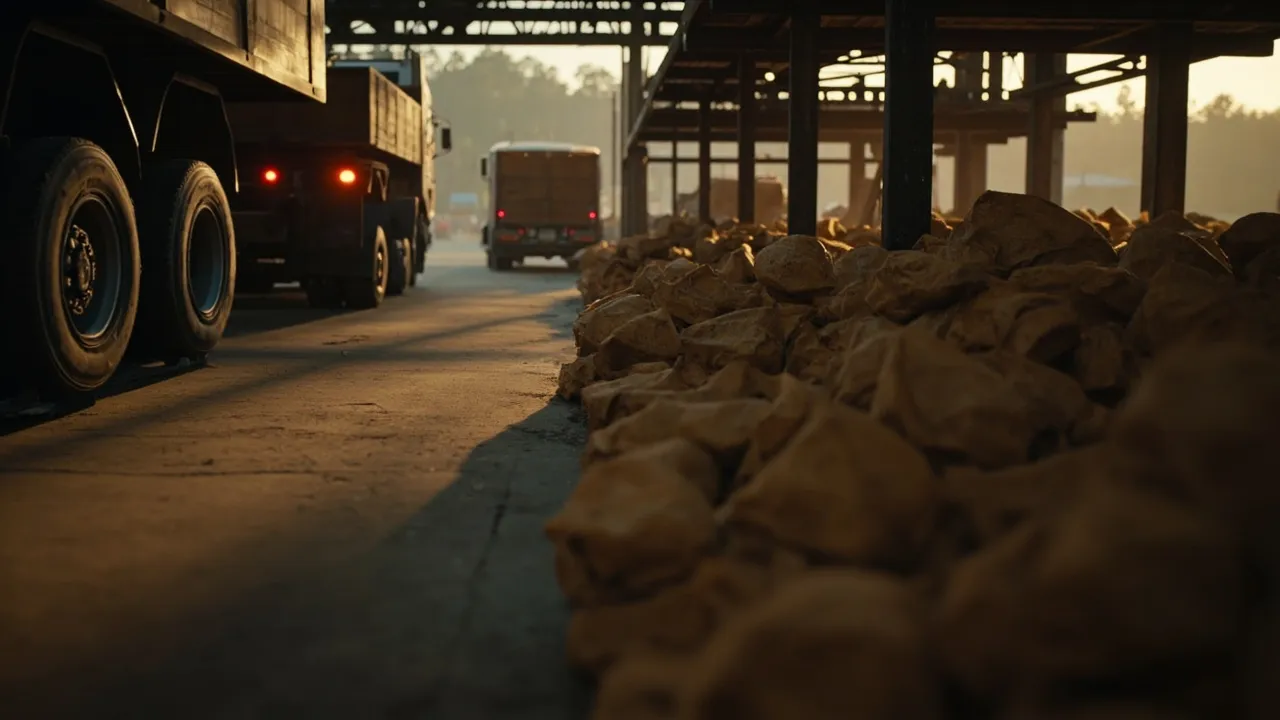
Supply chains have gotten pretty good at tracking containers at sea, pallets in distribution centers, and parcels on the final mile. The first mile is still a mess.
That is especially true for soft commodities like cocoa, coffee, cotton, and sugar, where the most important operating signals originate far upstream, long before a booking is made or a container is loaded. As SupplyChainBrain noted in its recent discussion of first-mile visibility in soft commodities, last year’s cocoa volatility in Ivory Coast left unsold stocks sitting in warehouses after a sudden export slowdown. That is the problem in one sentence: by the time downstream systems notice disruption, the damage is already underway.
The industry talks constantly about end-to-end visibility, but soft commodities expose the lie in that phrase. Most logistics networks are not truly end to end. They are port to customer, maybe factory to customer if the shipper is disciplined. Farm, co-op, and origin aggregation data usually remain fragmented, delayed, or trapped in spreadsheets, phone calls, and local workflows.
Why the first mile breaks more easily than the rest
Soft commodities are origin-fragmented by nature. A single export program can depend on thousands of small producers, local buying stations, regional warehouses, cooperatives, inspection points, and transport handoffs before cargo reaches a formal international logistics node. Ocean freight has carrier milestones. Warehouses have scans. Final-mile networks have proof of delivery. The first mile often has none of that discipline.
That matters because the first mile is where uncertainty compounds fastest.
If origin collection runs behind schedule, procurement teams buy buffer stock. If quality readings arrive late, inventory gets routed conservatively. If crop conditions are unclear, planners hedge with earlier purchases, alternate suppliers, or extra working capital. None of those reactions are irrational. They are what operations teams do when the upstream signal is weak.
Inbound Logistics has argued more broadly that supply chains are moving toward more comprehensive, market-based data and more technology-enabled visibility because flexibility now depends on faster decision-making, not just lower cost. That point lands even harder in commodities. When the first mile is opaque, the whole network becomes slower, more expensive, and more defensive.
The real business cost is not just delayed freight
The obvious cost of poor first-mile visibility is shipment delay. The bigger cost is distorted planning.
Soft commodities force procurement, logistics, finance, and sustainability teams to make bets before product reaches the cleaner, more instrumented parts of the supply chain. When upstream events are fuzzy, companies compensate with inventory buffers and wider safety assumptions. That shows up as higher carrying cost, more conservative replenishment timing, and weaker confidence in delivery commitments.
There is also a compliance angle. Provenance is no longer a nice-to-have field in a report. It is becoming an operating requirement. Mordor Intelligence says the blockchain supply chain market is being pushed by demand for end-to-end transparency in multi-tier supply chains, with platform offerings accounting for 56.62% of market share in 2025 and services projected to grow at a 48.10% CAGR. You do not need to be a blockchain evangelist to understand the message: companies are spending real money because origin certainty has become strategically valuable.
The technology appetite makes sense. Mordor also highlights real-world examples that show what better upstream traceability can unlock, from contamination tracing compressed from days to seconds to sensor-linked field records supporting 30,000 small farms and boosting yields by up to 60% while cutting operating costs by 20%. Different use cases, same lesson: when first-mile data improves, downstream logistics stops operating on guesswork.
ESG reporting exposed the gap, but operations feel it first
A lot of companies first noticed the first-mile problem through ESG and due diligence requirements. They needed proof of sourcing, land use, supplier behavior, or emissions inputs, and discovered they did not have reliable origin-side records.
But the operational consequences hit before the annual report does.
If you cannot trust harvest timing, origin inventory position, or quality status at the source, then forecasting gets padded. Quality-control decisions get delayed. Transportation planning gets compressed into a smaller execution window. Procurement teams end up reacting to exceptions instead of shaping flow. In soft commodities, that often means paying more for optionality because the organization lacks confidence in its earliest data.
That is why first-mile visibility should not be treated as a sustainability side project. It is a planning discipline.
What logistics leaders should actually do
Do not overengineer this. The first move is not a moonshot control tower. It is disciplined event capture at origin.
Start with four questions:
- What are the earliest events that materially change logistics decisions, such as harvest completion, pickup readiness, quality release, warehouse receipt, or export-document readiness?
- Who captures those events today, and how many of them still live in email, WhatsApp, or spreadsheet form?
- Which of those signals are needed by downstream planning systems within hours, not days?
- Where are teams adding inventory or timing buffers purely because they do not trust the upstream feed?
From there, the playbook is simple and pragmatic:
- Standardize a small set of origin milestones before trying to digitize everything.
- Prioritize high-risk origin regions and volatile commodities first.
- Tie first-mile events to procurement and transportation workflows, not just reporting dashboards.
- Use mobile-friendly data capture where farm and co-op infrastructure is limited.
- Measure whether better origin data actually reduces buffer inventory, quality surprises, and rush decisions.
That last point matters. Visibility projects die when they become theater. If better first-mile data does not reduce uncertainty in procurement timing, inventory posture, or freight execution, it is probably just expensive decoration.
The bottom line
Soft commodities remain one of the clearest examples of how “visibility” still breaks at the source. Ocean, warehouse, and last-mile systems got the funding because they were easier to instrument. The first mile is harder, messier, and far more fragmented, which is exactly why it deserves more attention.
For logistics leaders, the win is not perfect farm-to-port omniscience. It is getting the few upstream signals that materially change decisions, then making them reliable enough that the rest of the network can stop compensating for blind spots.
If your team wants tighter control over origin-side uncertainty, procurement timing, and downstream transportation planning, book a CXTMS demo and see how CXTMS helps turn fragmented logistics data into decisions you can actually trust.