The U.S.-Philippines Industrial Hub Plan Could Become a New Template for Allied Supply Chain Regionalization

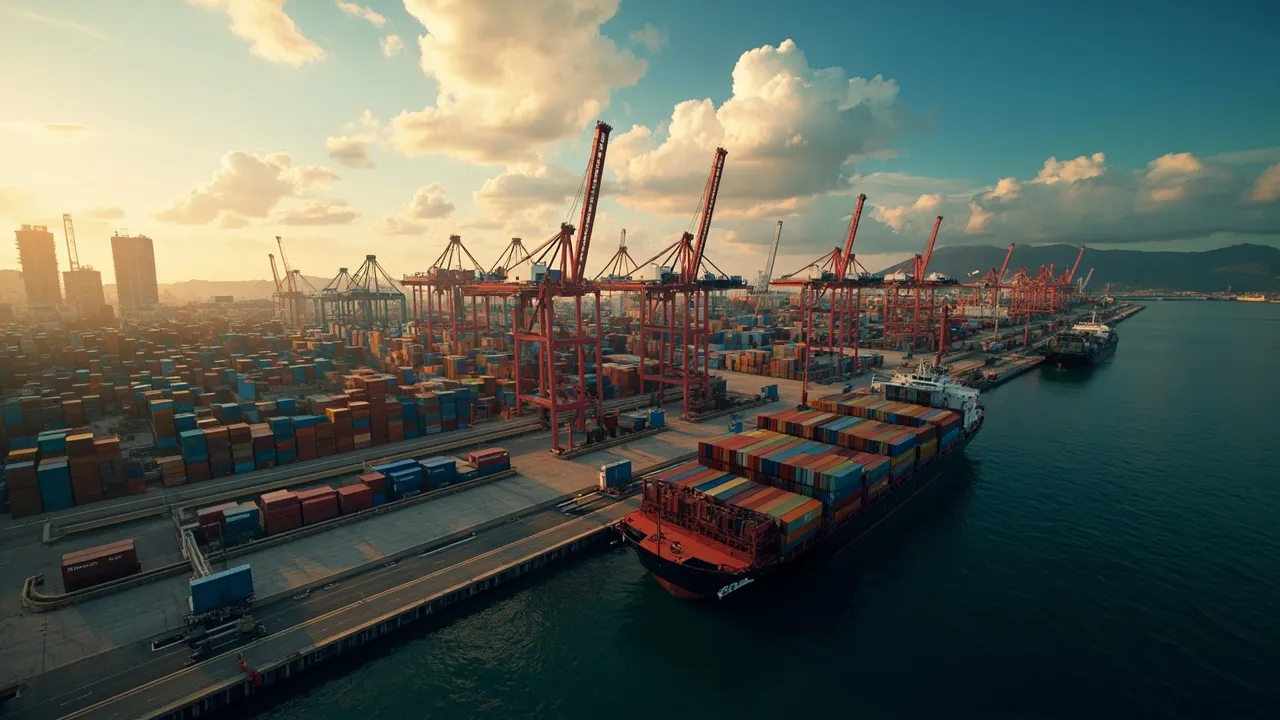
Supply chain regionalization usually gets discussed like a vague strategy memo. The proposed U.S.-Philippines industrial hub makes it look much more concrete.
According to SupplyChainBrain, the United States and the Philippines are planning a 4,000-acre industrial hub in the Luzon Economic Corridor designed to shore up supply chains for critical materials. The project is being framed as an "economic security zone" and, more importantly, as the first node in a broader industrial network that could eventually connect manufacturing sites, logistics corridors, and financing structures across multiple countries.
That is a bigger story than one bilateral investment announcement. It suggests governments and manufacturers are trying to build a repeatable template for allied supply chain regionalization, one that is less about abandoning globalization and more about redesigning it around trusted capacity.
Why the Philippines matters in this model
The lazy version of this story is that the Philippines is simply a lower-cost manufacturing alternative. That misses the point.
The U.S. State Department's April 16 fact sheet says the zone is meant to combine American legal and institutional certainty with the Philippines' workforce, mineral endowments, energy resources, and location at the crossroads of Indo-Pacific trade. It specifically highlights the country's reserves of nickel, copper, chromite, and cobalt, all of which matter for batteries, electronics, steel, and industrial supply chains.
That changes the lens. The Philippines is not being positioned merely as a labor market. It is being positioned as an industrial and logistics node with upstream material relevance, downstream manufacturing potential, and geographic value inside Asia-Pacific trade lanes.
For shippers and manufacturers, that distinction matters because regionalization only works when capacity sits inside a functioning logistics network. Cheap labor without ports, power, transport links, customs predictability, and investment governance is just a spreadsheet fantasy. Luzon at least offers the outline of something more serious.
A regionalization playbook is taking shape
The most interesting phrase in the State Department release is not the acreage. It is the idea that this zone could be the first of many in a larger industrial network.
That tells us where policy is going. Instead of depending on a single dominant country or trying to re-shore every strategic industry at home, governments are testing a middle path:
- place critical production and processing capacity in allied countries
- connect those sites through dedicated logistics corridors
- support them with financing and policy alignment
- reduce exposure to concentrated supply chains without blowing up cost structures
That is regionalization in grown-up form. Not slogans, not panic, and not an overnight divorce from Asia.
It is also a far more realistic model for logistics operators. Most supply chains will not become local. They will become more distributed, more politically filtered, and more dependent on corridor-level execution.
What this could change for Asia-Pacific network design
If the Luzon hub moves from concept to execution, it could affect network design in at least four ways.
1. More multi-country sourcing strategies
Procurement teams have spent years talking about China-plus-one. Projects like this could turn that into something more structured: China-plus-allied-network. Instead of treating backup sourcing as an emergency workaround, shippers may begin designing production footprints around linked regional hubs with different specialization roles.
2. Greater emphasis on mineral-to-manufacturing proximity
The Philippines' mineral profile is not a side note. If nickel, cobalt, and copper availability can be paired with processing, component production, and export infrastructure, companies gain a chance to shorten or de-risk parts of the input chain. That matters in sectors where a disruption upstream can stall everything downstream.
3. New pressure on ports and inland infrastructure
Industrial policy only becomes supply chain reality when containers move. If Luzon is meant to support a larger allied manufacturing network, then port throughput, road and rail connectivity, power reliability, customs handling, and digital trade infrastructure all become competitive variables. Regionalization is brutally unforgiving of infrastructure bottlenecks.
4. More corridor-specific freight planning
This is where transportation teams come in. As industrial hubs become policy-backed and strategically important, freight planning will shift away from broad country assumptions and toward specific corridors. The question will not just be "Can we source from the Philippines?" It will be "Can this corridor reliably move critical goods at the service levels we need?"
That is a TMS problem as much as a sourcing problem.
The real constraint is execution, not rhetoric
There is plenty to like in the proposal, but nobody should confuse an announcement with an operating network.
The watchlist is obvious:
- how quickly governance rules get defined
- which industries are prioritized first
- what infrastructure upgrades actually get funded
- whether permitting and customs processes become materially faster
- how investors evaluate political durability and return profiles
- whether logistics providers build dedicated capacity around the corridor
If those pieces lag, the zone risks becoming another impressive industrial-policy headline with patchy operational follow-through.
If they move, though, this could become a blueprint. A 4,000-acre zone tied to critical minerals, allied capital, legal certainty, and Indo-Pacific trade flows is not just a development project. It is an attempt to engineer resilience into network design.
What shippers should monitor now
The smart move is not to overreact. It is to watch the right indicators early.
Shippers with Asia-Pacific exposure should track three things over the next 12 months: first, whether anchor manufacturers or processors commit real capacity; second, whether transport and energy infrastructure inside the Luzon Economic Corridor advances on a visible timetable; and third, whether trade and customs procedures are streamlined enough to make the corridor commercially credible.
That is when this story stops being geopolitics theater and starts becoming logistics strategy.
The U.S.-Philippines hub plan matters because it points to where supply chain design is heading: fewer single-country dependencies, more allied production clusters, and tighter links between industrial policy and freight execution. If that model scales, regionalization will stop being a buzzword and start becoming the architecture of global trade.
If your team is planning for regionalized sourcing, corridor-level visibility, and tighter execution across Asia-Pacific freight flows, book a CXTMS demo to see how CXTMS helps logistics teams turn network shifts into operational decisions.