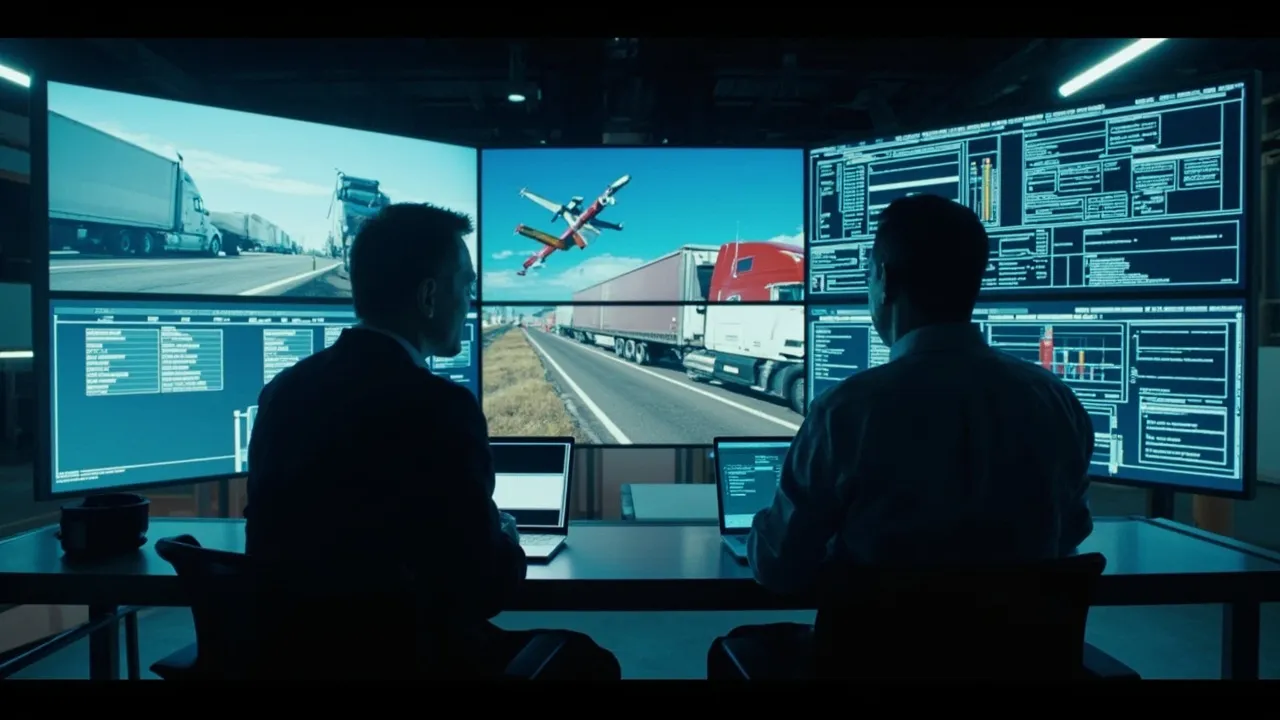
2026’s Real Supply Chain Risk Is Operational Fatigue: More Disruption, More AI, More Compliance at Once

Supply chain teams are still talking about disruption like it is a series of isolated events.
That framing is outdated.
The nastier risk in 2026 is cumulative operational fatigue: too many shocks, too many dashboards, too many compliance layers, and too many transformation projects landing on the same already-stretched teams. Disruption is not just happening more often. It is piling up faster than many organizations can absorb it.
That matters because resilient networks do not fail only when freight stops moving. They fail when planners, warehouse leaders, procurement teams, and compliance staff are forced to make too many high-stakes decisions in too little time for too long.
According to Food Logistics, citing Accenture research, 76% of global supply chain executives expect continued higher levels of change and disruption in 2026. That number is not interesting because it says disruption exists. Everyone knows that. It is interesting because it suggests turbulence is now the baseline operating condition.
At the same time, the pressure is not coming from one direction. Teams are being hit by geopolitical volatility, cost inflation, digitization mandates, labor redesign, and AI adoption at once. That stack is what creates fatigue. Supply Chain Dive’s 2026 logistics outlook points to the same pileup, with AI adoption, market volatility, ocean and air uncertainty, and carrier shakeouts all landing on operators in the same year.
The Stress Is Compounding, Not Rotating
The old playbook assumed companies could tackle one challenge at a time. Tight capacity this quarter. New compliance rule next quarter. System rollout later.
2026 is not offering that luxury.
Reuters reported that factories worldwide faced soaring input costs and supply chain disruptions in March as war-related logistics delays distorted purchasing managers index readings. The same report noted that Asia buys about 80% of the oil shipped through the Strait of Hormuz, making much of the region especially vulnerable to energy shock. In Manila, Reuters said diesel prices had tripled, while Japan’s manufacturing input prices rose at the fastest rate since August 2024.
That kind of volatility does not stay neatly inside transportation budgets. It bleeds into sourcing, inventory policy, customer commitments, and escalation workflows. Every geopolitical disruption creates a second-order workload problem for operations teams that have to replan around it.
Now add internal transformation on top.
Deloitte’s transportation research found that more than 40% of responding government and public-services executives said gen AI is already transforming their industry. Meanwhile, a McKinsey global supply chain survey found that 90% of respondents said their companies lack sufficient talent to meet digitization goals. That is the real contradiction inside many logistics organizations: leadership wants faster AI adoption, but the people expected to implement it are already overloaded.
Why AI Can Increase Strain Before It Reduces It
AI is often sold as the cure for operational overload. Sometimes it is. Sometimes it just changes the shape of the headache.
A new model, copilot, or decision engine does not remove work on day one. It usually creates parallel work: process redesign, data cleanup, governance rules, exception handling, user training, KPI rewrites, and a long tail of edge cases nobody budgeted for.
That is why operational fatigue is a better lens than simple labor shortage.
If a planning team has to keep freight moving during cost shocks, comply with tighter trade and safety requirements, and simultaneously migrate to AI-assisted workflows, the risk is not just burnout. It is degraded execution quality. More rushed exceptions. More inconsistent carrier decisions. More missed documentation requirements. More expensive expedites caused by preventable misalignment.
In other words, the network becomes fragile because the humans inside it are cognitively saturated.
Compliance Pressure Is No Longer a Separate Workstream
A lot of executives still treat compliance like a specialist lane off to the side. That is dumb, frankly.
Compliance now sits directly inside daily execution. Trade screening, supplier due diligence, shipment data accuracy, sustainability disclosure, product-level traceability, customs valuation, and transportation safety rules all feed back into how freight is planned and released. When these requirements expand, they do not just affect legal teams. They slow operational decision cycles.
That is part of why fatigue builds so quickly. People are not only handling more events. They are handling more rules per event.
The result is a dangerous pattern: companies invest in visibility and automation, but fail to simplify decision rights. So teams end up with more alerts, more tools, and more approval layers without a matching reduction in manual complexity.
That is not resilience. That is organized exhaustion.
A Better Prioritization Model for 2026
Operations leaders do not need another generic call to “be agile.” They need a ruthless filter for where effort actually belongs.
1. Automate repetitive decisions with clear rules
Start with tasks that are frequent, rules-based, and expensive to do badly: appointment confirmations, document checks, shipment-status normalization, routine exception triage, and standard carrier communications. If a decision happens hundreds of times a week and rarely requires judgment, it should be a candidate for automation.
2. Standardize cross-functional handoffs
Most fatigue hides in the seams. Procurement hands off to transportation. Transportation hands off to warehousing. Warehousing hands off to customer service. Every messy handoff creates rework. Standard operating procedures, shared event definitions, and cleaner ownership lines are less sexy than AI, but they reduce chaos faster.
3. Escalate only true edge cases
Not every disruption deserves executive oxygen. Build clear thresholds for what gets escalated based on revenue risk, service risk, compliance exposure, and customer impact. If teams escalate everything, leadership becomes a bottleneck and frontline staff stop trusting the workflow.
4. Cut tool sprawl before adding more intelligence
If teams are already buried in portals, spreadsheets, and alert layers, another dashboard is not a strategy. It is clutter. Consolidate systems where possible, and make sure data moves cleanly between TMS, WMS, visibility, and compliance workflows before launching the next shiny pilot.
5. Measure fatigue like an operating risk
Track exception volume per planner, after-hours intervention, rework rates, approval delays, and manual touches per shipment. Most companies measure service and cost. Fewer measure whether the team is one bad week away from making preventable mistakes at scale.
The Real Resilience Test
The companies that win in 2026 will not be the ones that merely survive the next disruption headline. They will be the ones that redesign operations so every new shock does not land as human chaos.
That is the core issue. Disruption is unavoidable. Operational fatigue is not entirely unavoidable, but it is absolutely manageable if leaders stop treating automation, compliance, and resilience as separate programs.
The smart move now is brutally simple: automate the repetitive, standardize the messy middle, and reserve human judgment for the decisions that actually deserve it.
If your operation still expects people to absorb every new risk manually, the problem is not the market. It is the design.
Want a TMS that helps your team reduce manual noise, standardize execution, and stay resilient when disruption stacks up? Book a CXTMS demo and see how CXTMS helps logistics teams turn complexity into controlled execution.