Ulta Scaled Ship-From-Store to 1,000 Locations. Beauty Logistics Just Got a Lot Faster.

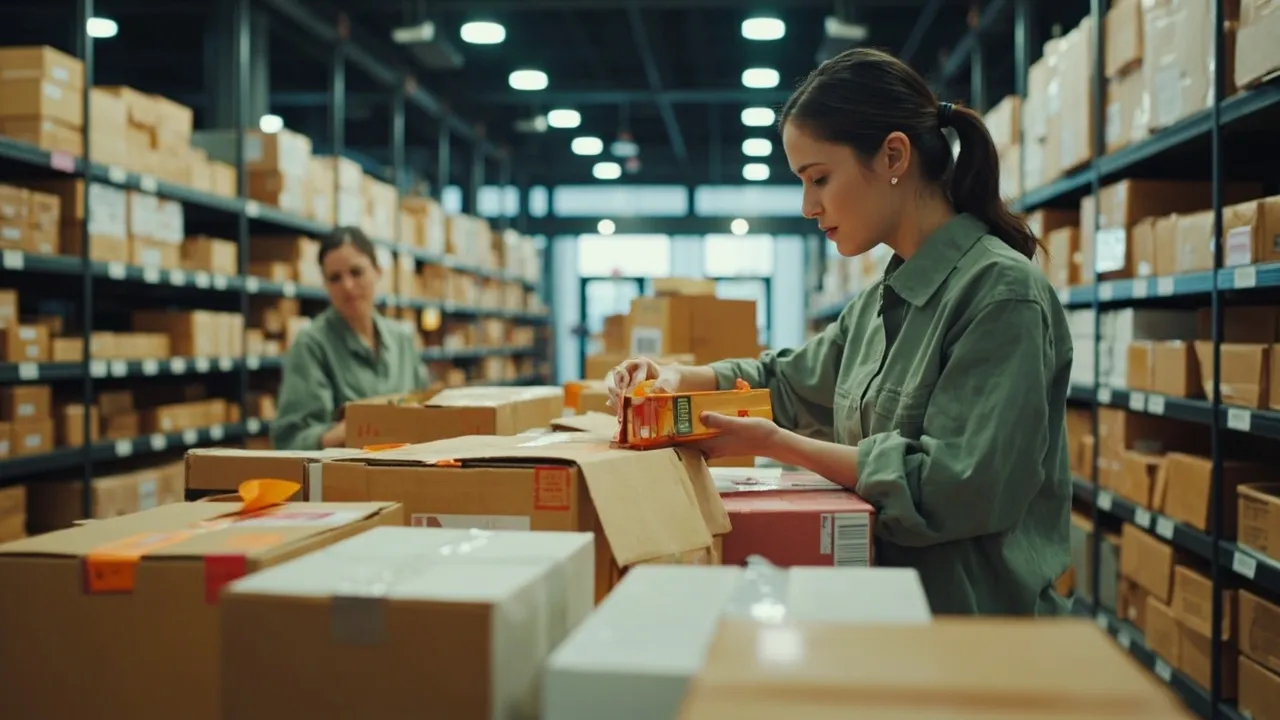
Ulta Beauty just gave specialty retail a very clear logistics signal: stores are not just selling points anymore, they are fulfillment nodes.
According to Supply Chain Dive, Ulta expanded its ship-from-store program from about 500 stores at the end of fiscal 2024 to more than 1,000 stores in fiscal 2025. That is not a tiny pilot getting dressed up as innovation. It is a network-level shift, and it happened while the retailer’s distribution center, market fulfillment center, and fast fulfillment center footprint stayed flat year over year.
The key enabler was software. Ulta said an AI-powered order management system helped optimize fulfillment decisions during the year, giving the company a way to route orders more intelligently across stores without needing a massive round of new building openings.
That matters because it gets to the real point of modern omnichannel logistics: speed is no longer just about adding more warehouses. It is about making better use of inventory that is already sitting closer to customers.
Why Ulta’s Expansion Is a Bigger Deal Than It Looks
A lot of retailers talk about stores as mini-warehouses. Fewer actually scale the model in a meaningful way. Ulta did.
Moving from roughly 500 to more than 1,000 ship-from-store locations in one fiscal year effectively doubled the number of inventory points that can support e-commerce fulfillment. For a retailer with a national specialty footprint, that changes service coverage, order routing flexibility, and peak-season resilience in one shot.
It also improves the odds that an order can be fulfilled from inventory already near the shopper, which can reduce parcel zones, shorten transit times, and limit split shipments. That is exactly the kind of math logistics teams care about, because every order fulfilled from the right nearby node is one less order forcing expensive long-haul parcel movement or DC congestion.
Ulta’s growth numbers show why the company needed that flexibility. Supply Chain Dive reported that fourth-quarter net sales rose 11.8% year over year to $3.9 billion, while full-year fiscal 2025 net sales increased 9.7% to $12.4 billion. When digital and omnichannel demand are expanding on top of that revenue base, the fulfillment network has to absorb more variability without turning every service promise into a cost problem.
AI Order Management Is the Quiet Hero Here
The sexy headline is “1,000 stores.” The operational headline is order orchestration.
If a retailer simply flips more stores into fulfillment mode without smarter decisioning, things get messy fast. Inventory accuracy issues, store labor constraints, poor order allocation, and inconsistent pick-pack performance can erase the theoretical benefit of local fulfillment.
That is why Ulta’s reference to an AI-powered order management system matters. Smarter order routing can weigh where inventory is available, how close it is to the customer, whether a store can handle the order without disrupting shoppers, and whether another node can fulfill the same basket more cheaply or more completely.
In other words, AI is not the strategy. It is the traffic controller.
That same logic is showing up elsewhere in retail. Target’s direct-from-store next-day delivery expansion will reach more than 100 stores in 50 markets by the end of 2026, up from six stores in two markets a year earlier, according to Supply Chain Dive. Target also said using Shipt for these deliveries lowers its cost to serve by about $2.50 per package compared with national parcel carriers.
That is the broader takeaway for logistics leaders: distributed fulfillment only works when the network knows which node should do the work, and when not to force a store into an order it should never have touched.
Stores Are Becoming Distributed Logistics Assets
Retailers spent years building omnichannel capability around dedicated fulfillment centers, sortation sites, and faster parcel injection. That infrastructure still matters. But Ulta’s move shows that stores can now do more of the heavy lifting when software is good enough.
This is especially powerful in specialty retail, where stores often hold broad SKU variety close to demand pockets. Beauty is a strong example because shoppers expect fast availability, baskets can include multiple small items, and store inventory is already spread across a dense physical footprint.
Using stores as fulfillment assets does come with trade-offs. Labor has to be trained. Pick paths need to be efficient. Inventory visibility has to be reliable enough that an online customer is not sold product that only exists in theory. And stores cannot all become fulfillment monsters without hurting the in-store experience.
That is why selective scaling beats blanket rollout. Reuters reported in March that Target is redesigning some locations as fulfillment-heavy hubs while others focus more on shoppers, rather than expecting every store to do everything. That is a smart model. The best distributed networks are not democratic. They are intentional.
What Ulta’s Case Means for Inventory Placement
Ulta kept its core fulfillment footprint flat while expanding ship-from-store. That should get the attention of every operator staring at capital budgets.
Sometimes the right answer is not another building. Sometimes it is better inventory placement, tighter order logic, and clearer segmentation of which stores should fulfill which orders.
An approved McKinsey analysis on omnichannel delivery found that faster local replenishment can allow inventory reductions of up to 20% in nearby stores when retailers consolidate forward stock intelligently. The point is not that every retailer can copy that number exactly. The point is that inventory and network design are now inseparable. If orders can be routed dynamically and inventory can be positioned with more precision, retailers do not need to brute-force service with excess stock everywhere.
For specialty chains, that opens a very practical playbook:
- identify stores with the right mix of inventory accuracy, labor capacity, and demand density
- use those stores as preferred e-commerce origin points
- keep slower or labor-constrained stores focused on shoppers
- rebalance inventory based on digital demand patterns, not just historical in-store sales
That is how a store network starts behaving like a logistics network.
The CXTMS Take
Ulta’s move is not just a beauty retail story. It is a blueprint for how distributed fulfillment is maturing.
The old omnichannel instinct was to expand capacity everywhere and hope the complexity paid for itself. The smarter model is more disciplined: keep the core DC network stable, turn the right stores into fulfillment assets, and let order management software decide when local inventory creates a service and cost advantage.
Going from roughly 500 to more than 1,000 ship-from-store locations in a year proves the concept is no longer experimental. It is operational.
For logistics teams, the lesson is blunt. If your stores, branches, depots, or field locations hold inventory, they are potential fulfillment nodes. The question is not whether they can ship. The question is whether your systems can decide, fast and accurately, when they should.
Want to turn distributed inventory into a faster, lower-cost fulfillment network? Contact CXTMS to see how CXTMS helps logistics teams orchestrate orders, inventory, and transportation in one place.