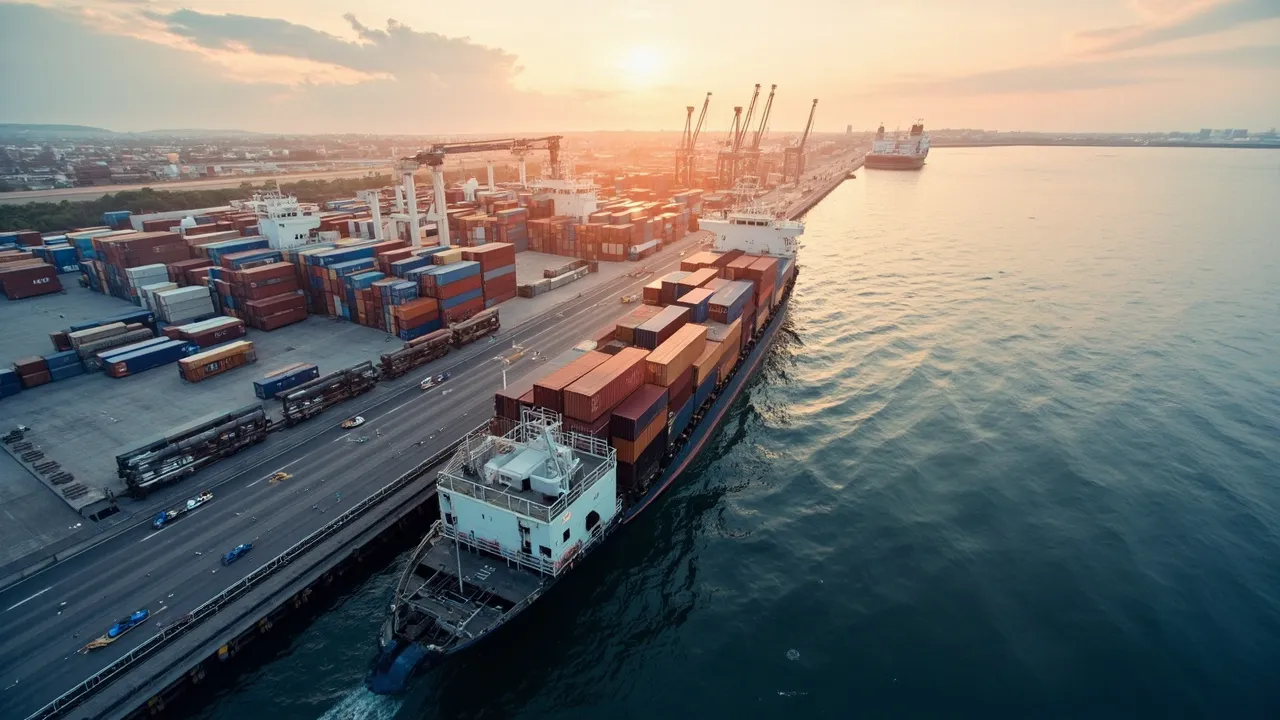
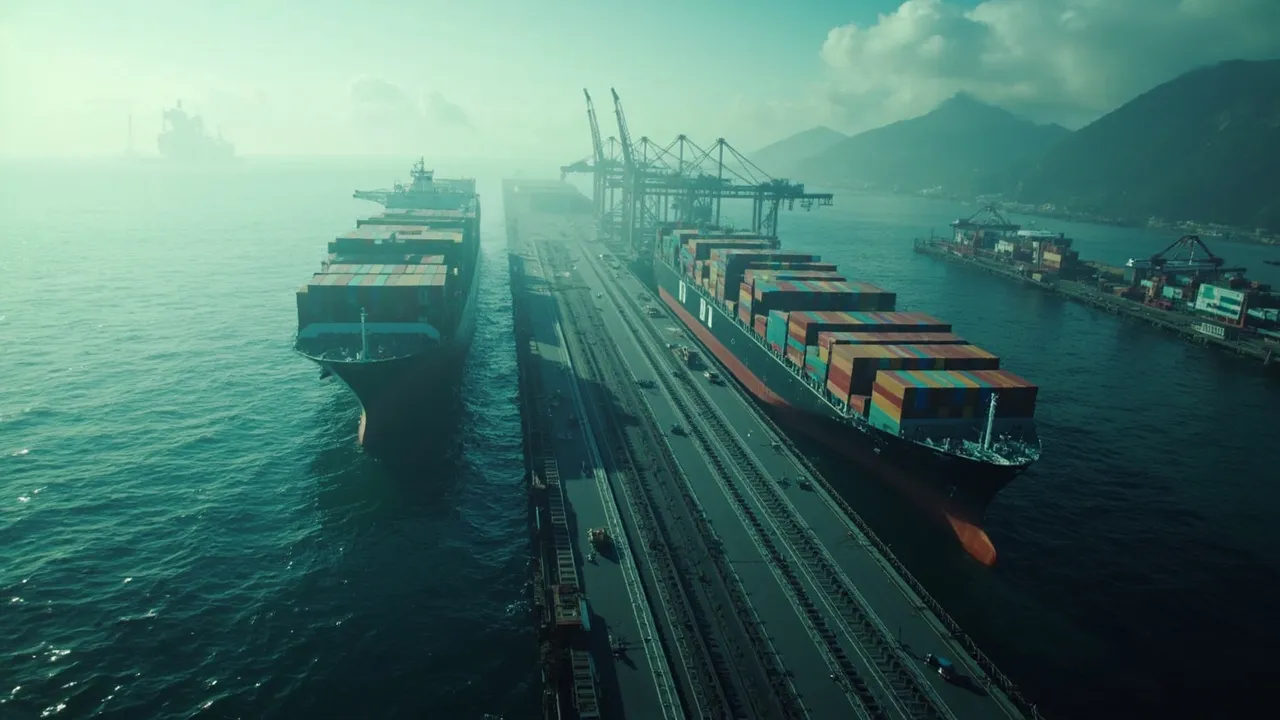
ZIM's 55% Rate Jump: When Expedited Ocean Can Replace Air Freight

Ocean freight is not automatically the economical choice, and air is not automatically the safe choice. The right mode depends on whether a shipment can absorb the full distribution of transit time—not merely the schedule printed in a quote.
That distinction matters as pricing changes. ZIM recently reported third-quarter net income of $830 million, up from $123 million one year earlier, while its average freight rate increased 55% year over year, according to FreightWaves. Those company-level figures show how quickly the ocean market can reprice. They do not, however, answer whether a particular server rack, semiconductor tool, or replacement component belongs on a vessel or an aircraft.
The answer requires a shipment-level calculation.
Expedited Ocean Is a Product, Not Just a Faster Sailing
Expedited ocean works when its entire operating chain is designed for speed: priority booking, a direct or limited-stop sailing, protected equipment, tight cutoff management, pre-cleared documentation, priority discharge, rapid availability, and a committed inland handoff. Removing days at sea while allowing a container to wait at origin or destination defeats the point.
Conventional ocean transit can consume 30 to 40 days, and importers often compensate with weeks of safety stock, as Inbound Logistics reports. Expedited services may narrow that gap substantially on suitable port pairs, but operators should compare door-to-door plans rather than port-to-port marketing claims.
Air freight has the clearest advantage when elapsed time dominates every other consideration. It also reduces inventory in transit. Yet air schedules have their own failure points: missed acceptance cutoffs, dimensional constraints, security screening, congestion at transfer hubs, and limited uplift for heavy or outsized cargo.
In other words, the decision is not “slow and cheap” versus “fast and expensive.” It is a comparison of two different risk profiles.
Compare Four Costs Before Switching
1. Transit variability
Use historical door-to-door performance by lane, service, forwarder, and weekday. Compare the 90th-percentile arrival—not the average. A service averaging 15 days but arriving in 24 days during one shipment in ten may be unacceptable for a launch-critical component.
Include booking lead time, origin dwell, sailing time, transshipment exposure, customs release, terminal availability, and final delivery. Ocean strategies should explicitly weigh cost, transit time, reliability, geographic coverage, and port access, a framework also recommended by Logistics Management.
2. Inventory carrying cost
Calculate the value tied up for the additional ocean days:
in-transit carrying cost = cargo value × annual carrying rate × extra days / 365
For $2 million of equipment, a 20% annual carrying rate, and 12 additional days, the incremental carrying cost is about $13,151. That amount matters, but it may still be far below the air premium. Add the cost of any extra safety stock required to protect the customer promise.
3. Damage and handling exposure
High value does not always mean air. Dense, rugged equipment can be well suited to a sealed container, especially when ocean avoids repeated break-bulk handling. Conversely, humidity-sensitive electronics, delicate calibrated instruments, and cargo that cannot tolerate vibration or long environmental exposure may favor air even when inventory economics point toward ocean.
Measure claims by mode and lane, then add packaging, sensors, insurance, and inspection costs to the comparison. Do not hide them in a general overhead rate.
4. Service consequence
The most important number may be the cost of being late. A delayed component that idles a data-center deployment, breaches a service-level agreement, or postpones revenue has a much higher consequence than replenishment stock with 30 days of cover.
Classify the shipment by consequence, not by product category alone. Two identical accelerators can require different modes if one supports a scheduled installation and the other replenishes regional inventory.
Segment High-Value Cargo by Value Density and Consequence
A simple two-axis screen helps dispatchers avoid the reflex to send all valuable cargo by air:
- High value density, high consequence: Favor air unless ocean's worst-case arrival stays comfortably before the need date. Examples include launch-critical chips and emergency replacement modules.
- High value density, lower consequence: Test expedited ocean. Sealed-container security, lower freight expense, and planned inventory cover can make it attractive.
- Lower value density, high consequence: Compare expedited ocean with deferred air and split shipments. Airfreight only the quantity needed to bridge the gap.
- Lower value density, lower consequence: Use standard ocean unless capacity, seasonality, or a customer commitment requires acceleration.
Product lifecycle also matters. Inbound Logistics has noted that handsets moving by ocean can spend 10% to 20% of their product lifecycle in transit. For fast-depreciating technology, time can destroy value even without a late-delivery penalty.
A Practical Mode-Switch Rule
Authorize expedited ocean only when all five conditions are true:
- The service's 90th-percentile door-to-door arrival is at least three business days before the required delivery date.
- The ocean savings exceed carrying cost, added safety stock, insurance, packaging, and expected delay cost.
- Origin cutoff, equipment, vessel allocation, customs documents, destination appointment, and inland capacity are confirmed.
- Cargo characteristics permit the longer environmental exposure and handling profile.
- A recovery plan exists, with a trigger date for airfreighting a bridge quantity if a milestone is missed.
This rule turns mode selection into controlled execution. The shipment can be economical without becoming a service gamble.
Use Split Shipments to Reduce Binary Decisions
Many moves do not need an all-air or all-ocean answer. Send the minimum launch or production quantity by air, then move the balance via expedited ocean. This protects the critical date while reducing the premium paid on the full order.
The key is visibility at milestones: cargo ready, booking confirmed, gate-in, vessel departure, transshipment, arrival, customs release, availability, and delivery. When those events and costs live in one transportation workflow, teams can apply the same rule consistently instead of escalating every urgent shipment by instinct.
Ocean rate inflation can narrow the savings, but it does not eliminate the case for expedited ocean. The winning move is to price uncertainty, inventory, handling, and service consequence together—and reserve air freight for shipments whose business impact truly demands it.
Want to build repeatable mode-selection rules around real shipment milestones and costs? Request a CXTMS demo and see how your team can manage ocean and air decisions in one workflow.