Wegmans' $110M Supply Chain Investment: A Practical 3PL Insourcing Scorecard

Wegmans Food Markets is putting $110 million behind a supply chain redesign that offers a useful lesson for any shipper reconsidering its dependence on third-party logistics providers. The decision is not simply “insource or outsource.” It is a network, capital, labor, service, and risk decision that should be tested activity by activity.
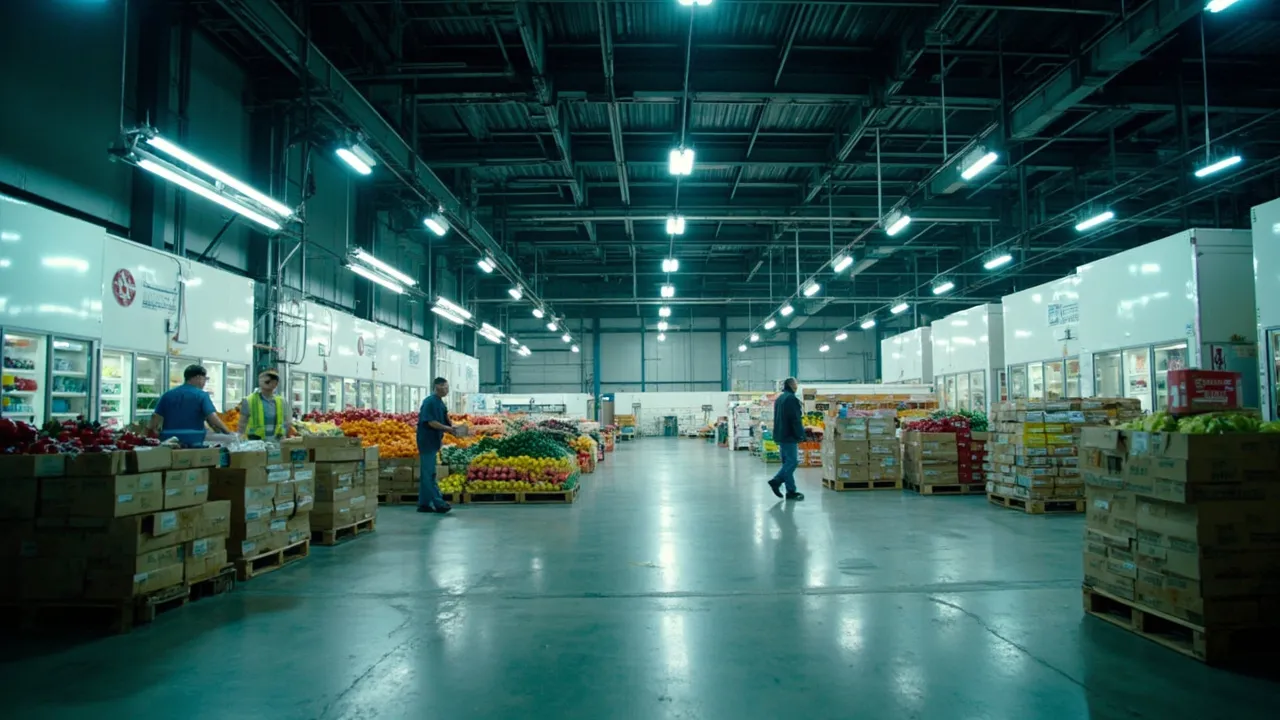
According to Supply Chain Dive, the investment will include a new refrigerated facility in Rochester, New York, supporting fresh produce, meat and seafood, deli, and restaurant operations. Wegmans also plans to move its returns operation to a modernized Rochester building and consolidate its Winton Road general merchandise distribution activity into its Pottsville, Pennsylvania, facility in spring 2027.
The stated goals are expanded capacity, stronger operations, and less reliance on third-party providers. Those are attractive outcomes, but bringing logistics in-house only creates value when the operating model can outperform the outsourced baseline after every cost and transition risk is counted.
Start With the Strategic Reason
Insourcing works best when control creates a measurable advantage. In grocery, that can mean tighter cold-chain execution, faster response to demand swings, better handling of perishables, and direct control over food-quality processes. A refrigerated facility serving multiple fresh categories is closer to the customer promise than a generic warehouse.
Control alone, however, is not a business case. Inbound Logistics' comparison of insourcing and outsourcing notes that in-house operations can improve quality control and decision speed, while requiring significant upfront investment in equipment, training, and personnel. Outsourcing can offer expertise, scale, and flexibility, but may reduce direct oversight and create vendor dependency.
The correct question is therefore: Where does ownership improve total economics or service enough to justify fixed capital and operating risk?
Build a True Total-Cost Baseline
A 3PL invoice is visible. The internal costs that replace it are scattered across departments. Before approving insourcing, build a 12- to 24-month baseline with five cost groups:
- Fixed assets: property, construction, refrigeration, material-handling equipment, warehouse systems, maintenance, insurance, and depreciation.
- Variable operations: hourly labor, supervision, overtime, utilities, packaging, repairs, sanitation, and consumables.
- Transportation: private or dedicated fleet costs, contract carriage, fuel, tolls, empty miles, backhauls, and accessorial charges.
- Inventory: safety stock, spoilage, shrink, working capital, transfer inventory, and write-offs caused by longer or less reliable lead times.
- Transition risk: parallel operations, hiring and training, systems integration, inventory relocation, temporary capacity, and service recovery.
Normalize both options to the same unit—cost per case, pallet, order, or delivery—and segment the calculation by product and lane. Refrigerated seafood should not inherit the same assumptions as shelf-stable general merchandise.
Context matters. An Inbound Logistics summary of the 2018 Annual Third-Party Logistics Study reported that 3PLs managed 55% of participating shippers' transportation spend and 39% of warehousing spend. It also found 81% of shipper respondents believed 3PL use improved service to end customers. Those figures are dated, but they underline a durable point: outsourcing is not automatically a failure of control. It can be the best operating choice when provider scale and specialization exceed what a shipper can economically build.
Establish the Service Baseline Before Moving Work
Financial models often assume today's outsourced service without measuring it. Capture at least 13 weeks of lane- and facility-level performance before changing the network:
- On-time pickup and delivery, measured against agreed appointment windows
- Order and case fill rate
- Dock-to-stock and order cycle time
- Temperature excursions and cold-chain claims
- Damage, spoilage, shrink, and returns processing time
- Inventory accuracy and days on hand
- Cost per case, pallet, stop, and mile
- Labor hours and overtime per unit handled
- Tender acceptance and emergency freight
Document definitions as carefully as results. If the 3PL measures “on time” by arrival date while the internal operation uses a two-hour window, the comparison is fiction. CXTMS can preserve a common event history across outsourced and internal moves so management compares equivalent work.
Use a Phased Cutover Scorecard
Do not transfer a whole network because the average business case looks positive. Score each activity from one to five across six gates:
| Gate | Question | Evidence required |
|---|---|---|
| Strategic control | Does ownership protect a customer promise or critical capability? | Product, service, and risk requirements |
| Volume stability | Is demand sufficient and predictable enough to absorb fixed cost? | Weekly volume, seasonality, and forecast error |
| Cost advantage | Does internal total cost beat the 3PL on equivalent service? | Fully loaded unit economics and scenarios |
| Talent readiness | Can the company recruit, train, and retain the required team? | Staffing plan, wage data, and training milestones |
| Systems readiness | Can orders, inventory, appointments, and transport events flow end to end? | Tested integrations and exception workflows |
| Recovery capacity | Can the network withstand startup errors or disruption? | Overflow contracts, alternate sites, and escalation owners |
Set minimum scores for launch and make recovery capacity a hard gate, not an average. A strong cost case cannot compensate for having nowhere to send refrigerated inventory after an equipment failure.
Begin with stable, repeatable flows whose failure can be contained. Run the internal and 3PL operations in parallel for a defined period, compare actual unit cost and service, and move the next wave only after the new operation meets its thresholds. Keep specialized, volatile, or geographically thin work outsourced where a provider still has a structural advantage.
Treat the Decision as a Portfolio
Wegmans' plan combines new capacity, relocated returns, facility consolidation, and reduced third-party reliance. That is a portfolio of choices—not a blanket rejection of 3PLs. Most shippers should reach a similarly mixed answer.
Own the activities where proprietary processes, density, service sensitivity, or data control create an advantage. Outsource work where external scale, specialized expertise, geographic reach, or demand variability matter more. Re-score the portfolio quarterly after launch using actual cost, service, and exception data.
CXTMS gives logistics teams one operating view across private fleets, internal facilities, carriers, and 3PL partners—making the insourcing decision measurable before, during, and after cutover. Request a CXTMS demo to build a fact-based logistics sourcing scorecard for your network.