The Two-Person Rail Crew Rule Survives Court Review: What Shippers Should Put in Service Contingencies

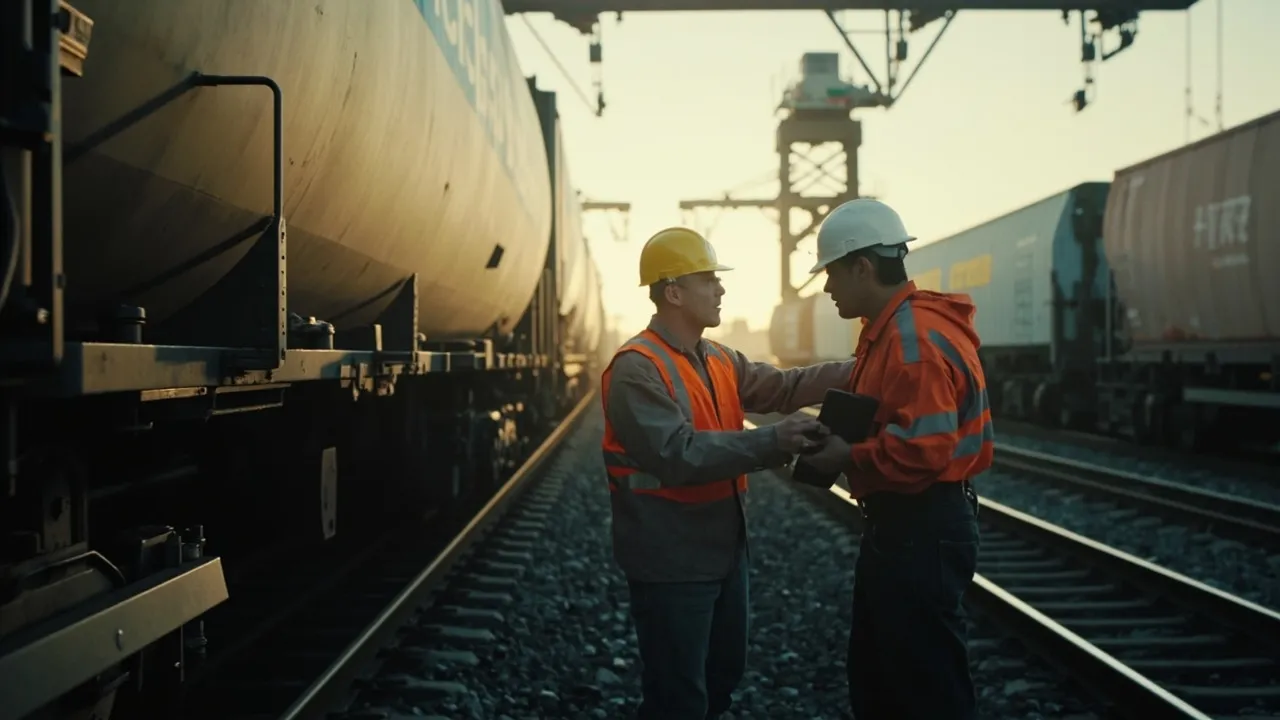
The Federal Railroad Administration's two-person train crew rule has survived a major court challenge. For shippers, the immediate lesson is not that trains will suddenly stop running. It is that crew compliance remains a durable operating constraint that belongs in rail service contingency plans alongside terminal congestion, equipment shortages, weather, and labor availability.
The U.S. Court of Appeals for the 11th Circuit upheld the 2024 rule in a 93-page, 2-1 decision. According to FreightWaves' report on the ruling, the court rejected all seven arguments raised by railroad industry petitioners. The decision leaves the minimum two-person requirement in place for most operations while preserving exceptions and a special approval process for certain one-person operations.
That legal clarity should trigger a practical review: Where could a crew-related disruption affect a critical shipment, and what evidence will distinguish that problem from ordinary network variability?
What the decision changes—and what it does not
The ruling reinforces the rule's regulatory footing. It does not create a new nationwide embargo, impose a universal two-person standard without exceptions, or prove that every late train is short of qualified employees. Railroads have already been operating under the final rule issued in April 2024.
The court rejected arguments that FRA exceeded its authority, reversed prior policy without adequate explanation, failed to account for costs, conflicted with federal risk-reduction requirements, or acted too slowly. It also rejected short-line challenges involving legacy one-person operations and locomotive alerter requirements. The majority noted that the special approval process can permit one-person crews, which matters when evaluating exposure by carrier and lane.
For a shipper, compliance remains principally the railroad's responsibility. The commercial risk appears downstream: a train start can be delayed when a qualified crew is unavailable; a missed start can consume a terminal slot; and the resulting delay can cascade into interchange, pickup, production, or delivery appointments.
Do not label every delay a crew problem
Rail networks are complex, and weak diagnosis produces expensive reactions. A container dwelling at an origin ramp may be waiting for a train, but the cause could be a missed cutoff, blocked track, locomotive availability, weather, congestion, or a downstream terminal restriction. A car at interchange may have moved on schedule and then waited for the receiving railroad.
Build reason codes that separate at least four categories:
- Crew and regulatory: qualified employee availability, hours-of-service constraints, or an operation's approval status.
- Network: terminal congestion, train plan changes, interchange delay, track work, or weather.
- Equipment: locomotive, railcar, chassis, container, or mechanical availability.
- Shipper-controlled: documentation, loading, release, billing, cutoff, or appointment failure.
Ask carriers for the event that failed, not a generic explanation such as “operational delay.” The useful question is whether the load missed a planned train start, departed and lost time en route, or reached the destination but could not be grounded or placed.
Why current volume raises the stakes
The ruling arrives while rail demand is running ahead of last year. FreightWaves reported that U.S. railroads handled 526,410 carloads and intermodal units in the week ending August 1, 2026, up 2.4% year over year. Intermodal volume reached 293,239 containers and trailers, up 4.8%, even as carloads slipped 0.4%.
Through the first 30 weeks of 2026, combined U.S. traffic totaled 15.23 million units, 3.3% above 2025. Intermodal was up 3.8%, and carloads were up 2.7%. Growth does not automatically mean poor service, but a busier network leaves less room to recover when a train start or interchange window is missed.
That is why contingency thresholds should reflect both the shipment's importance and the lane's recovery options. A one-day slip on a frequent intermodal lane may be recoverable. The same slip on an infrequent service, a plant-critical carload, or a lane requiring multiple interchanges can threaten several days of production.
Build a lane-level contingency card
Start with critical lanes rather than trying to create a universal rail playbook. For each origin-destination pair, document:
- Planned milestones. Record release, ingate or placement, scheduled train, departure, interchange, destination availability, and final delivery.
- Normal variability. Establish median and 90th-percentile dwell and transit times. An escalation based only on the published schedule will generate noise.
- Recovery frequency. Note the next viable train or service after a missed departure and whether the carrier can reroute through another terminal.
- Inventory exposure. Link the shipment to days of supply, production sequence, customer promise, demurrage or storage risk, and shipment value.
- Named owners. Assign responsibility for carrier escalation, plant coordination, customer communication, and mode conversion.
Set milestones that become progressively more serious. A missed departure should prompt carrier confirmation and a revised plan. No confirmed recovery within a defined window should trigger inventory and production review. A projected stockout or customer failure should activate an alternate-mode decision.
Use alternate modes selectively
Moving freight to truck is not automatically the right response. Drayage capacity, container availability, commodity characteristics, distance, weight, and transfer handling can erase the apparent time advantage. Bulk commodities and specialized railcars may have no practical road substitute.
Define alternate-mode eligibility in advance. Good triggers include a projected stockout before the next confirmed rail arrival, a contractual delivery failure whose cost exceeds conversion expense, or a missed production window that cannot be protected through inventory reallocation. Compare the full landed recovery cost—not just the linehaul quote—with the value at risk.
The two-person crew decision is best treated as a planning signal, not a reason to panic. Shippers that capture precise milestones, demand specific delay codes, and pre-price recovery choices can respond to genuine crew-related interruptions without overreacting to every late ETA.
Turn rail exceptions into controlled decisions
CXTMS connects shipment milestones, carrier communication, inventory priorities, and exception workflows in one operating view. Teams can define escalation thresholds by lane, document why an alternate mode was approved, and measure whether each intervention protected service and margin.
Request a CXTMS demo to build a more disciplined rail contingency process around the shipments that matter most.