Tractor Supply's Automated Idaho DC: How to Govern a Dedicated Warehouse AI Team

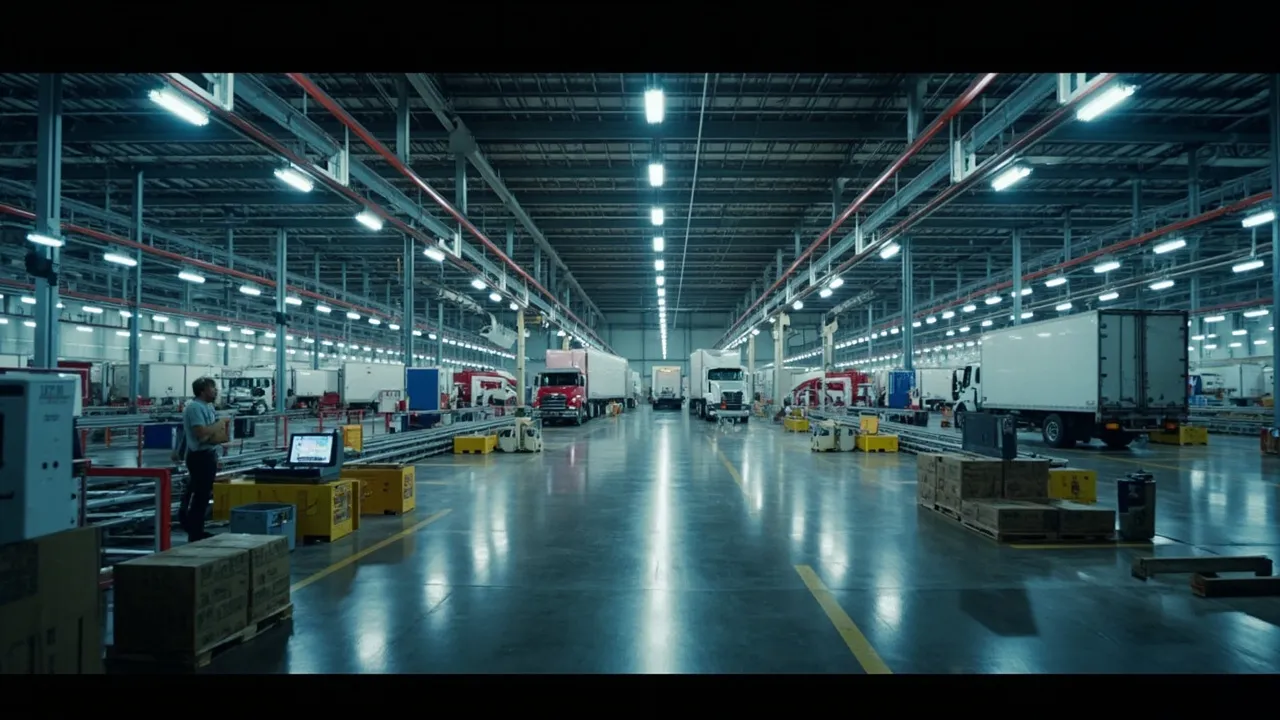
Tractor Supply's new distribution center in Nampa, Idaho, is more than another dot on a network map. It is a useful preview of what warehouse operations look like when physical automation and a dedicated artificial intelligence team arrive under the same roof.
The opportunity is substantial, but so is the governance challenge. A warehouse AI group can improve slotting, labor plans, wave design, inventory placement, and outbound scheduling. Those recommendations also affect customer promises, carrier commitments, safety, and cost. The right operating model must let the team experiment quickly without allowing an untested model to quietly become the production decision-maker.
A high-volume proving ground for practical AI
The scale of the Nampa operation makes disciplined decision-making essential. According to Supply Chain Dive, the 865,000-square-foot facility represents an investment of more than $200 million. It has 80 truck docks and is expected to create 500 full-time jobs.
The facility will serve 123 stores across nine states during its first year and can scale to more than 200 stores at full capacity. It is Tractor Supply's 11th distribution center and its first to use an automated storage and retrieval system. Automated conveying is integrated with the architecture to store, sequence, and move products.
Those numbers matter because every model recommendation can propagate across a large physical system. A new sequencing rule may change congestion at dozens of docks. A revised replenishment policy may alter inventory availability across nine states. A labor forecast may influence hundreds of shifts. The facility's dedicated AI innovation team therefore needs more than access to data and models; it needs explicit authority boundaries.
Separate experimentation from production control
The first governance rule should be a firm boundary between a sandbox and live execution. In a sandbox, the AI team can test ideas against historical orders, inventory states, labor availability, equipment telemetry, and shipment outcomes. It can compare a proposed policy with the decisions actually made and estimate impacts on throughput, dwell, touches, overtime, and service.
Production is different. An AI recommendation that changes an inventory allocation, releases a wave, reassigns labor, or advances a trailer appointment creates an operational commitment. Moving a model across that boundary should require named owners, documented tests, and approval tied to the risk of the decision.
This separation also protects the underlying data. As Inbound Logistics notes, clean data is the foundation for warehouse AI, while legacy processes and systems often struggle to support real-time analytics and automation. Before trusting model output, operators should know whether item dimensions, locations, order priorities, labor standards, and equipment events are complete and current.
Set approval thresholds by operational consequence
Not every recommendation warrants the same control. A practical governance framework sorts decisions into tiers:
- Advisory decisions: The model identifies likely congestion, late orders, or inefficient slotting, but a supervisor chooses the response.
- Bounded automation: The system may act automatically within approved limits, such as changing a pick sequence without affecting a promised ship time or safety rule.
- Controlled decisions: Inventory reallocations, labor changes, wave releases, and appointment moves require human approval above defined volume, cost, or service thresholds.
- Prohibited autonomy: Safety interlocks, regulatory controls, customer-specific restrictions, and emergency procedures cannot be overridden by the model.
Thresholds should be measurable. Examples include the number of orders affected, expected transportation cost, minutes of dock disruption, units moved, labor hours changed, or risk to a customer delivery window. If a proposed action crosses a limit, it should route to the responsible warehouse, inventory, transportation, or safety leader.
Preserve a fast human override
Warehouse conditions change faster than many models can absorb. A conveyor outage, late inbound trailer, damaged pallet, weather event, or unexpected absenteeism can invalidate an otherwise sound recommendation. Frontline leaders need a simple way to reject, pause, or reverse AI-driven actions.
An override should not disappear into a generic exception log. Capture who intervened, when they acted, the operating conditions they observed, the recommendation they rejected, and the action they chose. Repeated overrides can reveal a missing input, a poorly calibrated threshold, or a process that should never have been automated.
The same principle applies to rollback. Each production model should have a known previous version or rules-based fallback. If output quality drifts or a key data feed fails, the operation should return to a stable method without waiting for the AI team to diagnose the problem.
Build an audit trail from recommendation to shipment
Good governance produces evidence, not just policies. For every material recommendation, retain the model version, input timestamp, relevant data quality checks, predicted benefit, confidence or risk band, approval status, override history, and actual result.
That evidence should connect to physical execution. Tractor Supply reported that roughly 81% of merchandise received by its stores in fiscal 2025 flowed through its distribution network. At that level of dependency, warehouse decisions and transportation outcomes cannot be governed as separate systems.
For example, an AI-generated wave change may look successful because it improves pick throughput. If it causes a carrier to wait, splits an order across trailers, or misses a delivery appointment, the enterprise outcome may be worse. The audit record must follow the decision through loading, tendering, pickup, transit, and delivery.
Connect warehouse intelligence to transportation execution
CXTMS can provide that downstream operational record. Warehouse recommendations can be associated with orders, loads, appointments, carriers, costs, milestones, and exceptions. Teams can then compare the predicted benefit with actual shipment performance rather than grading an AI initiative solely on warehouse metrics.
This creates a useful feedback loop: the AI team sees which decisions improved end-to-end service, warehouse leaders retain control over execution, and transportation teams receive earlier notice when inventory or wave changes affect outbound plans. It also gives management auditable evidence of approvals and overrides.
The lesson from Nampa is straightforward. Advanced automation creates leverage, and a dedicated AI team can accelerate learning. But production authority must be earned one decision class at a time. Clear thresholds, human control, reliable data, and shipment-level evidence turn practical warehouse AI into dependable operations.
Request a CXTMS demo to see how warehouse decisions can connect with auditable transportation planning and execution.