Ocean Freight
111 posts tagged with “Ocean Freight”

IMO Net-Zero Framework Explained: How Global Maritime Carbon Pricing Will Reshape Ocean Freight Costs for Every Shipper
The IMO Net-Zero Framework introduces the world's first global carbon pricing mechanism for international shipping, targeting $100 per tonne of CO₂ equivalent. With adoption now delayed to October 2026 amid geopolitical pressure, shippers face a narrow window to prepare for per-TEU cost increases that could reshape ocean freight economics across every trade lane.
 CXTMS InsightsMarch 6, 2026 · 7 min read
War Risk Surcharges Are Back: A Shipper's Complete Guide to Understanding, Negotiating, and Managing Conflict-Driven Freight Premiums in 2026
War risk surcharges of $1,500–$4,000 per container are hitting shippers as the Iran-Strait of Hormuz crisis escalates. Here's exactly what these surcharges are, what carriers are charging, and how to negotiate and manage them.
CXTMS InsightsMarch 3, 2026 · 7 min read
Freight Schedule Normalization: How Carrier Blank Sailing Recovery After the Suez Return Is Creating New Rate Negotiation Windows
As carriers resynchronize schedules following the Suez Canal return, ocean freight rates are dropping sharply. Here's how shippers can exploit the normalization window to renegotiate contracts and lock in favorable terms.
CXTMS InsightsMarch 2, 2026 · 6 min read
Suez Canal Return Begins: How Carriers' Gradual Red Sea Comeback Will Reshape Freight Rates in 2026
Maersk, CMA CGM, and Hapag-Lloyd are cautiously returning to the Suez Canal after two years of Red Sea disruptions. Here's what this means for ocean freight rates, capacity, and shipper strategy in 2026.
CXTMS InsightsMarch 1, 2026 · 6 min read
Hapag-Lloyd's $4.2 Billion ZIM Acquisition: What Container Carrier Consolidation Means for Shippers in 2026
Hapag-Lloyd's $4.2 billion acquisition of ZIM reshapes the global container shipping landscape. Here's what shippers need to know about carrier consolidation, alliance shifts, and freight procurement strategy in 2026.
CXTMS InsightsFebruary 28, 2026 · 6 min read
Blank Sailings Hit 122% Surge in February 2026: How Shippers Should Navigate the Transpacific Capacity Squeeze
February 2026 saw 136 cancelled ocean sailings — a 122% month-on-month jump. Here's what's driving the blank sailing surge and how shippers can protect their supply chains.
CXTMS InsightsFebruary 22, 2026 · 6 min read
Red Sea Disruptions Continue: How Ongoing Instability Is Reshaping Global Shipping Routes and Rates in 2026
Over two years after Houthi attacks first disrupted Red Sea shipping, the crisis remains unresolved. Here's how the ongoing instability is reshaping ocean freight routes, rates, and supply chain strategy in 2026.
CXTMS InsightsFebruary 18, 2026 · 6 min read
INTTRA API and the Future of Ocean Freight Digitization: What Shippers Need to Know
How INTTRA's API platform and DCSA standards are transforming ocean freight booking, tracking, and documentation—and why shippers who delay digitization risk falling behind.
CXTMS InsightsFebruary 17, 2026 · 6 min read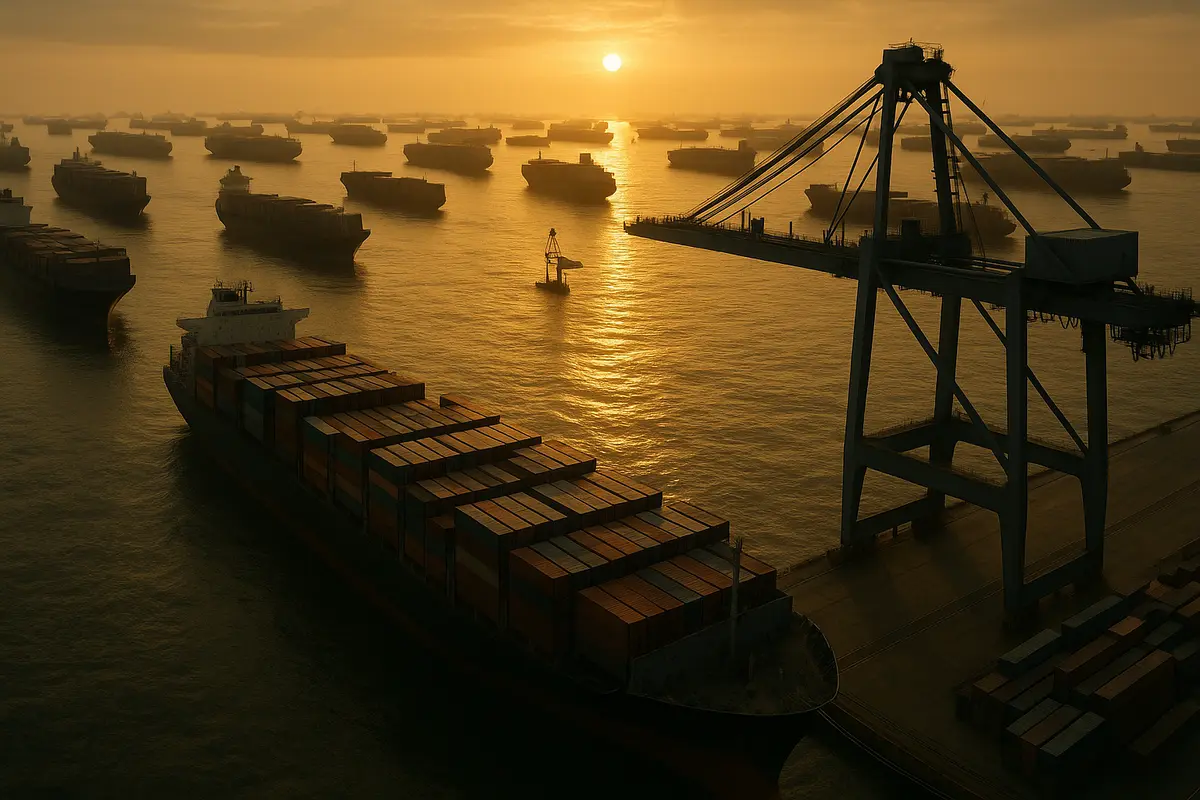
Ocean Freight Overcapacity Hits Record Levels: A Shipper's Playbook for Winning 2026 Contract Negotiations
With a 36% surge in container capacity between 2023–2027 and rates falling fast, 2026 is the most shipper-friendly ocean freight market in years. Here's your tactical playbook for contract negotiations.
CXTMS InsightsFebruary 14, 2026 · 5 min read
EU ETS Maritime Compliance 2026: What Every Shipper Must Know About the 100% Emissions Reporting Mandate
Starting 2026, shipping companies must surrender allowances for 100% of maritime emissions on EU/EEA voyages. Learn the compliance requirements, cost impacts, and strategies to manage EU ETS exposure.
CXTMS InsightsFebruary 12, 2026 · 6 min read