A Russian Diesel Tanker Stopped Off the US Coast: Build a Sanctions-Aware Voyage Gate

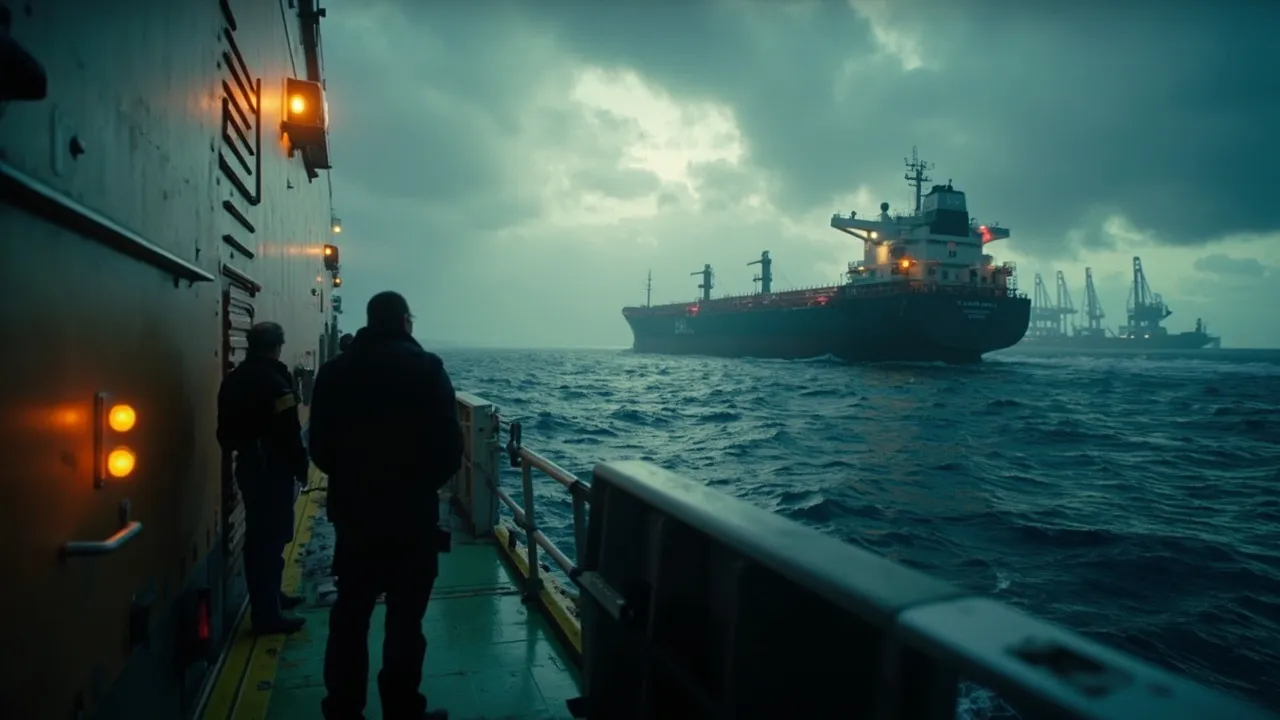
A tanker waiting outside a destination market is not automatically evidence of wrongdoing. It may be awaiting a berth, buyer instructions, customs clearance, weather, or documents. But when the cargo has a sanctions-sensitive origin, that ordinary pause becomes a test of whether a logistics organization can produce a defensible release decision under time pressure.
The latest case offers a useful operating lesson. Reuters reported that a tanker carrying Russian diesel halted off the US coast. Earlier reporting identified the Malta-flagged Agioi Fanendes and said it loaded 40,000 metric tons of ultra-low-sulfur diesel at Russia's Baltic port of Primorsk on October 22, based on LSEG shipping data. The voyage followed a US-Russia arrangement that made the shipment commercially possible, according to Reuters' initial account.
The right operational response is neither automatic rejection nor hurried release. It is a sanctions-aware voyage gate: a documented workflow that assembles the evidence, tests contradictions, assigns decision rights, and preserves exactly what was known when approval was granted.
Start with identity, not the vessel name
Names, flags, managers, and owners can change. The gate should therefore begin with the vessel's IMO number and reconcile it across the charter party, bill of lading, certificate of registry, classification record, port-call history, AIS feed, and sanctions-screening result. Record former names and flags, registered owner, beneficial owner where available, technical manager, commercial operator, charterer, and any intermediaries receiving payment.
That depth is justified by the structure of sanctions-exposed shipping. Reuters describes shadow-fleet vessels as commonly having opaque ownership, lacking top-tier Western insurance or safety certification, and sometimes using unknown insurers or seaworthiness assessors. In April 2026, the EU's twentieth sanctions package added 46 vessels and brought its listed shadow fleet total to 632 vessels, according to Reuters. Screening only a ship name against one list is plainly too weak for a population that large and changeable.
Screen every relevant party and identifier against the lists applicable to the transaction, bank, cargo, flag, ports, and service providers. Save the list version and timestamp. A clean result today does not prove the party was clear when a contract was signed, nor that it will remain clear when payment settles.
Prove the cargo and transaction chain
Next, connect the physical product to its commercial story. The release packet should include:
- Bill of lading, cargo manifest, certificate of origin, quality and quantity certificates, and terminal loading records
- Load port and date, refinery or supplier where disclosed, shipper, consignee, buyer, seller, and title-transfer sequence
- Purchase price, freight and insurance components, currency, payment route, banks, and documentary-credit terms
- Import authorization, customs classification, end-use statement where required, and the legal basis for any license, exemption, or policy change
The team should compare these documents field by field. A different cargo quantity may have an innocent explanation such as measurement tolerance; a different supplier, load date, or payment beneficiary requires escalation. Never allow a narrative memo to substitute for source records.
Price-cap or other services-based restrictions can make the transaction value and attestations as important as physical origin. The compliance team should determine which rules actually apply to each participant rather than assuming that the destination country's position resolves the obligations of a foreign insurer, bank, broker, or ship manager.
Treat insurance as evidence, not a checkbox
Confirm that protection-and-indemnity and hull cover are active for the voyage, cargo, trading area, and dates involved. Obtain certificates directly or verify them with the named insurer. Check the insurer, reinsurer, broker, policyholder, limits, exclusions, sanctions clauses, and claims contact. Confirm that the port and terminal accept the cover.
This is not paperwork theater. A Reuters investigation found that one insurer had at some point covered almost one in six shadow-fleet tankers sanctioned by Western governments. The UK later sanctioned that insurer, Maritime Mutual, after the reporting. Counterparty status and credibility can change, so the gate needs fresh verification rather than a certificate copied from an earlier voyage.
If the insurer cannot be independently contacted, the policy dates do not cover discharge, or the insured entity does not match the vessel's current ownership structure, place the voyage on hold.
Make AIS anomalies explainable
AIS is useful evidence, but it is not the full truth. Build an expected voyage timeline from load-port departure through anchorage, including reported position, speed, draft changes, port calls, ship-to-ship proximity, and periods with no transmission. Compare it with bills of lading, terminal timestamps, agent reports, satellite-derived observations where available, and bunker or pilot records.
Define escalation rules before an anomaly appears. Examples include an unexplained AIS gap near a transfer area, an impossible position jump, a destination change inconsistent with instructions, a draft change outside a port, or close contact with a listed vessel. A planned security-related AIS interruption supported by master and coastal-authority records is different from an unexplained blackout coinciding with a possible cargo transfer.
The gate should classify each anomaly as resolved, unresolved but immaterial, or material. Record the evidence and approver for that classification. "Operations says it is fine" is not an auditable finding.
Use a four-level release decision
A practical workflow routes the voyage into one of four outcomes:
- Release: Identity, cargo, counterparties, insurance, payment, and voyage evidence align; required legal authority is documented.
- Conditional release: A non-material item remains open, with a named owner, deadline, and control that prevents discharge or payment until closure.
- Compliance hold: A sanctions match, ownership gap, AIS anomaly, document conflict, unusual payment instruction, or insurance uncertainty requires enhanced review.
- Reject and report: Counsel or compliance determines that service is prohibited, documents are unreliable, or a reporting obligation has been triggered.
No single commercial participant should override a compliance hold. Define approval authority across charterer, broker, terminal, customs agent, finance, legal, and compliance teams. High-risk releases should require dual approval, with legal signoff where rule interpretation is material.
Finally, preserve a time-stamped decision record containing every document version, screening result, question, response, exception, approver, and condition. Link it to the voyage, vessel IMO number, shipment, purchase order, and payment. If facts change—ownership, destination, beneficiary, cargo quantity, insurer, or sanctions status—the gate must reopen automatically.
A vessel waiting offshore creates pressure: demurrage accumulates, terminal windows tighten, and customers demand certainty. That is exactly when an improvised email chain fails. A structured voyage gate turns ambiguity into controlled questions and gives every participant one defensible release record.
Need a clearer workflow for sanctions-sensitive freight decisions? Request a CXTMS demo to see how centralized shipment records, configurable approval gates, exception workflows, and audit trails can support your compliance operation.