Reusable Cold-Chain Shippers Need Reverse-Flow Controls, Not Just Sustainable Packaging

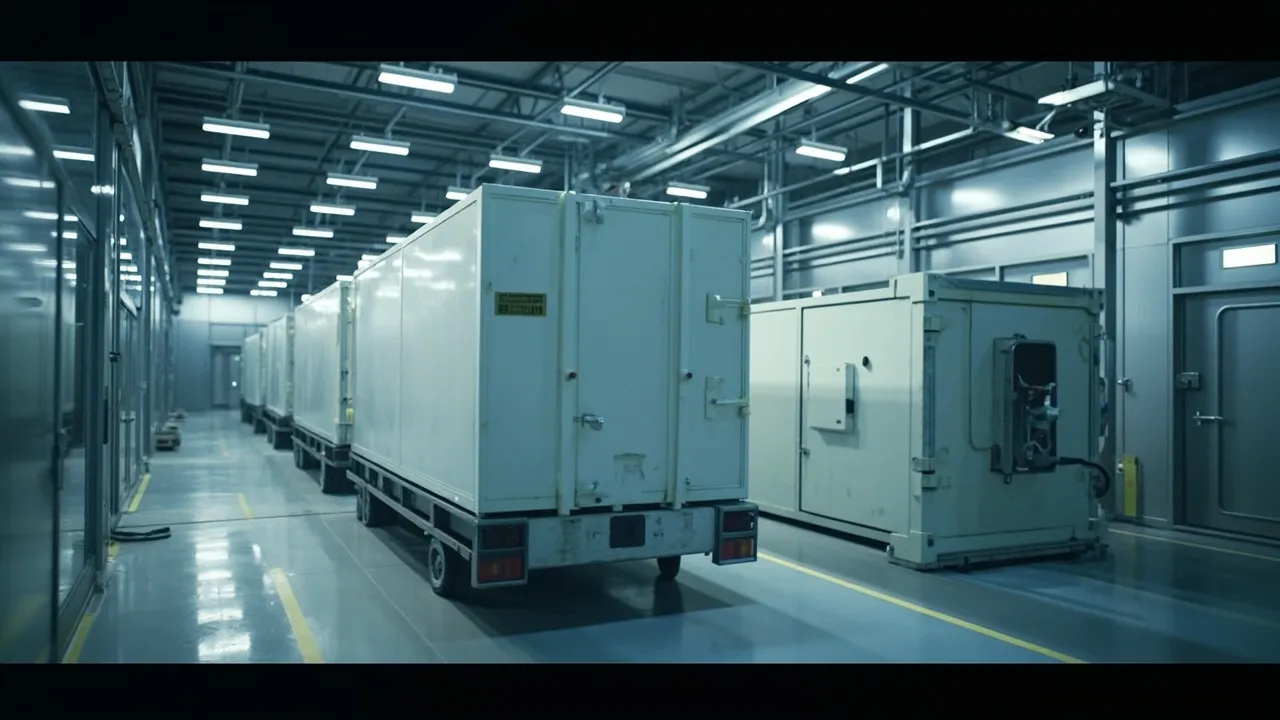
Reusable cold-chain shippers are often introduced as a packaging upgrade: fewer disposable components, less waste, and a more consistent pack-out process. Those benefits are real. But the investment succeeds or fails after delivery, when each high-value container must find its way back through collection, cleaning, inspection, qualification, and redeployment.
That makes reusable packaging a reverse-logistics program, not a procurement project. A shipper sitting unidentified at a consignee, waiting for a return label, or quarantined without an owner is unavailable inventory. If those exceptions are invisible, companies compensate by buying more containers and quietly erase the expected return on investment.
Simpler pack-out is only the first benefit
An Inbound Logistics case study describes how onboarding reusable shippers reduced pack-out errors at MD Logistics because the units were easier to assemble and used fewer components. The change also simplified component inventory management and reduced stockout risk.
Those operational gains matter in temperature-controlled distribution, where the wrong coolant quantity, panel arrangement, or box configuration can compromise a shipment before it leaves the dock. Standardized reusable systems can replace a variable bill of packaging materials with a qualified configuration and a repeatable work instruction.
Demand is also expanding. Food Logistics reports that the cold-chain packaging market is expected to grow at a 19.6% compound annual rate from 2023 through 2030. Meanwhile, Inbound Logistics notes that robust multi-use containers can remain in service for more than 15 years. Longevity can create strong economics—but only if containers keep turning instead of disappearing into the network.
Model the complete asset loop
Every reusable shipper needs a digital lifecycle connected to the shipment it protects. The minimum loop includes seven states:
- Issue: A qualified container is assigned to an order, lane, and pack-out specification.
- Custody: Responsibility transfers among the warehouse, carrier, airport or terminal, delivery agent, and consignee.
- Delivery: Proof of delivery establishes where the asset entered the return network and starts the return clock.
- Return: A pickup, parcel label, consolidation move, or hub drop-off brings the unit back.
- Cleaning: The shipper is received, decontaminated, and documented according to product and regulatory requirements.
- Qualification: Inspection confirms that insulation, closures, sensors, and structural components remain fit for use.
- Redeployment: The asset becomes available for another shipment at a defined location.
Each transition should have a timestamp, location, responsible party, and exception code. Without those four fields, teams can see that an asset is missing but cannot determine who should act or how long it has been stalled.
The control clock should begin at delivery, not when someone notices a shortage. Set expected durations by consignee and return method. For example, an asset might be expected to enter return transit within two business days, arrive at a service hub within five, and clear cleaning and qualification within another two. Alerts should escalate before those limits expire.
Measure the economics per turn
Purchase price alone is a poor comparison between reusable and disposable packaging. The useful denominator is successful, qualified turns. A practical cost-per-turn calculation includes:
- acquisition cost allocated across realized turns;
- outbound positioning and return transportation;
- cleaning, inspection, repair, and requalification;
- tracking technology and program administration;
- loss, theft, irreparable damage, and premature retirement;
- extra fleet inventory required to cover long dwell times;
- avoided disposable packaging, waste handling, and pack-out labor.
Track five operating measures alongside cost: loss rate, median and 90th-percentile dwell, damage rate, thermal excursion rate, and turns per asset per year. Segment them by lane, consignee, carrier, shipper model, and return method. A network-wide average can hide a customer site where containers routinely sit for three weeks or a lane where rough handling drives repair expense.
The strongest ROI model compares actual cohorts. If 500 units entered service in one quarter, measure their realized turns, dwell, repair history, and survival together. Do not divide total program shipments by the current fleet count; additions and retirements will distort the result. Food Logistics similarly emphasizes that defined metrics and ROI are essential when evaluating whether reusable packaging supports both business and sustainability goals.
Join shipment and asset records without scan overload
Visibility does not require a new manual scan at every handoff. Start by linking the shipper ID to the shipment or handling-unit record during pack-out. Existing transportation events can then advance both records: pickup confirms custody, proof of delivery starts return dwell, a return booking identifies the reverse move, and service-center receipt closes the open return.
Use passive RFID, Bluetooth, cellular, or QR scans selectively where they resolve a specific blind spot. High-value pharmaceutical lanes may justify continuous location and condition monitoring. A stable closed-loop grocery lane may need only issue, delivery, and depot-receipt events. The goal is reliable state changes, not the largest possible stream of pings.
Exception workflows should fill the remaining gaps. If delivery occurs but no return movement is booked within the agreed window, create a task for the consignee or asset-recovery team. If a unit arrives at the cleaning hub but does not pass qualification on time, route it to inspection. If a temperature excursion occurs, preserve the sensor history with both the shipment and the packaging asset so quality teams can distinguish product risk from container performance.
Put reverse flow into the launch plan
Before deploying reusable shippers, define the return method, custody terms, service hubs, cleaning standard, qualification rules, and exception owners for every lane. Pilot with a bounded asset pool and compare actual cycle time and cost per qualified turn against the disposable baseline. Expansion should depend on return compliance and thermal performance, not just successful outbound deliveries.
Reusable cold-chain packaging can reduce pack-out complexity, material consumption, and waste while protecting sensitive freight. But sustainability claims do not recover assets. A controlled digital loop does—and it turns every custody event, return delay, cleaning outcome, and redeployment into evidence that the fleet is delivering value.
CXTMS connects shipment milestones, return movements, asset custody, exceptions, and cost data in one operational record. Contact CXTMS to build measurable reverse-flow controls for reusable cold-chain shippers.