Pakistan Seizes Containers for Roadblocks: Protect Cargo When Governments Requisition Equipment

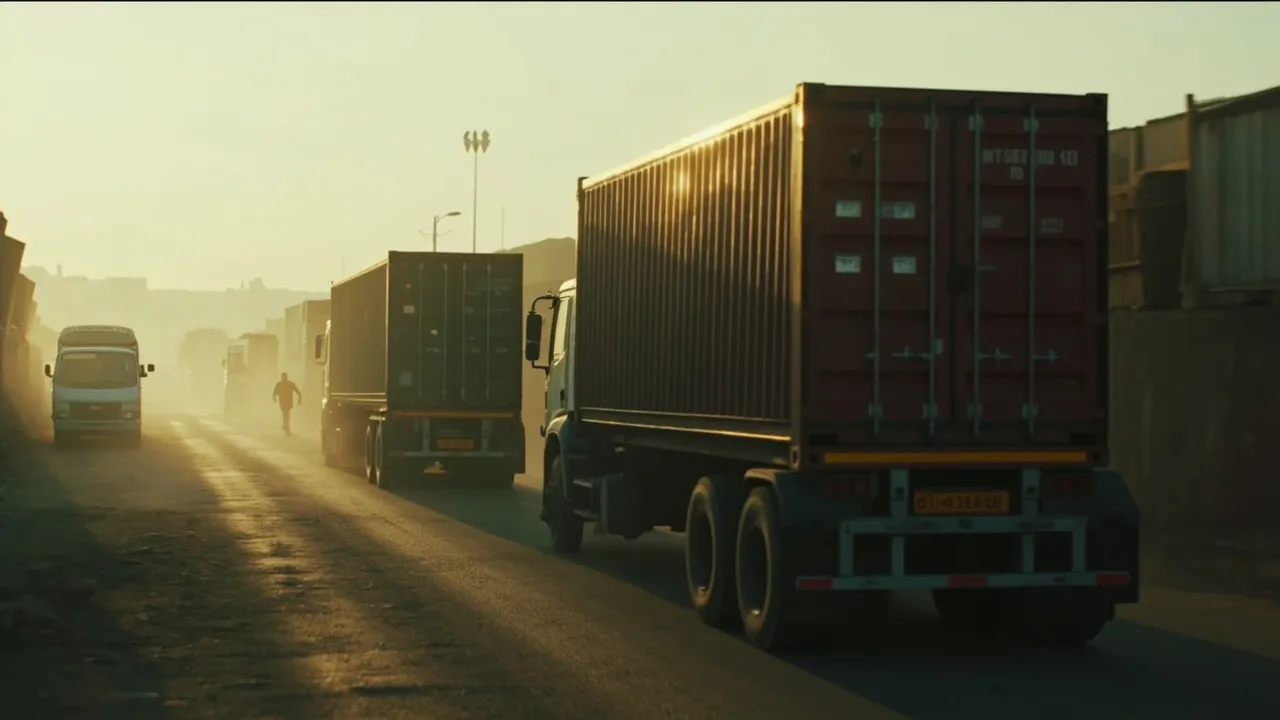
A container can clear a port and still fail to become an inland shipment. Pakistan's use of trucks and shipping containers as roadblocks illustrates the gap: cargo, equipment, drivers, and documents can all be caught between a completed maritime move and an incomplete delivery.
Reuters reported that authorities requisitioned more than 2,000 vehicles in September 2026 ahead of a planned march on Islamabad. Many were loaded and held for days with little or no compensation. Drivers then refused northbound trips, leaving containers to accumulate at Karachi, roughly 1,400 kilometers from the capital.
This is not a conventional port-delay problem. It is a custody and recoverability problem. Shippers need to know exactly where responsibility changed, which commercial clocks continue running, and which loads deserve the first available path out.
One container, four different statuses
A single "in transit" label hides too much. During a government requisition or road closure, teams should track four milestones separately.
Vessel discharge confirms that the box left the ship and entered the terminal. It does not mean the consignee can collect it or that inland capacity exists.
Customs status shows whether the shipment is uncleared, under examination, released, or subject to another agency hold. Customs release does not transfer custody or stop every storage charge.
Equipment custody identifies whether the ocean carrier, terminal, haulier, police, consignee, or another party physically controls the container and chassis. Record the last verified handoff, seal condition, driver, tractor, and location.
Inland delivery covers dispatch, gate-out, route progress, appointment, proof of delivery, and empty return. A completed gate-out can therefore coexist with a failed delivery and an equipment seizure.
This separation matters because every status has a different owner and remedy. Customs may have released the goods while police hold the truck; the carrier may keep charging equipment time while the consignee has no practical way to return the box.
Put the cost clock beside the shipment clock
The Pakistan disruption shows how quickly physical uncertainty becomes financial exposure. Reuters cited the Karachi Goods Carrier Association saying daily demurrage on one seized container could reach 30,000 to 40,000 Pakistani rupees, approximately $110 to $150. The same report said consumer prices rose 10.26% year over year in September, while the transport price index climbed 27.43%.
Those figures should drive action, not sit in a news alert. For every exposed consignment, record free-time expiry, daily detention or demurrage, terminal storage, driver waiting, cargo value, spoilage window, production impact, and the party currently expected to pay. Calculate the next 24-hour cost as well as total accrued exposure.
Do not automatically accept an invoice simply because the tariff clock continued. Preserve police notices, gate records, GPS events, photographs, driver statements, carrier messages, and attempted return appointments. They create the evidence package for a force-majeure request, detention dispute, insurance notification, or recovery claim.
Establish escalation rules before the road closes
Government intervention requires a faster and broader escalation path than an ordinary missed appointment.
- Notify the ocean carrier and equipment provider as soon as seizure risk prevents dispatch or empty return. Request written instructions and suspension of applicable charges.
- Alert the cargo insurer when physical custody is lost, seals may be disturbed, or delay threatens the goods. A late notice can weaken a valid claim.
- Escalate regulated cargo to product, safety, and compliance owners. Reuters described one driver keeping a chemical load parked in Karachi rather than risk seizure in Punjab; that is a controlled hold, not merely a late truck.
- Rebook through an alternate depot, route, or mode only after confirming that customs permissions, equipment acceptance, insurance, and receiving capacity remain valid.
- Inform the customer with a milestone-based update: last verified location, custody, cargo condition, financial clock, next decision time, and named owner.
This discipline fits a wider reality. Inbound Logistics describes macro disruption as the permanent operating baseline, citing Suez traffic down roughly 80% and Cape diversions adding 14 to 21 transit days. The lesson is not to predict every political event; it is to make exception handling repeatable.
Build a recovery queue based on consequence
When routes reopen, first-in-first-out recovery can send low-impact freight while critical loads deteriorate. Create a scored queue before capacity returns.
Give the highest priority to perishables approaching temperature or shelf-life limits, followed by dangerous or regulated goods requiring secure custody. Next should come production-critical inputs whose absence can stop a line, essential consumer or medical supplies, and containers nearing free-time expiry. Lower-value, stable cargo with flexible delivery windows can wait.
For each load, combine urgency with recoverability. Confirm the driver and tractor are available, the container has not been damaged or repurposed, the seal can be verified, the route and destination are open, the consignee has an appointment, and an empty-return location will accept the equipment. A high-priority load without those conditions is not ready; assign an owner to remove each constraint while dispatching the next executable shipment.
Track the recovery with a few hard measures: containers by custody status, value of cargo at risk, charges accruing per day, loads with insurance notice completed, time from route reopening to dispatch, and empty-return success. That turns a chaotic backlog into an auditable sequence of decisions.
CXTMS gives freight teams one operational record for milestones, custody, documents, costs, alerts, and recovery priority across every consignment. Request a CXTMS demo to see how structured exception management can protect cargo and equipment when normal routes suddenly stop being available.