Insights
Industry insights, integration guides, and product updates from the CXTMS team.

Autonomous Delivery Robots Go Beyond Sidewalks: How New State Laws Are Unlocking the $50 Billion Last-Mile Robotics Market
New state laws are expanding autonomous delivery robots from sidewalks to bike lanes and road shoulders. With the delivery robot market projected to reach $3.27 billion by 2031 and companies like Coco targeting 10,000 robots by year-end, here's how the last-mile robotics revolution is reshaping logistics.
 CXTMS InsightsMarch 6, 20268 min read
The Cabotage and CDL Crackdown: How FMCSA Enforcement Is Quietly Reshaping U.S. Trucking Capacity in 2026
FMCSA's triple enforcement wave — non-domiciled CDL restrictions, CDL mill shutdowns, and cabotage crackdowns — is removing tens of thousands of trucks from U.S. roads. Here's what shippers need to know about the coming capacity squeeze.
CXTMS InsightsMarch 6, 2026 · 6 min read
Cyber-Enabled Cargo Theft Hits Record Levels: How AI-Driven Fraud Is Merging Digital Crime With Physical Freight Theft
Cargo theft has evolved from broken trailer seals to AI-generated deepfake calls, synthetic broker identities, and GPS spoofing. With 3,594 supply chain crime events recorded in 2025 and average stolen shipment values doubling, shippers need a new security playbook.
CXTMS InsightsMarch 6, 2026 · 6 min read
DOT Launches National Strategy for Transportation Digital Infrastructure: What the Federal Push Means for Freight Data Standards
The U.S. Department of Transportation just issued an RFI for a National Strategy for Transportation Digital Infrastructure. Here's what it means for freight data standards, API interoperability, and TMS platforms across every mode.
CXTMS InsightsMarch 6, 2026 · 6 min read
Gartner's First Magic Quadrant for Fourth-Party Logistics: Why 4PL Orchestration Is the Next Competitive Frontier
Gartner's inaugural 2025 Magic Quadrant for Fourth-Party Logistics signals that 4PL orchestration has moved from niche concept to competitive necessity. With 42% of supply chain leaders already outsourcing to a 4PL, here's what the $67 billion market means for shippers in 2026.
CXTMS InsightsMarch 6, 2026 · 6 min read
IMO Net-Zero Framework Explained: How Global Maritime Carbon Pricing Will Reshape Ocean Freight Costs for Every Shipper
The IMO Net-Zero Framework introduces the world's first global carbon pricing mechanism for international shipping, targeting $100 per tonne of CO₂ equivalent. With adoption now delayed to October 2026 amid geopolitical pressure, shippers face a narrow window to prepare for per-TEU cost increases that could reshape ocean freight economics across every trade lane.
CXTMS InsightsMarch 6, 2026 · 7 min read
Section 122 Tariff Pivot: How the 10% Global Surcharge Is Replacing IEEPA Tariffs and Reshaping Import Strategy in 2026
The Supreme Court struck down IEEPA tariffs on February 20, 2026, and within hours, a new 10% global surcharge under Section 122 took its place. With a 150-day clock ticking toward July 24, importers face a narrow window to recalibrate strategy. Here's what changed and what to do about it.
CXTMS InsightsMarch 6, 2026 · 8 min read
Supply Chain War Gaming Goes Mainstream: How Fortune 500 Companies Are Using Tabletop Exercises to Stress-Test Logistics Resilience
With major supply chain disruptions now hitting every 3.7 years and costing companies up to 45% of annual profits over a decade, Fortune 500 companies are borrowing war gaming from the military playbook to stress-test logistics resilience before the next crisis strikes.
CXTMS InsightsMarch 6, 2026 · 7 min read
UFLPA Enforcement Pivots to Raw Materials: How CBP's Steel and Aluminum Focus Is Forcing New Supply Chain Due Diligence
CBP detained 6,636 shipments in just the first half of 2025 under the UFLPA—surpassing the entire 2024 total. With enforcement now targeting steel, aluminum, and lithium, importers of raw materials face a compliance reckoning that demands full supply chain traceability.
CXTMS InsightsMarch 6, 2026 · 7 min read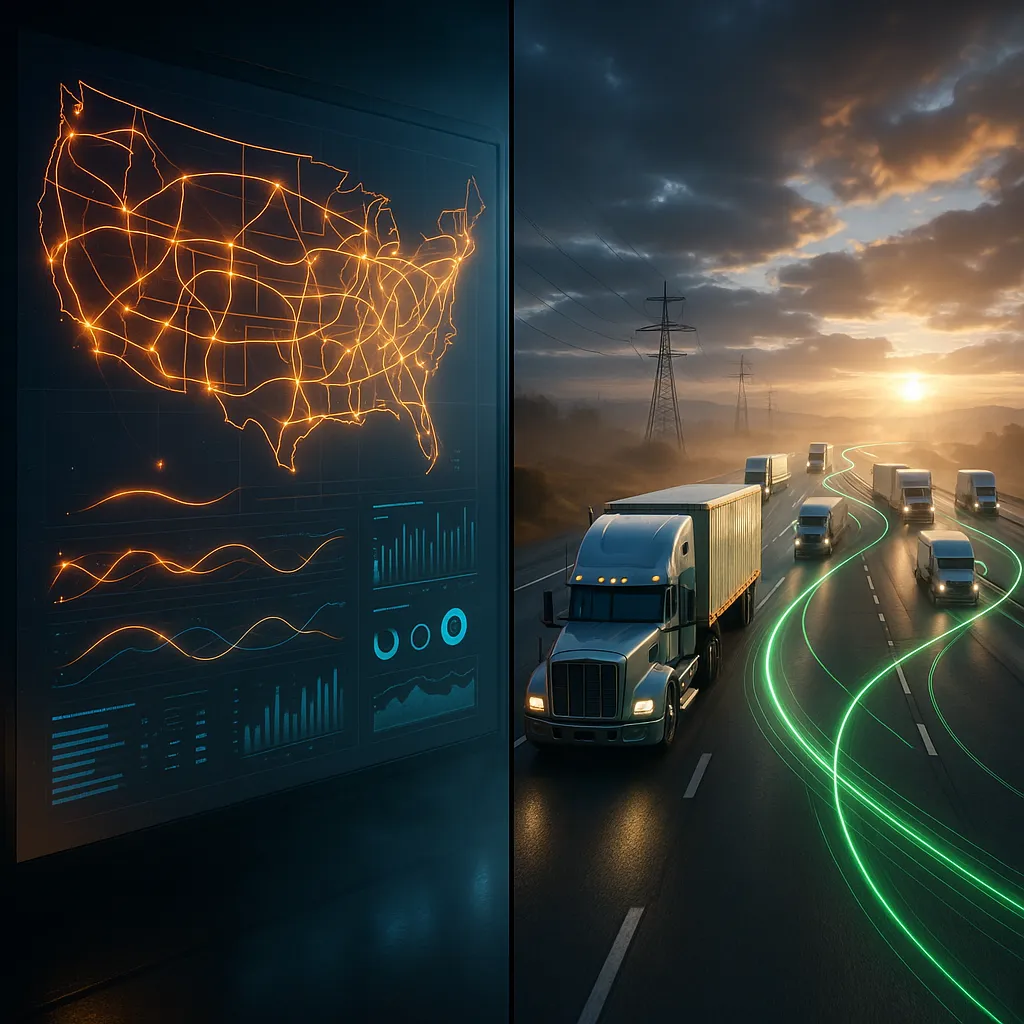
AI-Powered Digital Load Boards Are Reducing Empty Miles by 30%: How Smart Freight Matching Is Transforming Carrier-Shipper Connections
AI-powered digital load boards are cutting empty miles by up to 30% through intelligent freight matching. With the digital freight matching market projected to hit $107.57 billion by 2030, here's how smart load board technology is reshaping carrier-shipper connections and eliminating wasted capacity.
CXTMS InsightsMarch 5, 2026 · 7 min read