The Hidden Cost-to-Serve in Packaged Goods: Build a Customer–SKU Logistics Margin Ledger

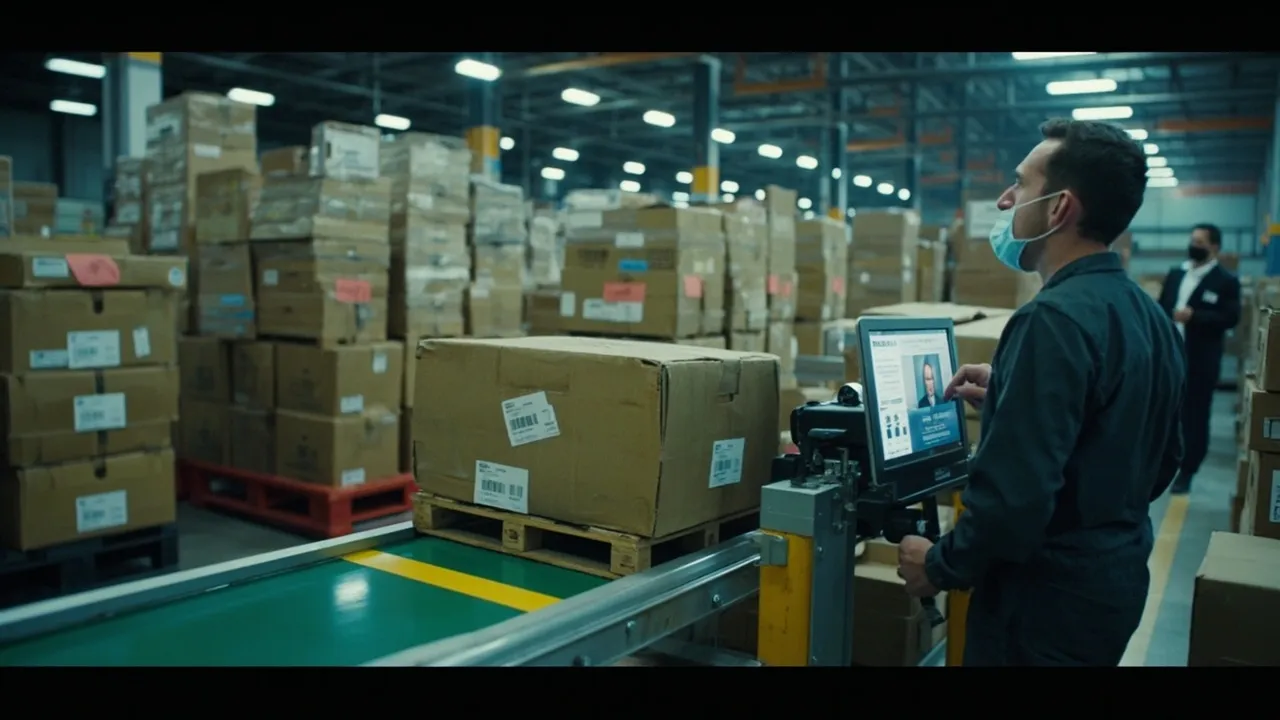
A case of packaged goods can leave the factory with a healthy gross margin and arrive at the customer barely profitable. The loss rarely comes from one dramatic event. It accumulates through mixed-pallet builds, retailer-specific labels, short lead times, low order quantities, detention, redelivery, returns, and invoice deductions.
Those costs disappear when finance averages freight across every shipment or reports profitability only by customer. A large account may look attractive overall while a specific combination of customer, SKU, order profile, and service promise consistently destroys margin.
The pressure is not theoretical. Supply Chain Dive reported that McCormick raised its fiscal 2026 inflation forecast from a mid-single-digit increase to as much as 7%, citing higher freight, logistics, packaging, and input costs. When the cost base rises that quickly, averages become dangerous. Packaged-goods companies need a logistics margin ledger granular enough to show who caused a cost, what service generated it, and whether the commercial terms recover it.
Why conventional customer profitability misses the leak
Standard margin reports usually begin with net sales and subtract product cost plus an allocated freight percentage. That approach is convenient, but it assumes similar orders consume similar resources. They do not.
A full-pallet shipment of one fast-moving SKU to a regional distribution center may require little intervention. An order with the same revenue can include 20 slow-moving SKUs, custom labels, a narrow delivery appointment, hand unloading, and multiple invoice corrections. Revenue may match; operational effort does not.
FreightWaves describes how rework, specialized handling, and operational exceptions consume labor, capacity, and coordination. The key management insight is that an exception stops being exceptional when it happens every week. It becomes part of the customer's service design—and should appear in the economics of that relationship.
McKinsey has likewise argued that cost-to-serve analysis should quantify logistics expense at both the SKU and store level. Its consumer-goods research found that more than 50% of surveyed CPG companies believed their supply chains were ready for e-commerce, while respondents said an average of 70% of portfolios met e-commerce packaging and safety requirements. Readiness, however, is not the same as profitability; channel-specific logistics can consume substantially more margin.
Build the ledger at the right grain
The most useful record is not simply customer by month. It is customer × SKU × order profile × service promise, connected to actual shipment and invoice outcomes.
For every shipment line, capture five cost families:
- Handling: picks, touches, case breaking, mixed-pallet construction, relabeling, repacking, temperature controls, and quality inspections.
- Transportation: linehaul, fuel, stop charges, detention, layover, redelivery, expedited service, and mode upgrades.
- Order economics: minimum-order shortfalls, low cube utilization, partial pallets, and delivery frequency above the commercial baseline.
- Service exceptions: appointment changes, late order revisions, special documents, customer-specific routing, and manual coordination time.
- Returns and deductions: reverse freight, inspection, disposal, restocking, claims administration, shortages, and compliance penalties.
Use a stable allocation driver for each category. Assign direct carrier charges to the shipment that generated them. Allocate warehouse labor by activity minutes or standard touches, not sales value. Allocate shared transportation by pallet positions, weight, cube, stops, or miles—whichever best explains consumption. Keep the rule consistent enough to compare periods, and preserve the original transaction so analysts can audit the result.
The ledger can then calculate a contribution measure:
Net sales − product cost − direct logistics cost − allocated service cost − returns and deductions = logistics-adjusted contribution
This is not a replacement for the general ledger. It is a decision layer that explains why booked gross margin and realized customer economics diverge.
Turn findings into commercial review triggers
The answer is not a blanket surcharge. Broad fees can punish efficient orders, confuse customers, and leave the root behavior unchanged. Instead, establish review triggers tied to controllable combinations.
Examples include a customer–SKU lane falling below its contribution threshold for three consecutive orders; accessorial cost exceeding a defined share of net sales; order frequency rising while average drop size declines; or returns cost breaching the allowance in the customer agreement.
Each trigger should open a specific remedy. Sales and operations might consolidate delivery days, raise a minimum order, change the case pack, shift a SKU to make-to-order, revise appointment terms, or price a premium service explicitly. The customer conversation becomes evidence-based: the issue is not that the account is broadly “expensive,” but that a repeatable ordering pattern creates measurable cost.
Close the loop with actual execution data
A ledger built from annual standards will age quickly. Rates change, carriers invoice accessorials late, service failures create returns, and customers alter ordering behavior. The model therefore needs a feedback loop from tender through settlement.
CXTMS can connect planned shipment assumptions with actual carrier charges, accessorials, delivery performance, claims, and invoice outcomes. That makes variance visible at the customer–SKU level and gives commercial teams a shared record instead of competing spreadsheets.
Use the results in three operating cadences: weekly exception review for newly unprofitable combinations, monthly commercial review for recurring patterns, and quarterly updates to sales rules, replenishment policies, and service agreements. Over time, the ledger becomes more than a cost report. It becomes a control system for profitable service design.
The goal is not to serve customers less. It is to stop giving away complex logistics invisibly. When every handling step, delivery promise, and exception has an accountable cost, packaged-goods companies can protect margin while offering customers clearer choices.
Ready to see which customer–SKU combinations are really profitable? Request a CXTMS demo and build cost-to-serve visibility from shipment planning through freight settlement.