OTIF Failures Cost Food and CPG Makers $100B—Find the First Broken Commitment

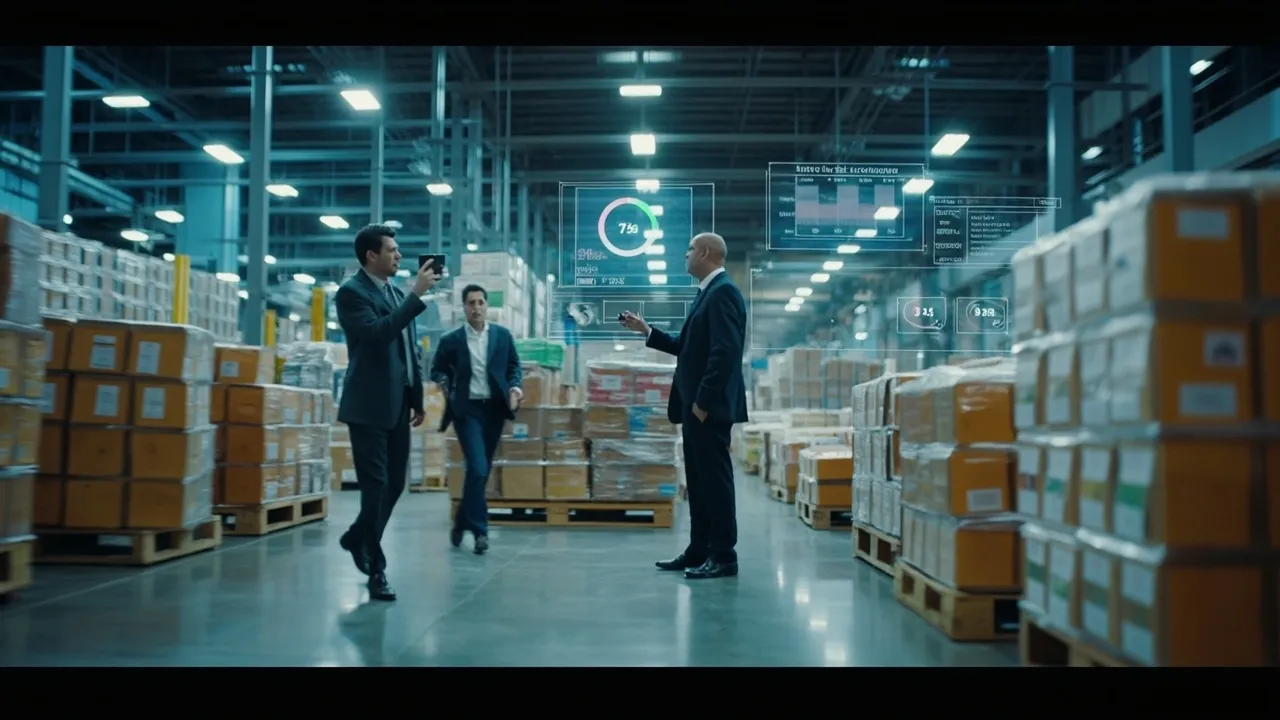
An on-time, in-full failure rarely begins at the retailer's receiving door. It may start when an order is accepted against unavailable inventory, a warehouse release misses its cutoff, or a carrier tender sits unanswered. The late truck is often only the last visible symptom.
That distinction matters because the financial exposure is enormous. Cleo estimates that late and incomplete deliveries cost U.S. and Canadian food, beverage, and consumer packaged goods manufacturers about $100 billion each year. According to FreightWaves' review of the research, only $10 billion to $11 billion comes from visible direct costs such as chargebacks, expedited freight, and dispute management. Another $85 billion to $90 billion sits in harder-to-see consequences including lost shelf space, reduced orders, excess inventory, and manufacturing inefficiency.
The right response is not another executive dashboard with one blended OTIF percentage. Manufacturers need a commitment ledger that identifies what each function promised, when it promised it, and where the first recoverable break occurred.
The chargeback is the receipt, not the root cause
Retail OTIF programs combine two tests: did the order arrive inside the agreed delivery window, and did it contain the full quantity? Definitions still vary among retailers, but the tolerance is tight. The FreightWaves report notes that major retailers often require performance above 95%, while many manufacturers benchmark between 85% and 91%. Walmart's published standard has required 98% compliance, with a penalty equal to 3% of the cost of goods for misses.
Direct penalties deserve attention, but they can distort priorities. A finance team sees a deduction. Transportation sees a missed appointment. Sales sees a reduced replenishment order. Manufacturing sees a schedule change. If each department investigates its own symptom, nobody reconstructs the common chain of commitments that produced the failure.
The indirect damage can also compound over time. Poor performance can affect allocation, shelf position, promotional support, and future order volume. By the time those effects appear in a commercial report, the operational evidence may be scattered across an ERP, WMS, TMS, carrier portal, email thread, and retailer scorecard.
Build a ledger across six operating commitments
For every order, capture the planned time, actual time, owner, source system, and reason code at six control points.
- Order acceptance. Was the purchase order received, validated, and acknowledged before the response deadline? Record quantity changes, requested delivery dates, and any rejected fields. Digital failures matter here: a separate FreightWaves report on supply-chain integration errors says one pilot grouped 96% of incoming errors into meaningful clusters, illustrating how recurring message failures can be converted into actionable categories.
- Inventory allocation. Was sellable inventory reserved against the order, or did supply remain provisional? Distinguish forecast error, production shortage, quality hold, and allocation override.
- Warehouse release. Did the facility receive a complete, executable instruction in time to pick, stage, and load? Log release cutoff, labor constraint, pick shortage, dock congestion, and load-ready time separately.
- Carrier tender. When was the load offered, accepted, rejected, or reassigned? A late tender is not the same failure as a carrier rejecting a timely offer, and each requires a different fix.
- Appointment. Was a compliant receiving slot requested and confirmed? Preserve the requested window, confirmed window, later changes, and the party making each change.
- Receiving. Capture arrival, gate-in, unload, proof of delivery, accepted quantity, shortages, damages, and retailer reason codes. This closes the evidence chain but should not overwrite an earlier cause.
The first missed commitment should become the primary cause. Later misses remain contributing effects. Without that rule, the final carrier event tends to absorb blame for upstream failures it could never recover.
Replace one OTIF number with accountable reason codes
An aggregate OTIF score is useful for tracking the customer outcome, but useless for assigning corrective work on its own. Create a compact reason-code hierarchy tied to accountable owners: commercial, demand planning, production, inventory, warehouse, integration, carrier, appointment, and consignee.
Then add a recoverable-time threshold to every milestone. If an order acknowledgement is due at 10 a.m. and the warehouse cutoff is 3 p.m., an exception detected at 10:10 may still be recoverable. The same exception found after the carrier cutoff is no longer an information problem; it is an expedited-freight decision.
This approach changes the operating question from “Did we miss OTIF?” to three sharper questions:
- Where did reality first diverge from the committed plan?
- How much recovery time remained when the divergence became visible?
- Who had the authority and information to act?
It also helps target the costliest periods. Cleo's model estimates that 40% of expedited shipments occur in the fourth quarter, and that 5% to 15% of shipments to major retailers require expediting. Air freight can cost five to 10 times the standard rate, while team drivers can cost 1.5 to two times as much. Earlier detection therefore has a measurable value even when the final delivery is saved.
Connect service performance to financial recovery
The commitment ledger should link operational events to deductions, premium freight, claims, write-offs, lost orders, and inventory effects. FreightWaves reports estimated annual CPG spending of $1.16 billion on chargeback disputes alone. It also cites estimates that 60% to 70% of disputed chargebacks are written off, while recovery services may keep 20% to 30% of successful recoveries.
That makes prevention more valuable than merely processing disputes faster. The same source estimates that improving OTIF by five to 10 percentage points could recover $11 billion to $23 billion across the market. Manufacturers should validate that modeled opportunity against their own customer mix, but the direction is clear: act while time remains, not after a deduction arrives.
CXTMS provides the transportation event layer for that control model. Order references, tender timestamps, carrier responses, appointment milestones, location events, exceptions, and proof of delivery can be preserved in one shipment history. Rules can alert the accountable owner when a milestone crosses its recoverable-time threshold, while reason codes distinguish an upstream inventory shortage from a true carrier service failure.
OTIF should remain the customer-facing outcome. Internally, the first broken commitment is the metric that drives better decisions.
Want to catch delivery risk before it becomes a chargeback or lost sale? Request a CXTMS demo and build an accountable event trail across every shipment.